 ultimate-guide
Optimizing Business Battery Procurement Strategies
Table of Contents
- Start With a Battery Procurement Checklist
- Battery Demand Forecasting That Actually Holds Up
- Building a Battery Request for Quote Template
- Supplier Vetting Beyond the Unit Price
- Battery Inventory Management and Replacement Cycles
- Total Cost of Ownership and Lifecycle Economics
- Risk Mitigation and Procurement Timing
- Frequently Asked Questions
Last Updated: October 12, 2026
Start With a Battery Procurement Checklist
Optimizing business battery procurement strategies starts with a single discipline: writing down what you actually need before you talk to anyone who sells batteries. Battery procurement is the process of specifying, sourcing, and buying battery cells and packs so that equipment keeps running without overbuying or emergency purchases.
Most teams skip the checklist and jump straight to price. That is a common mistake, and it costs far more than the few minutes a checklist takes to build.
Documents and Specs to Gather First
Pull these before you request a single quote:
- Existing battery label photo, or the device's original manual if the label is worn off
- Terminal type, physical dimensions, and case style
- Chemistry (sealed lead acid, lithium, nickel-based) and nominal voltage
That label photo matters more than people expect. When a label is unreadable, a supplier who knows the equipment category can usually identify the correct replacement from the device model and terminal layout.
Red Flags That Slow Down Purchasing
Vague specifications are the number one delay. "A battery for our forklift" tells a supplier nothing useful, and you will burn a week on clarifying emails. Missing quantity forecasts are the second. A supplier quoting a one-off replacement prices it differently than a recurring annual order, and if you have not told them which you are, the quote will be wrong.
Battery Demand Forecasting That Actually Holds Up
Battery demand forecasting is the practice of predicting how many batteries and packs you will consume over a set period by tracking replacement history, usage intensity, and equipment growth.
Build yours from four inputs:
- Replacement history. How many units did you actually replace last year, by equipment type?
- Usage intensity. Batteries in daily cycling service wear faster than batteries in standby.
- Fleet or device growth. New equipment adds consumption; retired equipment removes it.
- Seasonality. Marine and golf operations are not flat across twelve months.
Add a buffer for the categories where a failure stops work. A sump pump battery that fails during a storm is not the same risk as a spare in a drawer.
Building a Battery Request for Quote Template
A battery request for quote template is a standard document that lists every specification, quantity, and commercial term you need priced, so every supplier quotes the same thing.
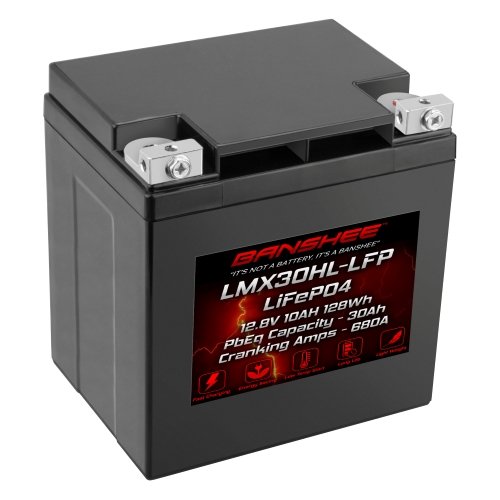
The Line Items Suppliers Need From You
Send the same fields to every supplier:
| Line Item | What to Specify | Why It Matters |
|---|---|---|
| Part identification | Model number, label photo, or device model | Prevents wrong-fit shipments |
| Chemistry and voltage | Exact chemistry, nominal voltage | Determines compatibility |
| Capacity and runtime | Amp-hour rating, expected runtime | Sizes the battery to the job |
| Physical fit | Dimensions, terminal type, case style | Confirms it installs |
| Quantity | Units now, units per year | Unlocks volume terms |
| Delivery | Required date, ship-to location | Sets lead time expectations |
| Warranty | Term, what it covers, claim process | Defines your recourse |
| Commercial terms | Payment terms, return policy, price validity | Makes quotes comparable |
Supplier Vetting Beyond the Unit Price
Supplier vetting is the process of qualifying a battery vendor on consistency, traceability, and support rather than on the lowest quoted number. Unit price is the easiest thing to compare and the least useful thing to decide on.
Use a repeatable framework so every candidate is scored the same way. The categories below cover what actually determines whether your second order goes as smoothly as your first.
Banshee 24V Battery for RV, Marine and Solar applications →
A Battery-Specific Due-Diligence Framework
Manufacturing capacity and sourcing. Ask who manufactures the cells and where the packs are assembled.
Quality systems and safety certifications. Look for documented quality management and product safety testing appropriate to the chemistry. Lithium packs in particular should carry recognized safety testing and, where applicable, transport certifications for shipping.
Financial stability and continuity. A vendor that disappears mid-contract leaves you scrambling for a replacement source.
After-sales support and remedies. Get the claim process in writing. What happens when a battery arrives dead, fails inside the warranty window, or underperforms its rated capacity?
Lead times and logistics. Ask for actual lead times on the parts you buy, not advertised ones.
Scoring the Candidates
Score each supplier against the categories above on a simple scale, and weight the categories by how much a failure would hurt your operation.
A supplier who cannot answer the traceability question is a supply-chain risk you are importing into your own operation. This is the part most buyers skip, and it is the part that determines whether your second order goes as smoothly as your first.
Battery Inventory Management and Replacement Cycles
Battery inventory management means holding enough stock to cover planned replacements and realistic failures without tying up capital in cells that age on the shelf.
Track three numbers per battery category:
- Average service life in your actual conditions
- Failure rate before rated life
- Lead time from order to delivery
When lead time is longer than the gap between a battery dying and work stopping, you are under-stocked regardless of what the spreadsheet says. Set reorder points from those three numbers, and review them when equipment or usage changes.
Total Cost of Ownership and Lifecycle Economics
Total cost of ownership for a battery is the purchase price plus everything it costs to install, maintain, replace, and dispose of it across its service life, divided by the service it actually delivers.
Most procurement teams stop at price per unit. The better comparison is cost per usable kilowatt-hour delivered over the warranty period. That number forces you to account for the battery-specific variables that generic procurement guides ignore.
Banshee 24V Battery for RV, Marine and Solar applications →
The Cost Drivers That Actually Move the Number
- Usable capacity versus nameplate capacity. A pack rated at a given amp-hour figure rarely delivers all of it. Depth-of-discharge limits, inverter cutoffs, and temperature derating shrink the usable slice. Compare batteries on usable capacity, not the label.
- Degradation and end-of-warranty capacity. Lithium packs typically lose capacity over cycle life. If a warranty guarantees a percentage of original capacity at a stated cycle count, that floor is the number your operation has to live with in year five, not the day-one rating.
- Round-trip efficiency. For any application that charges and discharges repeatedly, efficiency losses mean you buy more energy than you deliver. A few points of efficiency difference compounds across thousands of cycles.
Running the Comparison
- Convert each candidate to cost per usable kilowatt-hour over its warranted life, not cost per unit.
- Add installation and labor for every expected replacement, since a swap costs the same regardless of what the battery cost.
- Add downtime cost for each unplanned failure, weighted by how critical the equipment is.
- Add maintenance, monitoring, and any watering or equalizing labor.
- Add end-of-life recycling or disposal handling.
- Compare the totals, and sanity-check the winner against your service records.
When you are ready to run that math against real options, Bigtime Battery carries a wide selection of replacement batteries for medical, marine, and specialty applications, and the team can help you match a pack to your runtime and cycle requirements before you commit. Make your purchase at bigtimebattery.com.
Risk Mitigation and Procurement Timing
Procurement timing is a risk decision as much as a cost decision. Battery supply chains have real exposure to raw material markets and shipping delays, and academic work on strategic battery procurement in supply chains shows that how cost and risk are shared between buyer and supplier materially affects total procurement expense.
Practical risk mitigation looks like this:
- Split the award. Two qualified suppliers beat one, even at a slightly higher blended price.
- Order ahead of seasonal peaks. Marine and golf demand spikes are predictable; your ordering should be too.
- Lock price validity where you can. A fixed window protects you from mid-quarter movement.
- Keep a buffer on critical categories. The batteries that stop operations get the deepest stock.
Battery procurement rewards preparation and punishes improvisation. If you would rather spend your time running your operation than chasing specifications, Bigtime Battery is built for exactly that: a one-stop shop for single-cell battery needs with a wide selection of replacement batteries for medical, marine, and specialty applications, all at low prices and backed by people who will help you identify the right cell when the label is gone.
Frequently Asked Questions
How do businesses create a battery procurement strategy?
Start by documenting every battery your operation depends on, including voltage, chemistry, terminal type, and physical dimensions. Group them by criticality so emergency equipment like AED units and exit lighting gets priority stock. Then set procurement objectives around uptime, not just unit cost. A written battery procurement checklist keeps requests consistent, and pairing it with demand forecasting prevents both stockouts and dead inventory sitting past its shelf life.
What should a battery request for quote template include?
Include the exact part number or a photo of the old label, quantity needed now and over 12 months, required voltage and chemistry, terminal configuration, and delivery deadline. Add warranty terms, return policy for dead-on-arrival units, and whether you need ongoing wholesale pricing. Suppliers quote faster and more accurately when they can see your full battery procurement volume instead of a one-off order.
How can a business avoid battery stockouts?
Track consumption by device and location, then set reorder points based on actual lead times rather than guesswork. Keep safety stock for critical systems like sump pumps, emergency lighting, and medical devices. Battery demand forecasting should account for seasonal spikes, such as marine batteries before boating season or golf cart replacements in spring. Distributors like Bigtime Battery can help you plan bulk orders so you are not caught short.
How should businesses forecast battery demand?
Pull 24 months of purchase history and match it against equipment counts, replacement intervals, and failure rates. Batteries degrade predictably, so a fleet of forklifts or a marina's boat inventory gives you a baseline. Add buffers for weather events, new equipment, and regulatory testing cycles. Review the forecast quarterly and adjust for market volatility in lead times and shipping.
How can businesses compare battery suppliers beyond unit price?
Look at delivery performance, fill rate, warranty response time, and whether the supplier stocks the exact chemistry and form factor you need. A cheaper quote that ships the wrong terminal type or arrives three weeks late costs more in downtime. Ask for references, check return policies on dead-on-arrival units, and confirm they can scale with your volume. Bigtime Battery offers a one-stop shop for single-cell replacement needs at competitive prices.
What battery specifications should procurement teams verify?
Verify voltage, amp-hour capacity, chemistry (lead acid, AGM, lithium, or specialty), terminal type and orientation, and physical dimensions against the device compartment. Confirm cycle life ratings for deep cycle applications like marine and golf cart use. For medical and emergency equipment, check that the replacement meets the original manufacturer's specification. Matching the label exactly prevents returns and equipment damage.
How can businesses manage battery inventory and replacement cycles?
Label every battery with its install date and expected service life, then schedule replacements before failure rather than after. Rotate stock so older units ship first, and store batteries in cool, dry conditions to slow self-discharge. Use a simple spreadsheet or inventory system to flag units approaching end of life. This turns battery inventory management from reactive scrambling into planned purchasing.
Where can I buy replacement batteries in bulk?
Bigtime Battery supplies single-cell and specialty replacement batteries for marine fleets, medical devices, industrial equipment, and emergency lighting. You can order individual units or set up wholesale distribution for your retail shop or service business. Visit bigtimebattery.com to check stock, request volume pricing, and confirm delivery timelines for your area.