 ultimate-guide
Future Trends in Marine Battery Technology: 2026 Guide
Table of Contents
- The Marine Battery Market Is Growing Fast: What's Driving It
- Lithium-Ion vs Lead-Acid Marine Battery Chemistry: The Shift Underway
- Deep Cycle Marine Battery Performance: What Buyers Need to Know
- Marine Battery Management System Technology: Safety and Longevity
- Choosing the Right Marine Battery Supplier for Wholesale Operations
- LiFePO4 Marine Batteries: Why They're Becoming the Standard
- What to Expect: Marine Battery Technology Forecasts Through 2034
- Frequently Asked Questions
Last Updated: October 6, 2026
The Marine Battery Market Is Growing Fast: What's Driving It
The global marine battery market was valued at USD 1.67 billion in 2025 and is projected to grow to USD 6.11 billion by 2034, according to Fortune Business Insights Marine Battery Market analysis. That's not just growth, it's a fundamental shift in how vessels are powered. At Bigtime Battery, we've been tracking this transformation closely, and the numbers tell a clear story: the marine industry is moving away from traditional lead-acid systems toward lithium-based solutions that deliver superior performance and longevity.
What's driving this surge? Three factors converge. First, commercial applications now account for 62.87% of the marine battery market, pushing operators to demand batteries that can handle mission-critical loads without failure. Second, lithium-ion technology is projected to hold 35.95% of the market share in 2026, signaling a decisive shift in chemistry preferences. Third, wholesale buyers and fleet operators are finally seeing the total cost of ownership math work in lithium's favor, three times the energy density, one-third the weight, and cycle life eight times longer than lead-acid alternatives.
This guide breaks down what's actually changing in marine battery technology, which chemistry makes sense for your operation, and how to source the right batteries at scale. We'll also cover what the forecasts tell us about where this market is heading through 2034.
Lithium-Ion vs Lead-Acid Marine Battery Chemistry: The Shift Underway
Lithium-ion batteries are fundamentally different from lead-acid systems in how they store and release energy. Where lead-acid relies on chemical reactions that degrade with each charge cycle, lithium-ion maintains stable performance across thousands of cycles, typically 2,000-5,000+ cycles for quality cells. Lead-acid degrades predictably: capacity drops 20-30% within the first year of heavy use, then accelerates.
The performance gap shows up immediately in real marine conditions. A lead-acid battery rated at 100Ah might deliver 80Ah usable capacity on day one and 60Ah by year two. A lithium-ion battery maintains closer to 95% capacity for years. That consistency matters when your trolling motor, navigation system, or backup power depends on it.
Weight is another decisive factor. Lithium batteries weigh roughly one-third what lead-acid does for the same capacity. On a fishing boat or commercial vessel, that weight savings translates directly to fuel efficiency and payload capacity.
The trade-off is upfront cost. Lead-acid batteries are cheaper per unit, which is why they still dominate certain segments. But that advantage erodes fast. According to Maximize Market Research marine battery forecasts, the cost gap continues to narrow as lithium production scales.
Deep Cycle Marine Battery Performance: What Buyers Need to Know
Deep-cycle marine batteries are engineered to discharge 80% or more of their capacity repeatedly without damage, unlike starting batteries, which deliver high current briefly then recharge. For marine applications, deep-cycle performance is non-negotiable. Your trolling motor, auxiliary power, navigation systems, and backup equipment all depend on sustained discharge over hours, not seconds.
Lithium deep-cycle batteries outperform lead-acid on three critical metrics: cycle life, discharge rate, and state-of-charge recovery. A quality LiFePO4 deep-cycle battery can handle 3,000-5,000 full discharge cycles. Lead-acid typically manages 500-1,000 before capacity degrades significantly. That difference compounds over a vessel's lifetime.
Discharge rate also matters. Lithium batteries can deliver sustained high current without voltage sag, the voltage stays stable as you draw power. Lead-acid voltage drops as discharge deepens, which can cause equipment shutdown or reduced performance before the battery is actually empty.
State-of-charge recovery is where deep-cycle lithium shines. After a full discharge, lithium batteries recover to full capacity within hours of charging. Lead-acid requires longer recovery periods and never fully restores capacity after deep discharge events. Commercial operators running multiple charge-discharge cycles daily see this difference immediately in uptime and reliability.
When evaluating deep-cycle marine batteries for wholesale operations, ask for cycle-life documentation and discharge curves from the manufacturer. Don't rely on marketing claims alone. A reputable supplier like Bigtime Battery provides full technical specs and third-party test data so you can compare apples to apples.
Marine Battery Management System Technology: Safety and Longevity
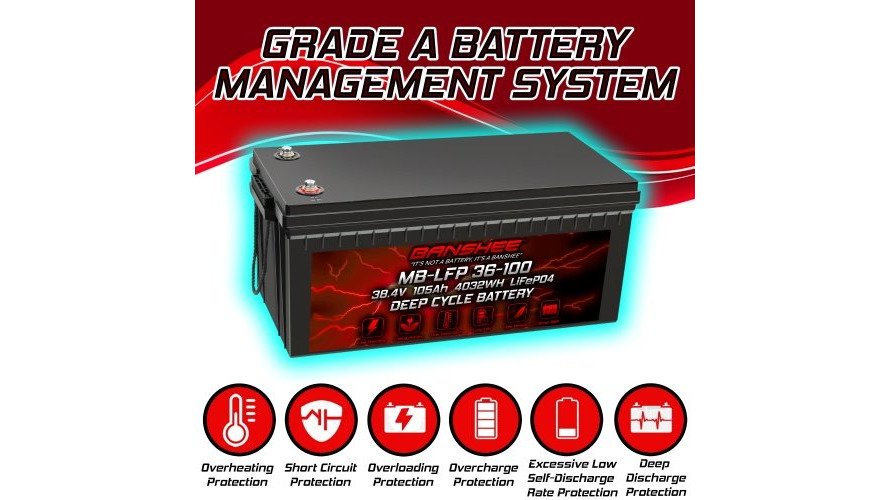
A battery management system (BMS) is the electronic controller that monitors and regulates your battery pack. For lithium marine batteries, BMS technology is essential, it's the difference between a reliable power source and a safety hazard. Lead-acid batteries tolerate overcharging and voltage spikes; lithium cells do not.
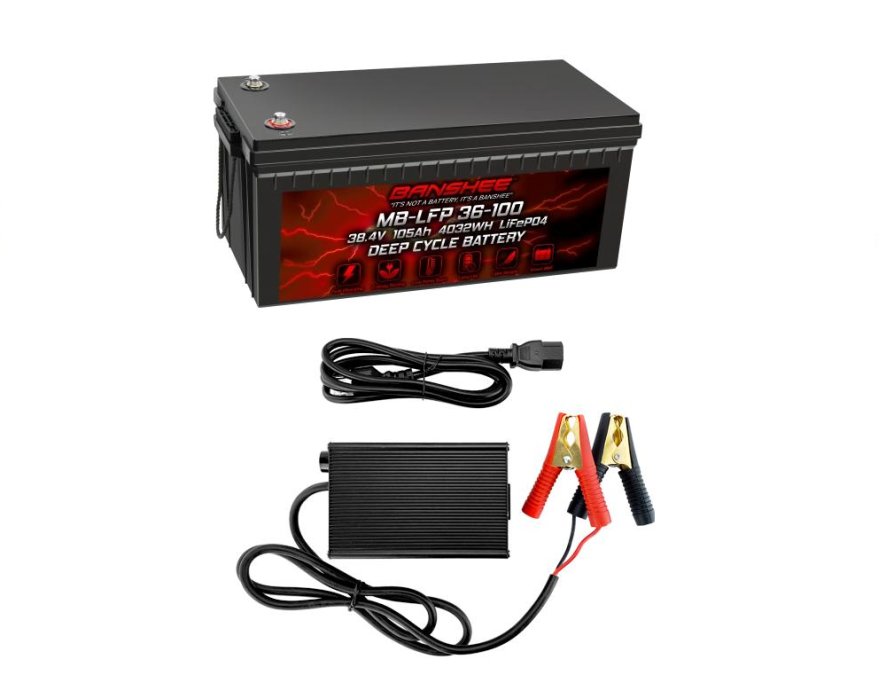
Banshee Bluetooth LiFePO4 Battery Smart 36V 105Ah Lithium Battery Perfect →
Modern marine BMS technology includes active cell balancing, which monitors individual cells within the pack and redistributes charge to keep them equal. When cells drift out of balance, capacity drops and failure risk rises. Active balancing prevents this by managing charge flow to lagging cells. The result is longer usable life and more predictable performance across the battery's lifespan.
Temperature management is another critical BMS function. Lithium batteries perform best between 32°F and 104°F. Outside that range, charging efficiency drops and safety risks increase. A marine BMS monitors pack temperature and throttles charging current if needed to keep cells in the safe zone. For vessels operating in cold climates or high-temperature engine rooms, this protection is invaluable.
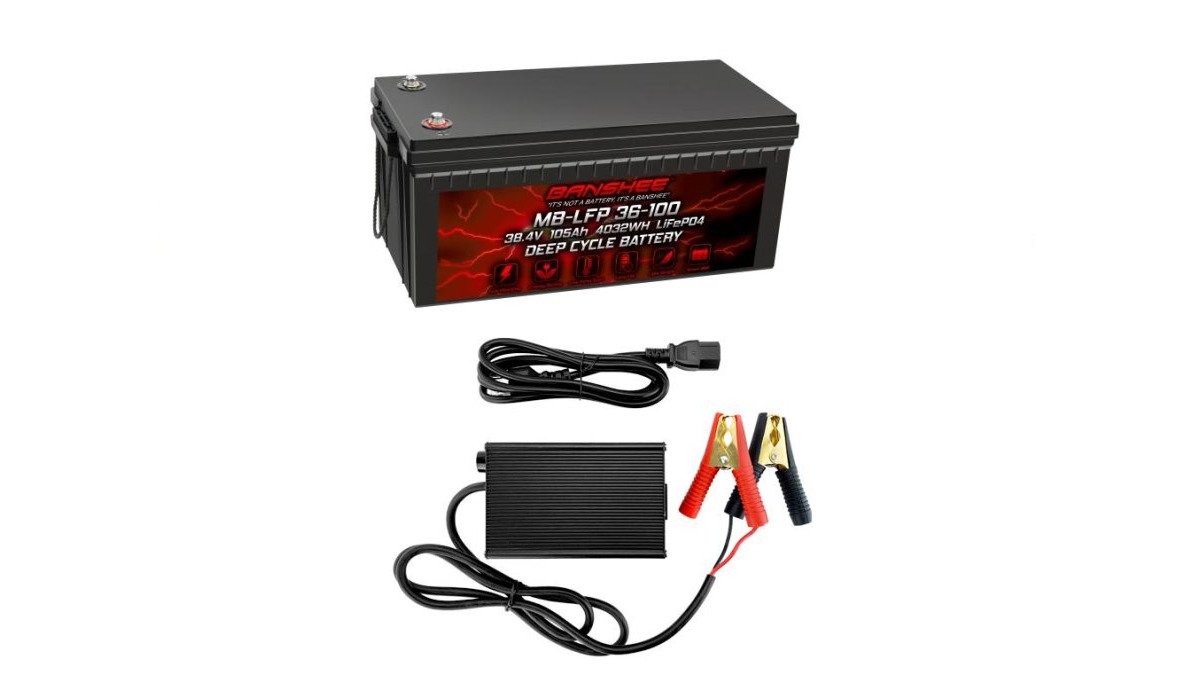
Smart BMS systems now include Bluetooth monitoring, allowing you to track battery health, voltage, current, and temperature from your phone or onboard display. Bigtime Battery carries the Banshee Bluetooth LiFePO4 Battery Smart 36V 105Ah system, which offers real-time monitoring via mobile app, giving you visibility into battery performance and early warning of any issues.
Choosing the Right Marine Battery Supplier for Wholesale Operations
Wholesale sourcing for marine batteries requires due diligence beyond price comparison. You're evaluating suppliers who will support your business over years, not just fulfill an initial order. The right partner offers technical expertise, consistent inventory, reliable delivery, and genuine support when problems arise.
Start with certifications and compliance. Marine batteries must meet ABYC (American Boat and Yacht Council) standards for safety and performance. Ask suppliers for documentation proving their batteries meet these standards.
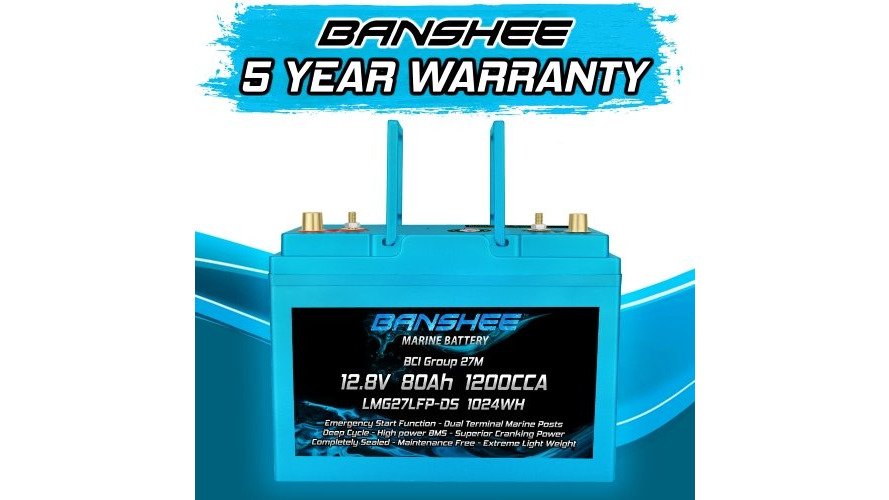
Next, evaluate the BMS and warranty. A quality lithium marine battery includes a certified BMS and typically carries a 5-year warranty. Bigtime Battery's Banshee LiFePO4 batteries come with a 5-year warranty and built-in Bluetooth monitoring, giving you confidence in long-term performance.
Inventory reliability matters for wholesale operations. Can the supplier maintain stock for your volume needs, or will you face backorders during peak season? Ask about lead times, minimum order quantities, and their supply chain resilience.
Technical support is often overlooked but critical. When a customer calls with a battery question, can your supplier's team help troubleshoot, or will you be on your own? Bigtime Battery provides direct support to wholesalers and resellers, helping you answer customer questions confidently.
Finally, confirm return and replacement policies. What happens if a battery arrives defective or fails prematurely? A reputable supplier stands behind their products with straightforward replacement terms. Get those terms in writing before committing to a large order.
LiFePO4 Marine Batteries: Why They're Becoming the Standard
LiFePO4 (lithium iron phosphate) is the dominant chemistry for marine batteries because it balances performance, safety, and cost better than competing lithium chemistries. Unlike lithium-cobalt cells used in consumer electronics, LiFePO4 is inherently more stable and less prone to thermal runaway, a critical safety advantage in marine environments where cooling is limited.
The chemistry delivers impressive cycle life. A quality LiFePO4 cell cycles 3,000-5,000 times before capacity drops to 80%. That translates to 10+ years of real-world service for most marine applications. Lead-acid reaches end-of-life in 3-5 years. The math favors LiFePO4 decisively for any operation running more than a few hours per week.
Energy density is another LiFePO4 advantage. These batteries pack three times the energy into one-third the weight compared to lead-acid. For electric trolling motors and auxiliary systems, the performance improvement is immediate and measurable.
LiFePO4 also tolerates partial discharge cycles better than lead-acid. You can run a LiFePO4 battery down to 20% state-of-charge and back up repeatedly without degradation. Lead-acid prefers to stay above 50% depth-of-discharge to maximize lifespan. This flexibility makes LiFePO4 more practical for real-world marine use, where consistent full-discharge cycles are common.
Banshee Bluetooth LiFePO4 Battery Smart 36V 105Ah Lithium Battery Perfect →
The Banshee Bluetooth LiFePO4 Battery Smart 36V 105Ah system exemplifies why this chemistry is becoming standard. It offers three times the energy of lead-acid, one-third the weight, and an 8x longer lifespan, all with built-in BMS and Bluetooth monitoring.
What to Expect: Marine Battery Technology Forecasts Through 2034
Market forecasts project substantial growth in marine battery adoption. According to Grand View Research marine battery market analysis, the market is projected to reach USD 2,821.5 million by 2033, growing at an 18.5% compound annual growth rate.
These forecasts reflect three converging trends. First, commercial vessel operators are accelerating adoption to meet emissions regulations and fuel efficiency targets. Second, battery costs continue to decline as production scales, a dynamic that favors lithium-ion over lead-acid.
Lithium-ion will likely hold 35-40% of the market through 2034, with LiFePO4 as the dominant chemistry. Lead-acid will persist in cost-sensitive segments but lose market share as the price gap narrows.
Integration with vessel systems will advance significantly. Battery management systems will become more sophisticated, offering predictive diagnostics and integration with navigation and propulsion systems.
The forecast also reflects growing demand from marine backup power, off-grid applications, and renewable energy integration. Vessels are increasingly equipped with solar panels and wind generators paired with battery storage.
The marine battery market is moving decisively toward lithium-ion technology, with LiFePO4 emerging as the standard chemistry for commercial and recreational applications. The performance advantages, cycle life, weight, energy density, and safety, are now proven at scale.
If you're sourcing marine batteries for your business, the decision comes down to chemistry, supplier reliability, and total cost of ownership. LiFePO4 batteries from trusted manufacturers deliver the performance and longevity your customers expect.
| Chemistry | Cycle Life | Weight (36V 100Ah) | Cost Range | Best For |
|---|---|---|---|---|
| LiFePO4 | 3,000-5,000 | ~50 lbs | $700-800 | Commercial, long-term use |
| Lead-Acid | 500-1,000 | ~150 lbs | $300-400 | Budget-conscious, light use |
| Lithium-Cobalt | 1,000-2,000 | ~40 lbs | $800-1,200 | High performance, specialty |
Frequently Asked Questions
What is the difference between lithium and lead-acid marine batteries?
Lithium-ion marine batteries, particularly LiFePO4 chemistry, offer three times the energy density of lead-acid batteries while weighing one-third as much. They deliver 8-10 times longer cycle life, typically 3,000-5,000 cycles versus 300-500 for lead-acid. Lithium batteries handle deep discharge better, charge faster, and integrate with modern battery management systems for real-time monitoring. Lead-acid remains cheaper upfront but costs more over time due to frequent replacement and maintenance requirements.
Are LiFePO4 batteries a good choice for marine applications?
Yes. LiFePO4 batteries are ideal for marine use because they deliver consistent power output, handle salt-air corrosion better than lead-acid, and work reliably in the temperature swings typical of boat environments. They're lighter, allowing better fuel efficiency and performance. Built-in battery management systems monitor cell health and prevent overcharge, critical for unattended marine equipment. Products like the Banshee 36V 105Ah LiFePO4 battery are purpose-built for trolling motors, backup power, and marine energy storage, with 5-year warranties and Bluetooth monitoring via mobile app.
How long do marine lithium batteries typically last?
Marine lithium batteries, especially LiFePO4 chemistry, typically last 10 years or longer in real-world service. Most quality marine lithium batteries are rated for 3,000-5,000 full charge cycles, which translates to a decade or more depending on usage patterns. The Banshee 36V 105Ah deep-cycle marine battery, for example, offers an 8-10 year lifespan with proper management. Actual longevity depends on charge/discharge depth, temperature exposure, and whether the battery has an active battery management system that prevents overcharging and balances cell voltages.
What should wholesale buyers look for in a marine battery supplier?
Wholesale buyers should prioritize suppliers offering certified LiFePO4 and lithium-ion batteries with built-in battery management systems, transparent cycle-life data, and bulk pricing. Verify product warranties (5+ years is standard for quality marine batteries), check for Bluetooth or app-based monitoring features, and confirm fast shipping and return policies. Ensure the supplier stocks deep-cycle marine batteries rated for your specific voltage and amperage needs. Bigtime Battery provides high-quality marine batteries with competitive wholesale pricing and reliable support, make your purchase at bigtimebattery.com for volume discounts and fast delivery.