 ultimate-guide
Lithium Marine Battery Safety Tips: 7 Critical Practices
Table of Contents
- Understanding Thermal Runaway and Fire Risks in Lithium Marine Batteries
- Lithium Battery Charging Best Practices for Marine Applications
- Terminal Connection Maintenance and Voltage Monitoring
- Signs of Lithium Battery Damage and Degradation
- ABYC Lithium Battery Standards and Installation Requirements
- Storage, State of Charge, and Off-Season Preparation
- Fire Suppression Equipment and Emergency Preparedness
- Protecting Your Investment with Bigtime Battery Products
- Frequently Asked Questions
Last Updated: September 29, 2026
Lithium marine battery safety tips are no longer optional considerations for boat owners and marine operators. The marine battery market was valued at $893.1 million in 2026 and is projected to grow to $2,821.5 million by 2033, according to Grand View Research's marine battery market analysis, reflecting the rapid adoption of lithium technology in maritime applications. However, this shift toward lithium-ion chemistry brings serious safety challenges that demand immediate attention. This guide covers seven critical practices that separate safe marine lithium battery operations from dangerous ones.
Understanding Thermal Runaway and Fire Risks in Lithium Marine Batteries
Thermal runaway is the cascade failure mode that keeps marine safety officers awake at night. It's an exothermic reaction where the battery's internal temperature spirals beyond control, generating heat that can ignite surrounding materials and fuel compartments. Research from ScienceDirect on battery design fires shows that lithium-ion battery fires differ fundamentally from conventional fuel fires, requiring specialized suppression methods that standard fire equipment cannot handle effectively.
The chemistry that makes lithium batteries powerful also makes them volatile. When voltage exceeds safe thresholds, when temperature climbs past the electrolyte's stability point, or when internal short circuits develop, the battery enters a state where it generates its own heat faster than it can dissipate it. On a boat where ventilation is limited and escape routes are constrained, thermal runaway becomes catastrophic.
LiFePO4 (Lithium Iron Phosphate) chemistry, now the standard for marine applications, does produce less gas during thermal runaway compared to other lithium chemistries. This is a genuine advantage. But LiFePO4 is not immune to thermal runaway itself. The misconception that LFP batteries are "fireproof" has led boat owners to skip critical safety measures, only to discover too late that the chemistry provides lower risk, not zero risk.
Lithium Battery Charging Best Practices for Marine Applications
Overcharging is the most common trigger for lithium battery failure in marine environments. The National Fire Protection Association (NFPA) emphasizes that standardized handling and storage procedures are essential for managing lithium battery risks, and charging protocols sit at the center of those procedures.
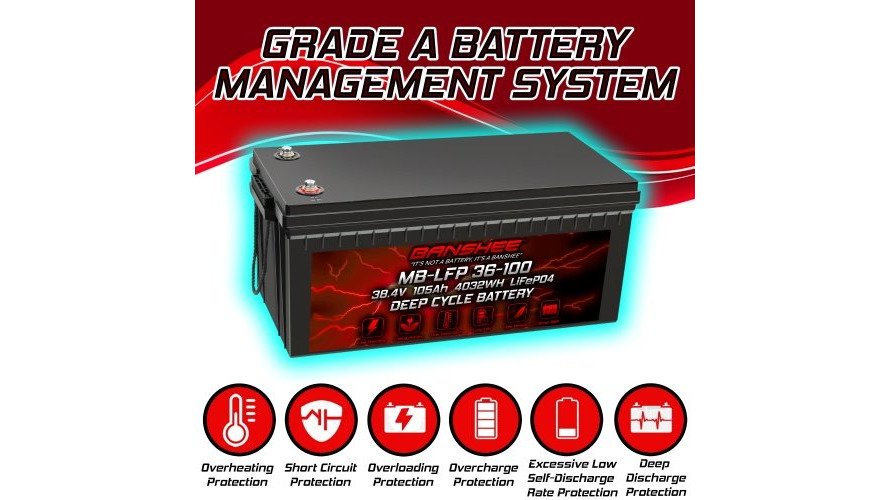
Lithium marine battery charging differs fundamentally from lead-acid charging. Lead-acid batteries tolerate overcharging with minimal consequence. Lithium batteries do not. Voltage monitoring must be continuous and precise. The battery management system (BMS) is not optional, it's the critical component that monitors voltage, temperature, and charge levels to prevent overcharging and overheating.
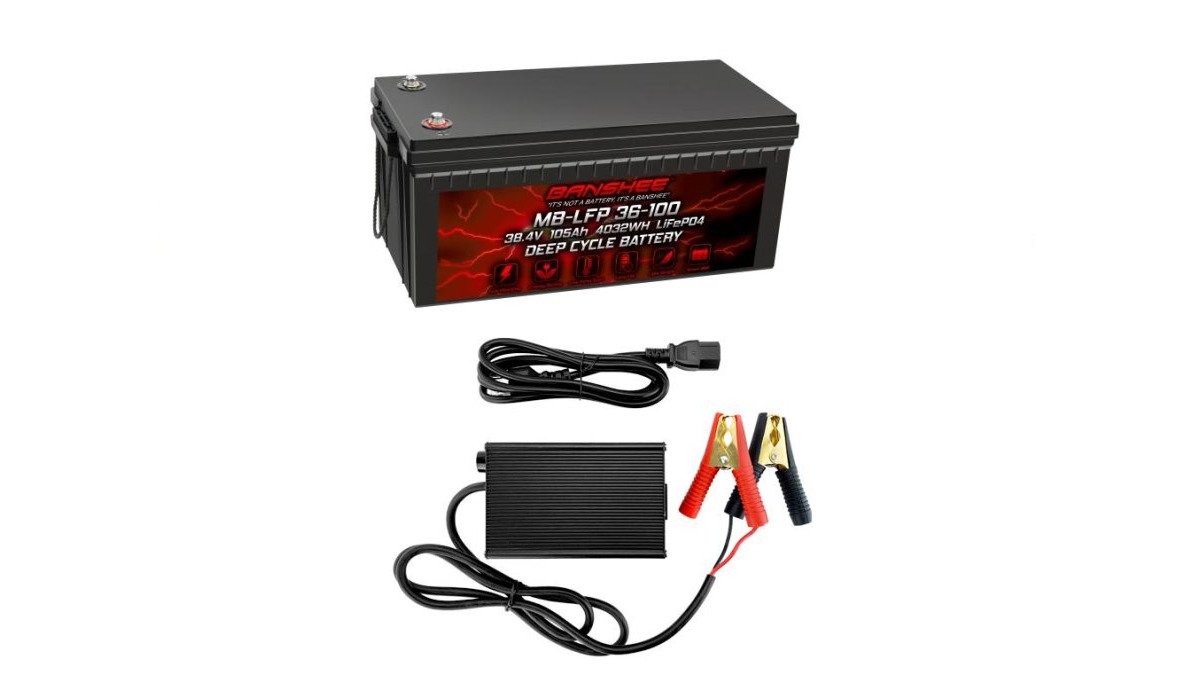
When selecting a charger, use one specifically designed for LiFePO4 chemistry. The Banshee 12V Lithium LiFeP04 Marine Battery Charger Maintainer is built with automatic circuit protection to prevent overcharging and short circuits, making it the reliable choice for marine applications where charging conditions vary with weather and vessel motion.
Temperature monitoring during charging is non-negotiable. Charge only when battery temperature is between 32°F and 104°F. Cold charging damages the internal structure; hot charging accelerates degradation. On boats where cabin temperature fluctuates, this means planning charge cycles around weather patterns and ambient conditions.
Charging Protocol | Best Practice | Why It Matters |
|---|---|---|
Voltage limit | 14.4V maximum for 12V systems | Prevents overcharge damage to cells |
Temperature range | 32-104°F during charging | Protects internal chemistry and BMS function |
Charge rate | 0.5C or lower (slow charge) | Reduces stress on battery and cell balancing load |
Monitoring frequency | Continuous via BMS | Detects voltage or thermal anomalies in real time |
Charger type | LiFePO4-compatible only | Standard chargers deliver wrong voltage profile |
Terminal Connection Maintenance and Voltage Monitoring
Terminal connections are where lithium batteries fail silently until catastrophe arrives. Corrosion, loose connections, and oxidation create resistance that forces the battery to work harder, generating heat that triggers thermal stress.
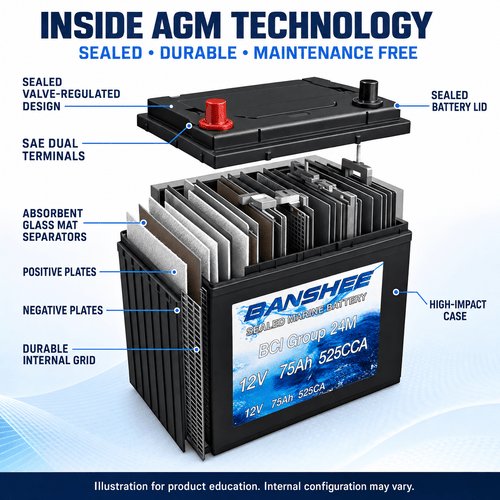
Inspect terminals monthly. Look for white or blue-green deposits (oxidation), swelling, or discoloration. Any visible corrosion must be cleaned immediately. Use a small wire brush and a corrosion-removal solution, then apply a thin coat of dielectric grease to protect against future oxidation. Loose terminals are equally dangerous, they create micro-arcs that generate heat and can ignite nearby materials.
Banshee 12V Lithium LiFeP04 Marine →
Voltage monitoring is your early warning system. Install a digital voltmeter that displays voltage continuously. A healthy 12V lithium battery at rest sits between 13.0V and 13.5V. Voltage below 10.0V indicates deep discharge, which damages the battery's internal structure. Voltage above 14.6V signals overcharging or a failed BMS. Either extreme requires immediate investigation.
The polyethylene barrier inside the battery's cell structure is vulnerable to electrical stress. When voltage spikes occur, this insulation can fail, allowing internal short circuits. Voltage monitoring catches these spikes before they escalate.
Signs of Lithium Battery Damage and Degradation
Physical inspection catches problems before they become fires. Check your battery monthly for swelling, leaks, or color changes. Any of these signals internal failure in progress.
Swelling indicates gas buildup inside the cells. This occurs when the electrolyte breaks down, usually from overcharging or thermal stress. A swollen battery will fail within hours to days. Do not attempt to charge or use it, isolate it immediately and contact your supplier for safe disposal.
Leaks or corrosion around the case indicate electrolyte escape or internal short circuits. The electrolyte is flammable. Any leak requires immediate isolation and professional disposal.
Cell balancing failures appear as voltage imbalance across cells. If you have a multi-cell battery with a BMS that displays individual cell voltages, watch for cells that drift significantly apart. A 0.1V difference between highest and lowest cell is normal. A 0.3V or greater difference signals a failing cell that will cascade into thermal runaway.
Performance degradation, slower charging, reduced runtime, or unexpected voltage drops under load, indicates aging or internal damage. Lithium batteries degrade with every charge cycle, but rapid degradation suggests mechanical damage, deep discharge events, or manufacturing defects.
ABYC Lithium Battery Standards and Installation Requirements
The American Boat and Yacht Council (ABYC) sets the safety standards that govern lithium battery installations on vessels. Compliance is not legally mandated for recreational vessels, but it represents the industry consensus on what safe installation looks like.
ABYC standards require that lithium batteries be installed with proper isolation from fuel systems, with adequate ventilation to prevent gas accumulation, and with fire suppression equipment rated for electrical fires within 6 feet of the battery. The standards also mandate that the BMS be accessible for monitoring and that all wiring use marine-grade cable with proper amperage ratings.
Installation location matters enormously. Never install lithium batteries in enclosed spaces without dedicated ventilation. Bilge areas are particularly dangerous because water intrusion accelerates internal corrosion. Engine compartments generate heat that accelerates battery aging. Cabin spaces where off-gassing could accumulate are equally risky. The safest location is a dedicated, ventilated battery box mounted securely to prevent vibration damage.
Banshee 12V Lithium LiFeP04 Marine →
Vibration resistance is often overlooked but critical in marine environments. Constant engine vibration loosens connections, stresses internal cell structure, and accelerates degradation. Use vibration-damping mounts and ensure all connections are torqued to specification.
Storage, State of Charge, and Off-Season Preparation
State of charge (SoC) is the single most important factor in battery longevity during storage. Lithium batteries stored at 100% SoC degrade rapidly. Stored at 0% SoC, they can develop internal shorts. The optimal storage state is 50% SoC, roughly 13.0V for a 12V LiFePO4 battery.
Before winter storage, charge your battery to 50% SoC, then disconnect it completely. Do not leave it connected to the boat's electrical system, parasitic loads will slowly drain it to zero. Check the battery monthly and recharge to 50% if voltage drops below 12.8V.
Temperature during storage matters as much as state of charge. Store lithium batteries in a cool, dry space, ideally between 50°F and 77°F. Cold storage slows degradation. Hot storage accelerates it.
Fire Suppression Equipment and Emergency Preparedness
Standard fire extinguishers rated for Class A and B fires are ineffective against lithium battery fires. Electrical fires require Class C extinguishers or specialized lithium battery suppression systems. A 5-pound ABC multipurpose extinguisher is inadequate.
Protecting Your Investment with Bigtime Battery Products
Your lithium marine battery is a significant investment. Protecting it means using compatible charging equipment, monitoring systems, and maintenance practices from suppliers who understand marine chemistry and safety standards.
Frequently Asked Questions
What are the signs of a failing lithium marine battery?
Watch for physical swelling, leaks, or visible corrosion on terminals. Battery voltage dropping unexpectedly during use, slower charging times, or the battery failing to hold a charge are clear indicators of degradation. Any sign of off-gassing or unusual odors requires immediate isolation of the battery.
Do lithium marine batteries require a specific charger?
Yes. Lithium-iron phosphate (LiFePO4) batteries must be charged using a LiFePO4-compatible charger to prevent overcharging and overheating. Standard lead-acid chargers will damage lithium batteries and create fire risks. The Banshee 12V Lithium LiFeP04 Marine Battery Charger Maintainer includes built-in circuit protection to prevent overcharging and short circuits—essential for safe charging. Always verify your charger matches your battery chemistry before purchasing at bigtimebattery.com.
How do I properly store lithium batteries during the off-season?
Store lithium marine batteries at 50% state of charge in a cool, dry location between 50°F and 77°F. Never store a fully charged or fully discharged battery for extended periods. Check the battery monthly and recharge to 50% if the voltage drops below 12.8V. Proper storage prevents deep discharge, cell balancing issues, and thermal degradation that can lead to exothermic reactions when the battery is returned to service.
What safety standards should I look for in marine batteries?
Look for batteries that comply with ABYC (American Boat and Yacht Council) lithium battery standards and include a certified Battery Management System (BMS) to monitor voltage, temperature, and charge levels. The BMS prevents overcharging, deep discharge, and short circuits—the primary causes of thermal runaway. Certified products from trusted manufacturers ensure your vessel meets safety requirements and reduces fire risk significantly.