 comparison
Lithium-Ion Battery Packs: Comparison Guide
Table of Contents
- Lithium-Ion Battery Packs: Key Specifications and Chemistry
- LiFePO4 vs. Other Lithium Chemistries: Comparison Table
- Safety Features and Battery Management Systems
- Lithium-Ion Battery Charging Best Practices
- Lithium Battery Safety Regulations and Compliance
- Sealed Lead-Acid Battery Replacement with Lithium-Ion
- Applications and Use Cases for Different Battery Packs
- Troubleshooting and Failure Modes
- Frequently Asked Questions
Last Updated: August 25, 2026
Lithium-Ion Battery Packs: Key Specifications and Chemistry
Lithium-ion battery packs power everything from electric vehicles to backup power systems. The U.S. lithium-ion battery pack market reached USD 40.7 billion in 2024 and is projected to expand at a compound annual growth rate of 12.4% through 2035, reaching USD 144.2 billion, according to Fact.MR's U.S. Lithium-ion Battery Packs Market Outlook.
At Bigtime Battery, we help customers select the right lithium-ion battery pack for their application. Understanding the specifications and chemistry behind these packs directly determines whether a battery will perform reliably or fail prematurely.
Voltage, Capacity, and Cell Configuration
Voltage (measured in volts) represents the electrical potential a battery delivers, while capacity (measured in amp-hours) indicates how long the battery sustains a load before depletion. Cell configuration determines voltage and capacity: cells arranged in series increase voltage, while parallel arrangement increases capacity and current output. A 12V battery pack, for example, might consist of four 3.2V lithium iron phosphate cells in series.
Nominal voltage differs from cut-off voltage, the minimum voltage below which discharge should stop to avoid permanent damage. Most lithium-ion packs include protection circuits that prevent over-discharge.
Energy Density and Cycle Life
Energy density measures how much energy a battery stores relative to its weight (watt-hours per kilogram). Higher energy density delivers more power while remaining lightweight, critical for portable applications and electric vehicles.
Cycle life refers to the number of complete charge-discharge cycles before capacity degrades to 80% of original rating. Lithium-ion batteries typically deliver 500 to 3,000 cycles depending on chemistry. Lithium iron phosphate chemistry delivers 4,000 to 5,000 cycles or more.
Research from Stanford University's Precourt Institute for Energy and SLAC National Accelerator Laboratory found that electric vehicle batteries subject to normal real-world driving conditions could last about a third longer than forecasted by constant discharge rate lab tests, challenging assumptions that standardized testing accurately predicts field performance.
LiFePO4 vs. Other Lithium Chemistries: Comparison Table
Lithium iron phosphate (LFP) chemistry has gained significant momentum in the U.S. market, particularly in plug-in hybrid electric vehicles and stationary energy storage. Chemistry choice fundamentally affects safety, performance, cost, and lifespan.
| Chemistry | Voltage per Cell | Energy Density | Cycle Life | Thermal Stability | Cost | Best For |
|---|---|---|---|---|---|---|
| Lithium Iron Phosphate (LFP) | 3.2V | 120-160 Wh/kg | 4,000-7,000 | Excellent | Lower | Deep cycle, stationary storage, safety-critical |
| Nickel-Metal Hydride (NMH) | 1.2V | 60-100 Wh/kg | 500-1,000 | Good | Moderate | Older hybrid vehicles, legacy systems |
| Lithium Cobalt Oxide (LCO) | 3.7V | 150-200 Wh/kg | 500-1,500 | Moderate | Higher | Consumer electronics, smartphones |
| Lithium Manganese Oxide (LMO) | 3.7V | 100-150 Wh/kg | 300-1,000 | Good | Moderate | Power tools, portable devices |
LiFePO4 dominates applications where safety and longevity matter more than maximum energy density. Its superior thermal stability prevents thermal runaway, the uncontrolled temperature increase that can lead to fires, making it the safest choice for residential and marine applications. The automotive segment commanded approximately 84.35% of the North American lithium-ion battery market in 2025, with LFP gaining share due to reliability and cost advantages.
Safety Features and Battery Management Systems
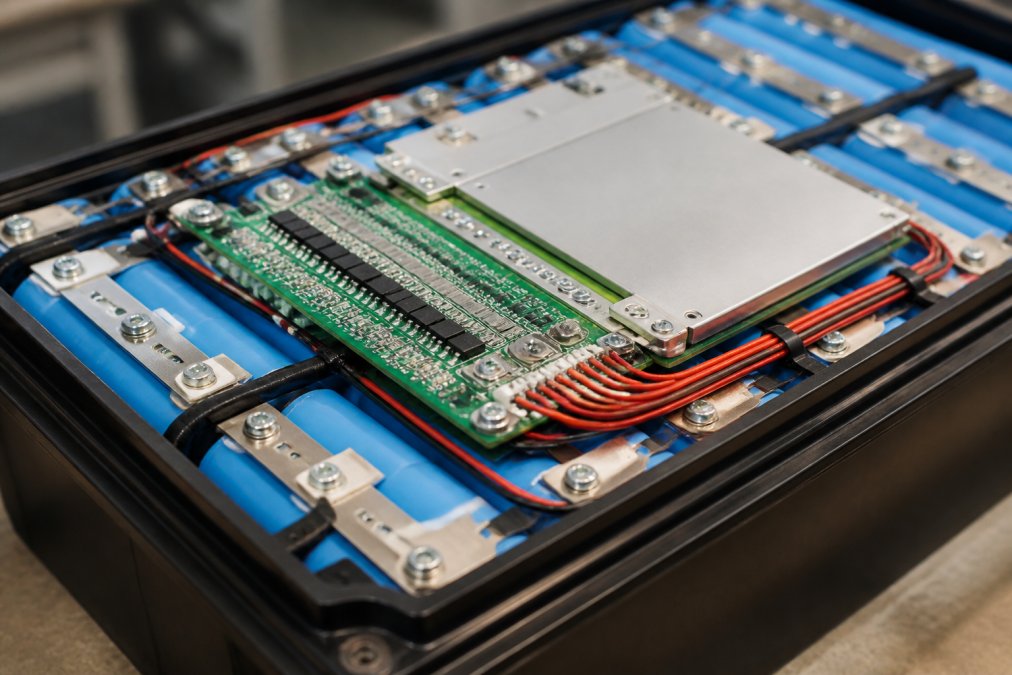
Battery management systems monitor the battery's state of charge, prevent overcharging and over-discharging, manage temperature, and balance cell voltages in multi-cell packs. The protection circuit board (PCB) sits between the battery cells and external load, continuously measuring voltage, current, and temperature. When parameters exceed safe thresholds, the PCB disconnects the battery from the circuit.
Thermal runaway occurs when a cell experiences uncontrolled temperature increase, triggering a chain reaction that can release flammable electrolyte and cause fires. The U.S. Consumer Product Safety Commission reported that lithium-ion battery burns increased 64.2% from 2,222 incidents in 2020 to 3,648 in 2024.
Protection Circuits and Thermal Runaway Prevention
Modern lithium-ion battery packs employ multiple redundant protection mechanisms. Overcharge protection prevents charging beyond maximum safe voltage. Over-discharge protection disconnects the battery when it falls below safe minimum voltage. Over-current protection limits maximum current delivery, protecting both battery and equipment from short circuits or excessive load.
Temperature monitoring is critical. Most BMS designs include thermistors that trigger disconnection if temperature exceeds safe thresholds, typically 60°C. Advanced designs incorporate thermal fuses that physically disconnect the battery if temperature becomes extreme.
Balancing is essential in multi-cell packs. A BMS with active or passive balancing ensures all cells remain within a narrow voltage range, maximizing cycle life and preventing weak cells from limiting pack capacity.
Lithium-Ion Battery Charging Best Practices
Most lithium-ion batteries benefit from constant current-constant voltage (CC-CV) charging. The charger initially supplies constant current until the battery reaches target voltage, then switches to constant voltage mode while allowing current to taper. This approach is gentler on cells than fast charging and preserves long-term capacity.
Charge lithium-ion batteries in a temperature range of 15-35°C. Cold charging is problematic; many BMS designs include low-temperature charging lockouts that prevent charging below 0°C to avoid lithium plating, where metallic lithium deposits on the anode and compromises cell integrity.
Depth of discharge (DoD) affects cycle life. Regularly discharging to 80% rather than 0% can extend cycle life by 50% or more. Avoid leaving batteries fully charged for extended periods; a battery at 100% state of charge degrades faster than one maintained at 50%. For storage longer than a few weeks, charge to 50% and store in a cool location. sizing battery storage.
Lithium Battery Safety Regulations and Compliance
Lithium-ion batteries are classified as dangerous goods by the U.S. Department of Transportation and International Air Transport Association due to fire risk during transport. Batteries intended for shipping must meet specific packaging and labeling requirements under DOT regulations.
The Consumer Product Safety Commission regulates lithium-ion batteries sold for consumer use. Manufacturers must ensure products meet safety standards and report incidents involving thermal runaway, fires, or injuries. Recent regulatory focus has intensified on batteries for e-commerce devices, personal mobility devices, and consumer electronics following a surge in reported incidents.
Workplace safety standards under OSHA require employers to establish procedures for safe handling, storage, and charging of lithium-ion batteries in industrial settings. For forklift operations and warehouse environments, proper training and maintenance protocols are essential.
CPSC regulations on lithium-ion battery safety establish mandatory testing and reporting requirements for manufacturers. Compliance violations can result in product recalls, fines, and legal liability.
Sealed Lead-Acid Battery Replacement with Lithium-Ion
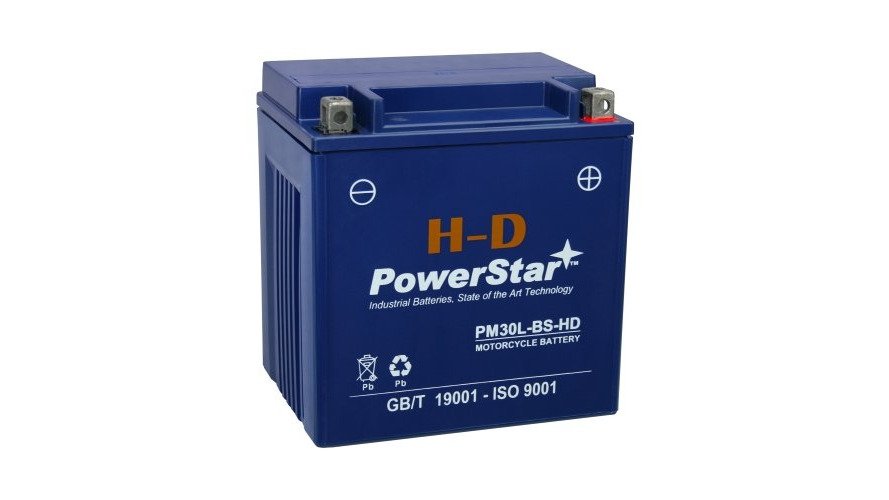
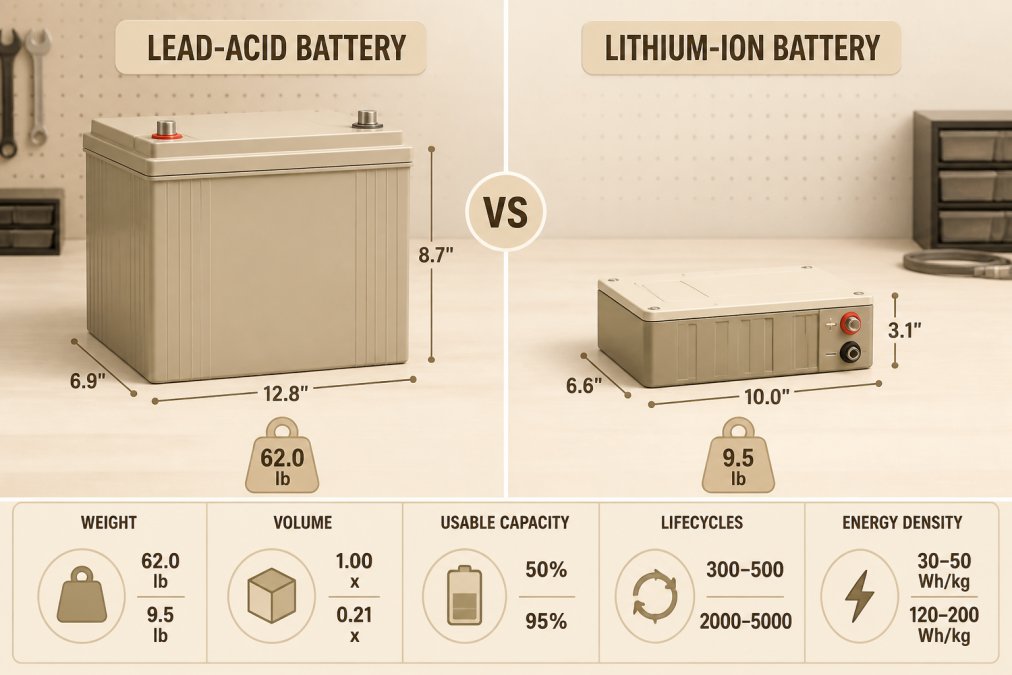
Sealed lead-acid batteries have dominated backup power and deep cycle applications for decades, but lithium-ion packs are rapidly displacing them. Lithium-ion packs can be engineered to match the voltage and form factor of lead-acid batteries.
Lead-acid batteries typically deliver 300-500 cycles, while lithium-ion packs deliver 2,000-7,000 cycles. Lithium-ion batteries weigh roughly one-third as much as lead-acid equivalents and maintain consistent voltage throughout discharge, while lead-acid voltage sags significantly, potentially causing equipment malfunction.
Lithium-ion packs cost more initially, but extended cycle life and reduced maintenance deliver lower total cost of ownership over 5-10 years. For critical applications like emergency lighting, backup power systems, and marine systems, the reliability advantage often justifies the premium.
When replacing lead-acid with lithium-ion, verify charger compatibility. Lead-acid chargers use different charging profiles than lithium-ion chargers and can damage lithium batteries. Most lithium-ion packs include an integrated BMS that prevents charging with incompatible chargers, but use the recommended charger for your specific battery pack.
Applications and Use Cases for Different Battery Packs
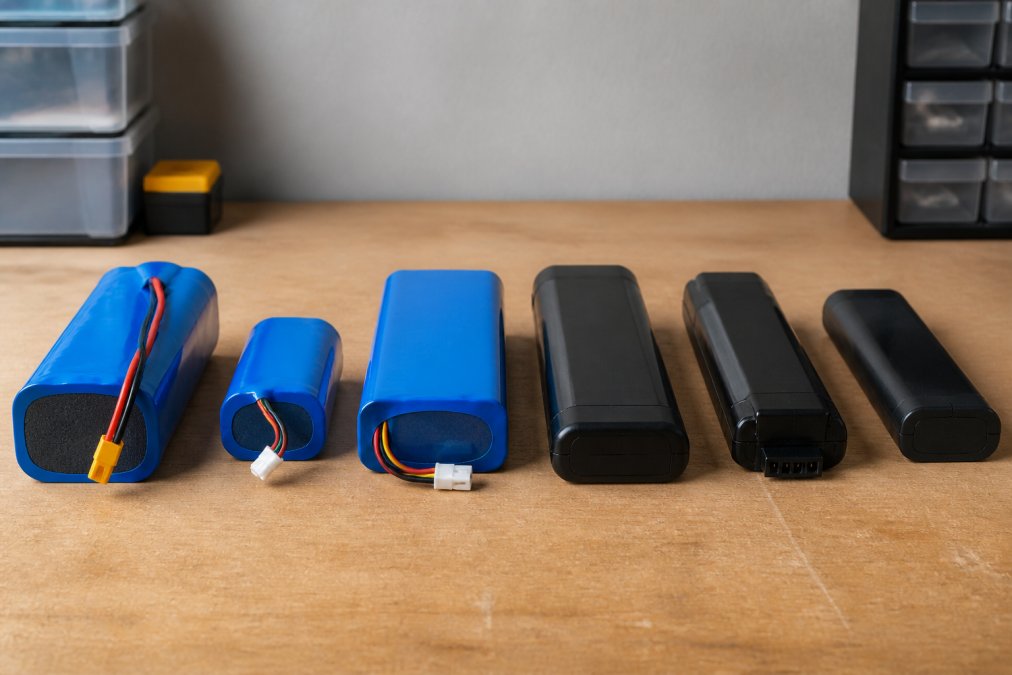
Lithium-ion battery packs serve vastly different roles depending on chemistry, capacity, and design.
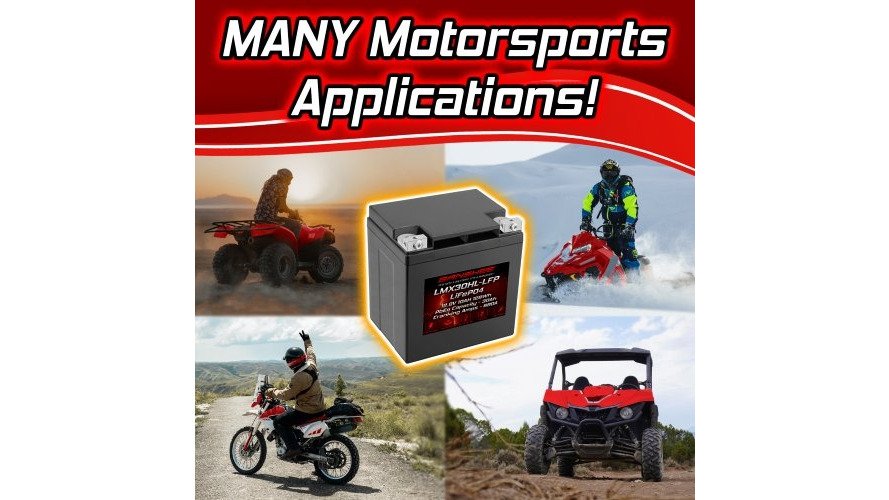
Marine and Recreational Applications: Deep cycle lithium-ion packs are ideal for boats, RVs, and off-grid cabins where weight, space, and reliability are critical. Extended cycle life means fewer replacements over the vessel's life. Marine environments demand corrosion-resistant terminals and sealed designs that tolerate vibration and moisture.
Automotive: The automotive segment commanded 84.35% of the North American lithium-ion battery market in 2025, according to Mordor Intelligence's North America Lithium-ion Battery Market analysis. EV batteries require high power density, thermal management systems, and sophisticated BMS architecture to balance hundreds of cells and manage heat during fast charging.
Stationary Energy Storage: Residential lithium-ion battery energy storage systems were valued at USD 1,520 million in 2024, reflecting growing adoption of home solar and grid-backup systems. These applications prioritize cycle life and thermal stability, making LiFePO4 the dominant chemistry.
Industrial and Forklift Fleets: Lithium-ion batteries increasingly replace lead-acid in warehouse and material handling equipment. A forklift powered by lithium-ion batteries can operate 2-3 shifts without charging, compared to lead-acid batteries requiring mid-shift charging and water maintenance.
Portable Power and Consumer Electronics: High energy density is critical for smartphones, laptops, and portable power banks. Cobalt-based chemistries dominate this segment because they deliver maximum runtime in the smallest form factor.
Troubleshooting and Failure Modes
Voltage Sag: If a battery delivers full voltage at no load but voltage drops dramatically under load, internal resistance is likely the culprit. Test with a multimeter under load to confirm. If internal resistance is the problem, the battery is near end of life and should be replaced.
Capacity Loss: A battery that charges but won't hold charge or delivers significantly less runtime has experienced capacity degradation. This is normal over time but accelerates if exposed to extreme temperatures, overcharged repeatedly, or stored fully charged for extended periods. Sudden capacity loss indicates a defective cell.
Thermal Issues: A battery that becomes hot during charging or discharging may have an internal short circuit or defective cell. Stop using it immediately and allow it to cool in a safe location away from flammable materials. Do not attempt to charge it again until you've confirmed the BMS is functioning correctly.
BMS Disconnection: If a battery won't charge or discharge despite appearing intact, the BMS may have disconnected due to a fault condition. Check battery voltage with a multimeter. If voltage is present but the battery won't deliver current, the BMS protection circuit has triggered. Allow the battery to rest for several hours in a cool location, then attempt to charge again. If the problem persists, the BMS has failed and the battery should be replaced.
Swelling or Deformation: Physical swelling indicates gas generation inside the cell, typically from overcharging, internal short circuit, or manufacturing defect. Swelling is a precursor to thermal runaway. Stop using the battery immediately, place it in a fireproof container, and dispose of it safely according to local hazardous waste regulations.
According to Southwest Research Institute's battery monitoring research, developing battery management systems using strain gauges and real-time monitoring can detect performance degradation and state of charge conditions that reduce overcharging and over-discharging risks while prolonging cycle life.
Choosing the right lithium-ion battery pack requires understanding the interplay between chemistry, voltage, capacity, and safety features. Whether you're replacing a lead-acid battery in an industrial application, powering a marine vessel, or backing up critical home systems, specifications and protection mechanisms matter enormously. Bigtime Battery's curated selection of lithium-ion and specialty battery packs, combined with expert guidance on specifications and compatibility, ensures you get reliable power solutions for your specific application. Browse our wide selection of replacement batteries today and find the exact pack your equipment needs.
Frequently Asked Questions
How long do lithium-ion battery packs last?
Lithium-ion battery packs typically last 2,500 to 7,000 charge cycles depending on chemistry and usage patterns. LiFePO4 batteries often reach 4,000-5,000 cycles or more, with some premium models rated for up to 5,000 cycles at 80% depth of discharge. Real-world lifespan is typically 10 years or longer. Research shows that normal driving conditions, frequent acceleration, braking, and rest periods, can extend battery life beyond laboratory predictions.
What is the best way to charge lithium-ion battery packs?
Charge lithium-ion batteries at a rate matching their C-rating (capacity divided by discharge time in hours). Avoid overcharging by using a charger with automatic cutoff. Store partially charged (30-80% capacity) for extended periods. Keep batteries at moderate temperatures during charging; excessive heat reduces cycle life. Prevent deep discharges when possible, and never leave batteries charging overnight without monitoring, as overcharging creates fire risk.
Are lithium-ion batteries subject to transportation regulations?
Yes, lithium-ion batteries are classified as dangerous goods by the Department of Transportation (DOT) and must follow strict shipping rules. Batteries shipped via air or ground require special labeling, packaging, and documentation. Spare batteries and battery packs face more restrictions than batteries installed in equipment. Consult DOT and carrier guidelines before shipping, and always use approved packaging materials to ensure compliance and safety.
Can I replace my sealed lead-acid battery with a lithium-ion battery pack?
Yes, lithium-ion batteries can replace sealed lead-acid batteries in many applications, offering 3-5 times longer cycle life and significantly lower weight. However, verify voltage compatibility (12V, 24V, 48V) and capacity (amp-hour rating). Some chargers designed for lead-acid may not work with lithium-ion; check BMS compatibility. Lithium-ion batteries cost more upfront but deliver lower total cost of ownership over their lifespan due to extended cycle life and reduced maintenance.
What safety certifications should I look for in lithium-ion battery packs?
Look for UL 2054 (battery safety) and UL 2271 (energy storage systems) certification. Batteries should include an integrated Battery Management System (BMS) with overcharge, over-discharge, over-current, and short-circuit protection. Check for thermal management features, especially if used in cold climates. Reputable manufacturers provide detailed specifications, safety data sheets, and warranty information. Avoid batteries lacking clear safety documentation or third-party testing credentials.