 ultimate-guide
Wholesale Specialty Battery Distribution Program
Table of Contents
- What Is a Wholesale Specialty Battery Distribution Program?
- Who Benefits From Wholesale Specialty Battery Distribution?
- The Wholesale Account Application Process
- B2B Bulk Pricing, Volume Discounts, and Cost Savings
- Specialty Battery Inventory Best Practices for Resellers
- Battery Recycling Rebate Programs and Lifecycle Management
- Reseller Program Support, Shipping, and SLA Replacement
- Frequently Asked Questions
Last Updated: August 13, 2026
What Is a Wholesale Specialty Battery Distribution Program?
A wholesale specialty battery distribution program is a business partnership that allows resellers, retailers, and commercial operators to purchase batteries in bulk at discounted rates while gaining access to inventory management support, technical resources, and logistics coordination. These programs are designed specifically for businesses that need reliable power solutions across multiple applications, from marine vessels and golf carts to emergency lighting systems and industrial equipment.
Unlike retail purchases, wholesale specialty battery distribution provides negotiated pricing structures, priority inventory allocation, and direct support from the supplier. Businesses join these programs to reduce per-unit costs, simplify procurement workflows, and maintain consistent stock levels for their customers or operations.
At Bigtime Battery, we've built our wholesale specialty battery distribution program around the reality that resellers and commercial buyers face distinct challenges. You need batteries that perform reliably, pricing that scales with your volume, and a supplier who understands your supply chain constraints. The program connects you directly with our inventory, technical expertise, and logistics team, eliminating the friction that typically comes with bulk purchasing.
Who Benefits From Wholesale Specialty Battery Distribution?
Several categories of businesses find wholesale specialty battery distribution essential to their operations.
Retail resellers and independent shops stock specialty batteries for customers who need replacements for medical devices, marine equipment, automotive applications, and emergency systems. Retail margins depend on competitive wholesale pricing and reliable inventory access. A distributor relationship ensures you're not caught without stock when a customer needs a replacement battery urgently.
Commercial fleet operators maintain large inventories of batteries for forklifts, golf carts, and material handling equipment. Managing these fleets means tracking dozens of battery types, managing replacement cycles, and coordinating logistics across multiple locations. Wholesale programs simplify this by consolidating orders, providing bulk pricing, and offering technical support for fleet-specific issues.
Property management and facilities teams are responsible for emergency lighting, exit signs, backup power systems, and UPS equipment across commercial buildings. Compliance requirements mean you need reliable access to the right battery types, and procurement efficiency directly impacts your operational budget.
Marine businesses and boat dealers stock deep cycle batteries, starting batteries, and auxiliary power solutions for vessels. Marine environments demand batteries built for specific conditions, vibration, moisture, salt exposure. Wholesale programs that specialize in marine-grade batteries ensure you're sourcing products that won't fail in the field.
Homeowners and DIY enthusiasts who operate sump pump systems, emergency lighting, GPS devices, or backup power equipment often benefit from wholesale pricing when they need multiple units or plan for future replacements.
Small business owners looking to become authorized distributors can access wholesale specialty battery distribution programs to build a distribution network, stock inventory, and offer batteries to their own customer base.
The Wholesale Account Application Process
Joining a wholesale specialty battery distribution program involves a structured application workflow designed to verify your business legitimacy, assess creditworthiness, and establish the right account terms for your volume and use case.
Step-by-Step Application Requirements
Step 1: Complete the Wholesale Account Application Form
Begin by submitting a formal wholesale account application. This form captures essential business information: your legal business name, physical address, type of business (retailer, distributor, fleet operator, commercial facility, etc.), and the primary battery categories you intend to purchase.
The application also asks about your anticipated order volume and frequency. This information helps the distributor understand your needs and recommend appropriate pricing tiers and inventory management tools.
Step 2: Provide Business Verification Documentation
Distributors require proof that your business is legitimate and legally registered. Standard documentation includes:
- Business license or certificate of good standing
- Tax identification number (EIN or equivalent)
- Proof of physical business location (utility bill, lease agreement, or property deed)
- Business formation documents (articles of incorporation, partnership agreement, or sole proprietorship registration)
This verification step protects both the distributor and ensures you're a qualified business partner, not a consumer attempting to access wholesale pricing.
Step 3: Submit Financial and Credit Information
Wholesale accounts typically involve net-30 or net-60 payment terms, meaning you receive an invoice and pay within 30 to 60 days rather than paying upfront. To approve these terms, the distributor conducts a credit evaluation.
You'll provide:
- Business financial statements (profit and loss, balance sheet) or bank statements demonstrating financial stability
- Personal guarantee information if you're a sole proprietor or small business owner
- Trade references from other suppliers you've worked with
- Authorization for a credit check
Step 4: Specify Your Reseller or Operational Requirements
Clarify how you intend to use the batteries. Are you stocking them for retail resale? Operating a fleet that needs ongoing replacements? Managing commercial facilities? Your intended use affects which battery types you'll prioritize, what inventory levels make sense, and what kind of technical support you'll need.
If you're a reseller planning to market batteries under your own brand or as part of your retail offering, mention this clearly. Distributors sometimes offer co-marketing support or branded packaging options for qualified resellers.
Step 5: Establish Account Terms and Pricing Tiers
Once your application is approved and credit is verified, the distributor assigns you to a pricing tier based on your anticipated volume. Volume brackets typically look like this:
- Tier 1: Orders under 50 units per month
- Tier 2: Orders 50-200 units per month
- Tier 3: Orders 200-500 units per month
- Tier 4: Orders exceeding 500 units per month
Each tier carries different per-unit pricing, minimum order quantities, and access to specialized services like drop-shipping or dedicated account management.

Vendor Verification and Credit Approval
After you submit your application, the distributor's credit team conducts vendor verification. This process typically takes 5-10 business days.
The team reviews your business documentation, contacts your trade references, and may pull a business credit report. They're assessing whether your business has a track record of paying suppliers on time and whether your stated business purpose aligns with your application.
If you're a startup or new business with limited credit history, you may be asked to provide a personal guarantee (the business owner personally commits to paying invoices) or prepay your first order. Established businesses with strong credit histories often move directly to approved net-30 terms.
Once approved, you'll receive account credentials, access to the distributor's online ordering portal, and contact information for your dedicated account representative. At this point, your wholesale account is active and you can begin placing orders at negotiated wholesale pricing.
B2B Bulk Pricing, Volume Discounts, and Cost Savings
The financial advantage of wholesale specialty battery distribution comes from volume-based pricing structures. Rather than paying retail prices for every unit, your per-unit cost decreases as your order volume increases.
Most distributors offer tiered pricing that rewards larger orders. The per-unit savings compound across your annual purchasing volume.
Beyond per-unit discounts, wholesale programs often include additional cost-saving mechanisms. Minimum order quantities may be lower for established accounts, reducing the cash tied up in inventory. Some distributors offer seasonal promotions, end-of-quarter clearance pricing, or rebate programs for high-volume purchases.
Bulk purchasing also reduces your procurement overhead. Instead of managing dozens of small orders and paying transaction fees on each, you consolidate buying into fewer, larger orders. This simplifies accounting, reduces payment processing costs, and frees your team to focus on selling rather than sourcing.
For resellers, these cost savings translate directly to competitive retail pricing or improved margin. For fleet operators and commercial facilities, the savings accumulate across hundreds or thousands of units annually, meaningfully reducing operational expenses.
Specialty Battery Inventory Best Practices for Resellers
Managing specialty battery inventory as a reseller requires balancing stock depth with cash flow and shelf space. Overstock ties up capital; understock costs you sales and damages customer relationships when you can't fulfill orders.
Start by analyzing your sales history. Which battery types move fastest? Which applications drive your highest-margin sales? Track your inventory turns, how quickly you sell through a given battery type. Fast-moving items (deep cycle batteries for marine customers, replacement batteries for medical devices) warrant higher stock levels. Slow-moving specialty batteries might justify just-in-time ordering.
Segment your inventory by application. Marine batteries, automotive batteries, golf cart batteries, and emergency lighting batteries serve different customer bases with different seasonal patterns. Marine sales peak in spring and summer; emergency lighting demand spikes before hurricane season. Adjust your stock levels to match these patterns.
Implement a first-in, first-out (FIFO) rotation system. Batteries have shelf lives. Older inventory should move out before newer stock. Label your shelves with dates and train staff to pull older batteries first. This prevents dead inventory and customer complaints about receiving aged batteries.
Establish reorder points for your top-moving items. When inventory drops below a threshold, automatically trigger a new order. This prevents stockouts while minimizing excess inventory. Your wholesale distributor can often help you identify appropriate reorder points based on your sales velocity.
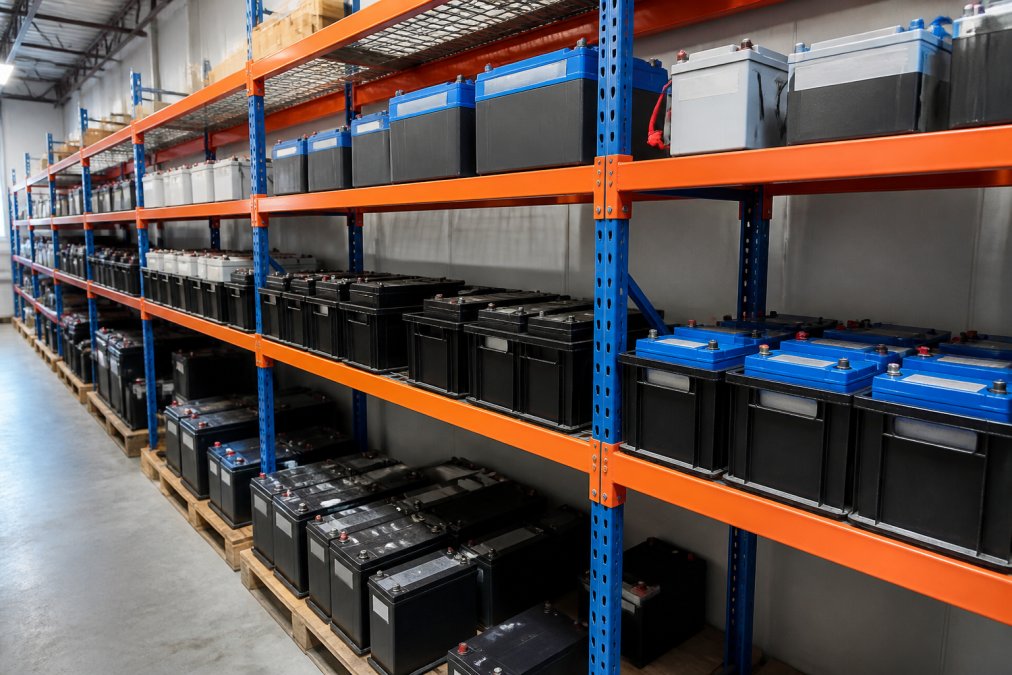
Use your distributor's online ordering portal to monitor stock levels and place orders efficiently. Many platforms provide inventory forecasting tools, sales analytics, and automated reorder suggestions. use these features to reduce manual work and improve ordering accuracy.
Consider drop-shipping arrangements for slower-moving items or specialty batteries with long lead times. Rather than stocking every possible SKU, arrange with your distributor to ship directly to your customer. This reduces your inventory carrying costs while still allowing you to offer a broad selection.
Battery Recycling Rebate Programs and Lifecycle Management
Environmental regulations require proper disposal of used batteries. Many wholesale distributors operate battery recycling rebate programs that offset the cost of responsible disposal while incentivizing resellers to channel old batteries back through the supply chain.
These programs typically work by offering a credit or rebate when you return used batteries to the distributor. The distributor consolidates batteries from multiple resellers, coordinates with certified recycling facilities, and ensures proper handling of hazardous materials. The rebate compensates you for the logistics effort and encourages participation.
Participating in a recycling program provides several benefits. It demonstrates environmental responsibility to your customers, particularly important for commercial facilities and marine businesses facing increasing sustainability expectations. It reduces your disposal costs since the rebate offsets or eliminates tipping fees. It also simplifies compliance with state and federal battery disposal regulations.
Beyond rebates, lifecycle management means educating your customers about battery longevity and replacement timing. A deep cycle battery typically lasts 4-6 years under normal use; marine batteries in harsh environments may need replacement sooner. By helping customers understand when replacement is due, you build loyalty, reduce warranty claims, and generate predictable repeat sales.
Some distributors provide technical resources, failure analysis guides, performance data, application notes, that help you and your customers understand which battery types suit specific use cases. This expertise builds trust and positions you as a knowledgeable partner rather than a commodity seller.
Reseller Program Support, Shipping, and SLA Replacement
Wholesale specialty battery distribution programs succeed when distributors provide active reseller support. This includes technical assistance, marketing resources, and reliable logistics.
Technical support means access to engineers or product specialists who can help you troubleshoot customer issues, recommend the right battery for a specific application, or explain performance differences between battery chemistries. A reseller who can confidently answer customer questions closes more sales and reduces returns.
Marketing support might include co-branded materials, sample inventory for demonstrations, or customer education resources. Some distributors provide reseller training programs covering product specifications, safety standards, and application best practices.
Shipping and logistics are critical. A distributor that offers multiple shipping options, standard ground, expedited, or drop-ship, gives you flexibility to meet customer expectations. Some programs include free shipping above certain order thresholds, reducing your landed costs.
SLA (Service Level Agreement) replacement policies protect you when batteries arrive damaged or defective. A strong SLA commits the distributor to replacing defective units within a specified timeframe, typically 24-48 hours, at no cost. This protects your reputation with customers and eliminates friction from warranty claims.
Reliable inventory availability is equally important. A distributor that frequently backlogs orders or delays shipments creates operational headaches. Evaluate distributors based on their track record for on-time delivery and inventory fill rates. Ask for references from existing resellers about their actual shipping performance.
Joining a wholesale specialty battery distribution program transforms how you source batteries, manage inventory, and serve your customers. The application process is straightforward, the cost savings are meaningful, and the operational support simplifies your supply chain.
Bigtime Battery's wholesale specialty battery distribution program combines competitive volume pricing, technical expertise, and reliable logistics to support resellers, fleet operators, and commercial facilities. With a wide selection of replacement batteries spanning marine, automotive, medical, and industrial applications, plus dedicated account support and flexible shipping options, Bigtime Battery helps you stock the right batteries and grow your business efficiently.
Frequently Asked Questions
What are the requirements to qualify for a wholesale battery distribution account?
To qualify for a wholesale specialty battery distribution account, you typically need to be a registered business entity with a valid tax identification number and business license. Most wholesale programs require a minimum credit application and vendor verification process. You'll need to provide business documentation, proof of resale authority, and sometimes a minimum order commitment. Contact Bigtime Battery directly for specific qualification criteria and the current application requirements for your business type.
How do volume discounts work in wholesale specialty battery programs?
Wholesale specialty battery distribution programs offer tiered volume discounts that increase as your order quantities grow. Larger bulk orders typically unlock better per-unit pricing, which directly improves your margins and total cost of ownership. Discounts may vary by battery type, deep cycle, lithium-ion, lead-acid, and specialty batteries often have different pricing structures. Contact Bigtime Battery for a wholesale account to receive a detailed pricing sheet showing how your volume discounts scale.
What happens if batteries arrive damaged or don't work out of the box?
Reputable wholesale battery suppliers like Bigtime Battery offer replacement guarantees and return policies for defective batteries. Most programs include SLA replacement terms that guarantee working batteries or quick replacements at no cost. If you receive dead batteries or damaged stock, document the issue immediately, contact customer service with photos or details, and request a replacement shipment. This protects your business from downtime and ensures you can fulfill orders to your own customers without delay.
How do battery recycling rebate programs reduce costs for resellers?
Battery recycling rebate programs allow you to return used or end-of-life batteries and receive credits toward future purchases. These programs support lifecycle management, reduce disposal costs, and provide financial incentives that offset your inventory expenses. By participating in battery recycling rebate programs, resellers can lower their total cost of ownership while meeting environmental compliance standards. Ask Bigtime Battery about available recycling programs and how credits apply to your wholesale account.