 ultimate-guide
Sump Pump Battery Maintenance Guide: 2026
Table of Contents
- Understanding Your Sump Pump Battery System
- Signs Your Sump Pump Battery Is Failing
- How to Test Sump Pump Battery Backup Systems
- Step-by-Step Battery Cleaning and Inspection
- Sump Pump Battery Replacement Frequency
- Sump Pump Battery Troubleshooting and Common Issues
- Seasonal Maintenance Schedule
- Battery Disposal and Recycling
- Frequently Asked Questions
Last Updated: August 11, 2026
Understanding Your Sump Pump Battery System
Your sump pump backup battery prevents thousands of dollars in water damage when the power goes out. Unlike the primary pump that runs on household electricity, the backup system activates automatically during outages, keeping water from accumulating in your sump pit. When power cuts out, the float switch detects rising water levels and signals the backup pump to activate. The battery supplies DC power to an inverter, which converts it to AC power for the pump. This entire sequence happens automatically, but only if your battery is in working condition.
Lead-Acid vs. AGM Batteries
Two main battery types power sump pump backup systems: traditional lead-acid (wet cell) and absorbent glass mat (AGM) batteries. Lead-acid batteries use liquid electrolyte and require periodic water top-ups. They're less expensive upfront but demand more hands-on maintenance.
AGM batteries are sealed units with electrolyte absorbed into glass mats. They don't require water additions and handle vibration and temperature swings better than wet cell designs. AGM batteries cost more initially but often outlast lead-acid alternatives and eliminate maintenance hassle. Both types are deep cycle batteries designed to discharge and recharge repeatedly without damage. A larger capacity battery (measured in amp-hours) means longer runtime during outages.
How Backup Power Works During Outages
When utility power fails, your sump pump backup system activates automatically. The float switch detects water and triggers the backup pump. The battery supplies direct current (DC) power at 12 or 24 volts, depending on your system. An inverter converts this DC power into alternating current (AC) at 120 volts, matching your pump's normal voltage.
A typical backup system draws 10-15 amps during pump operation. A 100 amp-hour battery can theoretically power the pump for 6-10 hours, though actual runtime depends on how frequently the pump cycles. A failing battery won't deliver full voltage, causing the inverter to work harder and the pump to run less efficiently.
Signs Your Sump Pump Battery Is Failing
Most sump pump batteries last 3-5 years before capacity degrades noticeably. A slow or sluggish pump startup signals voltage issues. When you test the system manually, the pump should engage instantly.
Corrosion on battery terminals indicates chemical reactions that reduce conductivity. White, blue, or green crusty deposits on the terminals mean current flow is restricted. Strange odors coming from the battery housing suggest electrolyte leakage or internal failure. A rotten-egg smell indicates sulfation and means replacement is imminent.
Backup system alerts on smart monitoring devices provide early warning before complete failure. Physical damage to the battery case, cracks, or visible leaks mean replacement is urgent.
How to Test Sump Pump Battery Backup Systems
Testing your backup system regularly confirms it will work when you need it. A simple monthly test takes five minutes. Most sump pump systems have a dedicated test switch that simulates a power outage by disconnecting the primary pump and activating the backup.
Locate the test switch on your backup system control panel. Press it and listen for the pump to start within 2-3 seconds. If there's a delay, the pump runs weakly, or nothing happens, your battery needs testing with a multimeter.
Voltage Testing With a Multimeter
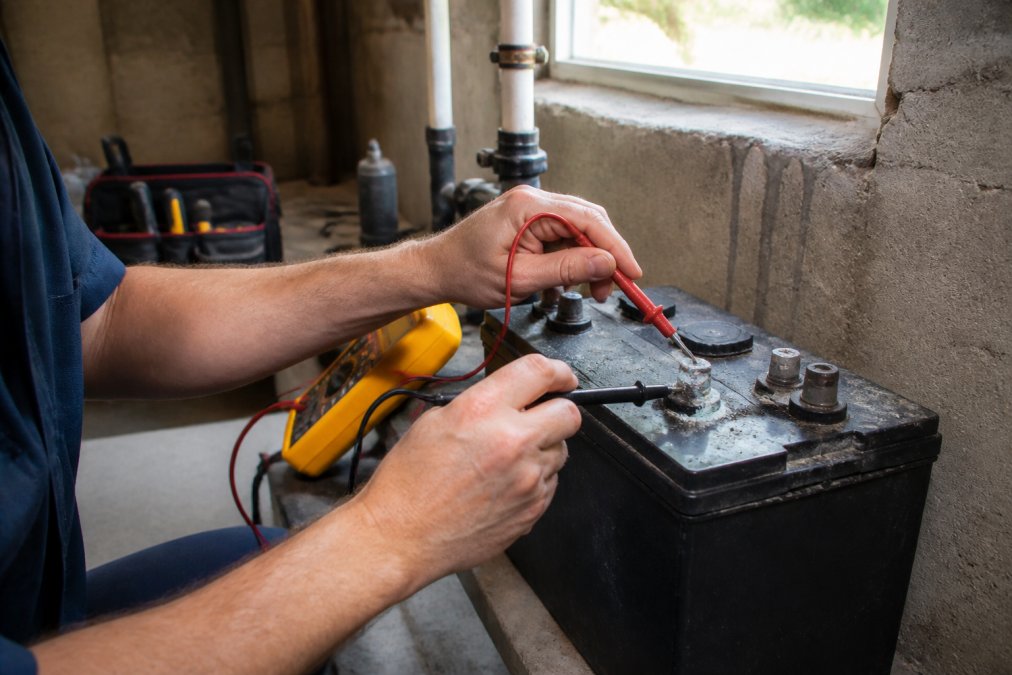
A multimeter measures electrical voltage, allowing you to determine if your battery is holding a proper charge. Set the multimeter to DC voltage mode. Most sump pump batteries operate at 12 or 24 volts, check your system documentation.
Touch the red probe to the positive terminal and the black probe to the negative terminal. A healthy 12-volt battery reads between 12.6 and 13.2 volts when fully charged. A reading below 12 volts indicates the battery isn't holding a full charge. Anything below 11 volts means the battery is critically weak. Record multiple readings over several days to establish a baseline and track changes.
Load Testing vs. Voltage Testing
Voltage testing tells you the battery's charge state, but not its ability to deliver current under load. A battery might read 12.8 volts but fail to power your pump because internal damage prevents it from delivering the 10-15 amps the pump requires.
Load testing applies actual electrical demand to the battery and measures how voltage holds up under stress. A simple load test uses a battery charger with a built-in load tester. A healthy battery maintains voltage above 9.6 volts during a 10-amp load. A battery that drops below 9.6 volts under load is failing and should be replaced.
Step-by-Step Battery Cleaning and Inspection
Corrosion on battery terminals reduces conductivity and can prevent your backup system from functioning. A thorough cleaning takes 15-20 minutes and requires only basic tools. Safety is critical when working with lead-acid batteries.
Disconnect the battery from the system before cleaning. Most sump pump systems have a disconnect switch or breaker, flip it to the off position. Wear safety glasses and nitrile gloves. Lead-acid battery electrolyte is sulfuric acid and will burn skin on contact.
Cleaning Terminal Corrosion
Identify the corrosion, white, blue, or green crusty deposits on the battery terminals and cable connectors. Use a wire brush or small brass brush to scrub away loose corrosion. For stubborn corrosion, make a paste of baking soda and water. Apply it to the corroded area and let it sit for 5 minutes. The alkaline baking soda neutralizes the acidic corrosion. Scrub again with the wire brush, then wipe clean with a damp cloth.
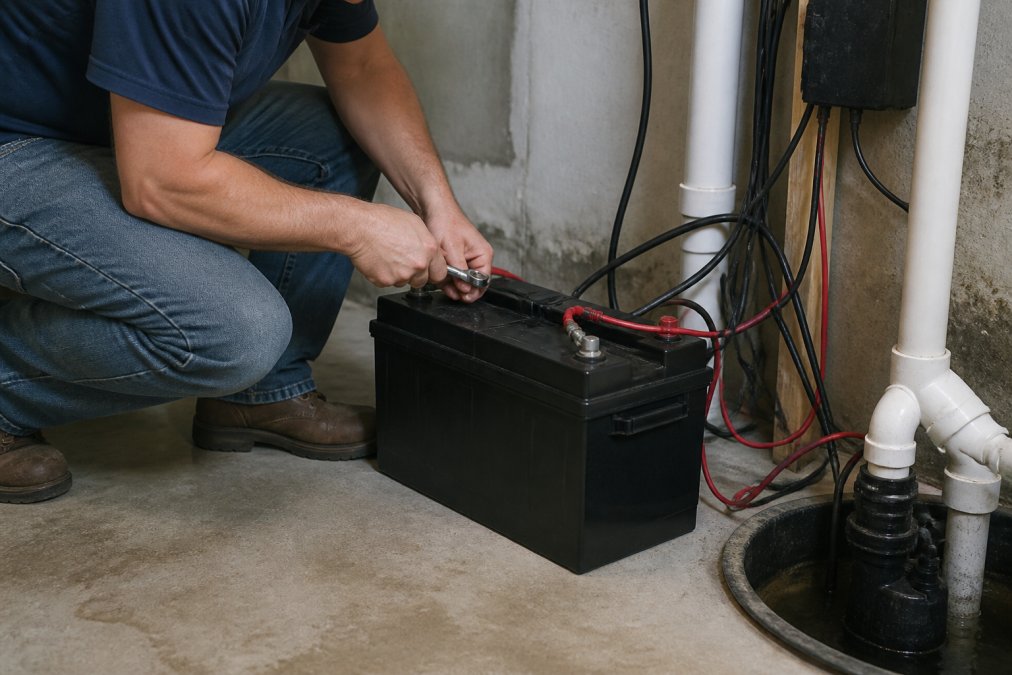
After cleaning, inspect the cable connectors. Loosen the cable clamp nuts and slide the connectors off the terminals. Clean the inside of the connectors with the wire brush. Reconnect firmly, the connection should be tight enough that you can't twist the connector by hand.
Checking Electrolyte Levels
Only wet cell (lead-acid) batteries require electrolyte checks. AGM batteries are sealed and don't need this maintenance.
Remove the cell caps from the top of the battery. Look inside each cell, you should see electrolyte covering the internal plates. The level should be about 1/2 inch above the plates. If electrolyte is low, add distilled water only. Never use tap water, minerals in tap water damage the battery. If electrolyte is consistently low across multiple cells, the battery is losing water through evaporation or leakage, indicating the battery is aging and replacement should be scheduled soon.
Sump Pump Battery Replacement Frequency
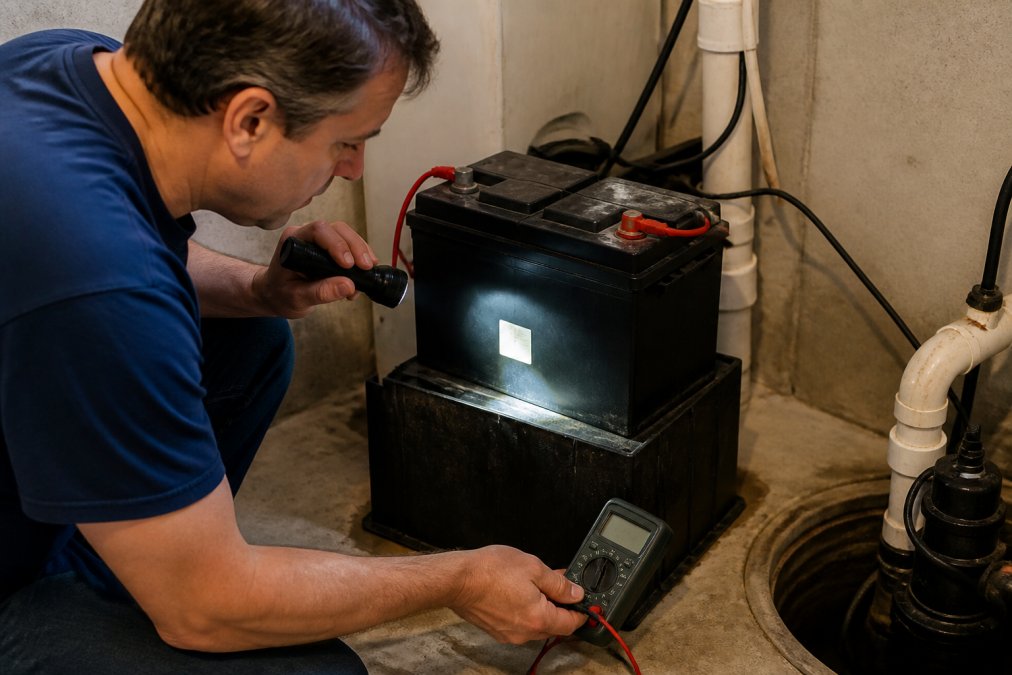
Most sump pump batteries need replacement every 3-5 years. This timeline varies based on how often your system runs and how well you maintain the battery. The best indicator of replacement timing is performance. If your battery fails a load test, voltage drops below 12 volts at rest, or the system shows delayed startup, replacement is necessary regardless of age.
Keep a record of your battery's installation date. Most batteries have a date code printed on the case. Plan replacement before failure. Waiting until your battery completely dies means you'll be shopping in an emergency, possibly during a storm when backup power is most critical. Schedule replacement when your battery reaches 4 years old, or sooner if testing indicates declining capacity.
Bigtime Battery offers replacement batteries for a wide array of sump pump system configurations.
Sump Pump Battery Troubleshooting and Common Issues
Backup system failures usually trace back to battery problems, but not always. Understanding what different symptoms mean helps you diagnose issues quickly.
Backup System Alerts and What They Mean
A low voltage alert means the battery isn't holding a full charge. This could indicate the battery is aging, the charger isn't working properly, or there's a loose connection preventing the charger from topping up the battery. Check your charger first. Confirm it's plugged in and the indicator light shows it's actively charging. If the charger light is off, the charger might be dead and needs replacement.
A high voltage alert indicates the charger is overcharging the battery. This can happen if the charger's voltage regulator fails. If you see a persistent high voltage alert, the charger needs replacement.
A system failure alert without specific voltage information usually means the inverter isn't converting DC power to AC properly, or the float switch isn't detecting water level correctly. These issues aren't battery-related and require professional service.
Smart Monitoring Integration
Newer backup systems include Wi-Fi or cellular connectivity that sends alerts to your phone when the battery voltage drops or the system activates during a power outage. Check your system's app regularly, don't just ignore notifications. A low voltage alert today means you should schedule battery testing and replacement within the week.
Seasonal Maintenance Schedule
Your sump pump battery experiences different stresses depending on the season. Adjusting your maintenance routine seasonally keeps the battery in peak condition year-round.
Spring (March-May): Heavy rain increases pump activity. Perform a full inspection including voltage and load testing. Clean any corrosion that accumulated over winter. Check electrolyte levels in wet cell batteries and top off if needed. Test your system's backup function to confirm it starts reliably.
Summer (June-August): Heat reduces battery lifespan. Ensure the battery housing has adequate ventilation. Check voltage monthly, heat causes faster self-discharge, so readings might be lower than in cooler months.
Fall (September-November): Prepare for winter storms by scheduling a full load test. If your battery is 4+ years old, replace it before winter arrives. Clean the battery and terminals thoroughly.
Winter (December-February): Cold reduces battery capacity, so voltage readings will be lower than summer readings. However, if voltage is below 12 volts even after the battery has warmed indoors, the battery is losing capacity.
Battery Disposal and Recycling
Lead-acid batteries contain toxic materials including lead and sulfuric acid. Most states regulate lead-acid battery disposal and require proper recycling.
Call your local solid waste management facility or environmental agency to find approved recycling centers in your area. Many auto parts retailers accept used batteries and offer credit toward new battery purchases. Never store a dead battery indefinitely. When transporting a used battery, keep it upright to prevent spillage. Wear gloves when handling and avoid touching your face until you've washed your hands thoroughly.
Protecting your home from water damage means maintaining the backup system you rely on during power outages. A properly maintained sump pump battery will start reliably when you need it most, keeping your basement dry through storms and extended electrical failures. Regular testing, seasonal maintenance, and timely replacement ensure your backup power system performs when it matters. When you're ready to replace an aging battery, Bigtime Battery offers the exact replacement you need with expert guidance to match the right battery to your specific system configuration.
Frequently Asked Questions
How often should a sump pump battery be replaced?
Most lead-acid sump pump batteries last 4-6 years under normal conditions. AGM batteries may extend to 7-10 years with proper maintenance. The lifespan depends on how often your backup system cycles, ambient temperature, and whether you perform regular maintenance. Check your battery's date code and voltage annually to catch decline early. When voltage drops below 12.6V at rest, replacement is due soon.
How do I test my sump pump battery backup system?
Use a multimeter to measure voltage: a healthy battery reads 12.6-12.8V at rest. For a practical test, unplug the primary pump and let the backup system run for 5-10 minutes, then check voltage again. Perform a load test annually by applying a 300A load for 15 seconds; voltage should stay above 9.6V. If voltage drops rapidly or the backup pump fails to activate, the battery needs replacement or the charger needs inspection.
What are the signs that a sump pump battery is failing?
Watch for slow cranking when the backup pump activates, a swollen or cracked battery case, visible terminal corrosion, sulfation (white or blue deposits on terminals), or a rotten-egg smell (hydrogen gas from the electrolyte). Backup system alerts on your control panel, failure to hold a charge, or voltage below 12V also indicate failure. If the battery is more than 5 years old and shows any of these signs, replacement is your safest option to prevent basement flooding.
How much distilled water should I add to a sump pump battery?
For wet-cell lead-acid batteries, add distilled water only when the electrolyte level drops below the minimum line on the battery case, typically visible through translucent sides. Add just enough distilled water to reach the maximum line, usually 1/4 to 1/2 inch per cell. Never overfill; excess water dilutes the electrolyte and reduces performance. Check levels every 3 months during heavy use, and always use distilled water, never tap water, which contains minerals that damage the battery.
Do sealed AGM batteries need maintenance?
Sealed AGM batteries require minimal maintenance compared to wet-cell batteries. You do not need to add water, and they are safer to handle because they do not leak acid. However, you should still test voltage annually, clean terminal corrosion, ensure proper ventilation around the battery, and verify that your charger is set to the correct AGM charging profile. Overcharging an AGM battery shortens its lifespan, so confirm your charger supports AGM trickle charging.
What should I do if my sump pump battery is completely dead?
First, check that the battery charger is connected and functioning; a faulty charger may prevent charging. Inspect terminals for corrosion and clean them if needed. If the battery still will not charge after 24 hours, it is sulfated or internally damaged and must be replaced. Do not attempt to jump-start a sump pump battery with a car battery, as the voltage and amperage mismatch can damage your backup pump. Order a replacement deep-cycle battery rated for your system's amperage.
How do I safely dispose of an old sump pump battery?
Lead-acid batteries are hazardous waste and must not be thrown in the trash. Many retailers that sell batteries, including big-box hardware stores, accept old batteries for recycling at no charge. You can also contact your local waste management facility for hazardous waste collection events. Some auto-parts stores and battery suppliers offer mail-back programs. Recycling recovers lead, plastic, and sulfuric acid for safe reuse, protecting the environment and complying with federal regulations.
Should I leave my sump pump plugged in all the time?
Yes, your primary sump pump should remain plugged in continuously so it can respond to water automatically. The backup battery system is designed to take over during power outages, so the primary pump's constant availability ensures normal drainage. However, if you are away for extended periods, you may unplug the primary pump to save electricity, but only if you manually monitor the sump pit or disable the system. Never leave the pit unattended without automatic pumping active.