 comparison
Marine Battery Brands 2026: AGM vs Lithium
Table of Contents
- Marine Battery Brands: What's Changed in 2026
- Lithium vs AGM Marine Battery Technology
- Choosing the Right Battery Capacity and Type
- Marine Battery Maintenance Tips for Longevity
- Battery Weight, Installation, and Cold Weather Performance
- Lifespan, Cycle Life, and Real-World Durability
- Bigtime Battery: Reliable Marine Battery Solutions
- Frequently Asked Questions
Last Updated: September 28, 2026
Marine Battery Brands: What's Changed in 2026
If you're comparing marine battery brands this year, you're navigating a landscape fundamentally different from 12 months ago. The shift toward lithium-ion is real, but the reality is more nuanced than "lithium is always better." At Bigtime Battery, we've watched boat owners wrestle with this decision repeatedly. The wrong choice costs money and downtime; the right one delivers years of reliable power.
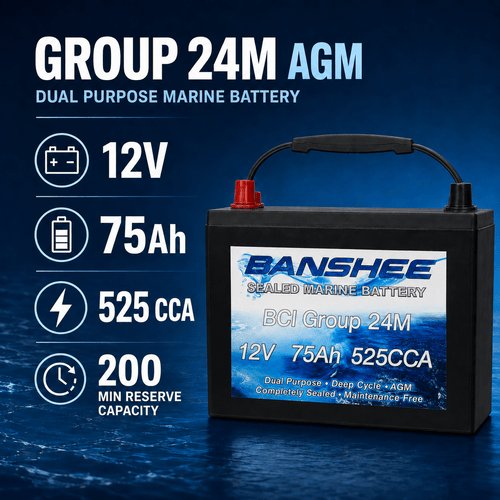
Banshee Group 24 AGM
This guide cuts through the marketing noise and shows you how to pick the right marine battery brands for your specific situation and vessel.
Lithium vs AGM Marine Battery Technology
The core decision for most marine applications comes down to two chemistries: AGM and lithium iron phosphate. Both have legitimate advantages. Neither is universally superior.
AGM (Absorbent Glass Mat) Batteries
AGM batteries use fiberglass mats to absorb electrolyte, creating a sealed, maintenance-free design. They've dominated marine applications for years because they work reliably across diverse conditions.
AGM batteries deliver excellent cranking amps for starting engines and handle vibration resistance well, critical on a boat where equipment takes constant shock. They're also forgiving with installation. AGM doesn't require sophisticated battery management systems, so integration with older marine electronics is straightforward. According to Hydrocell's 2026 marine battery analysis, AGM batteries remain the standard for most recreational vessels because they balance performance, cost, and ease of use.
The downside is cycle life. An AGM battery typically delivers 400-600 full discharge cycles before capacity degrades meaningfully.
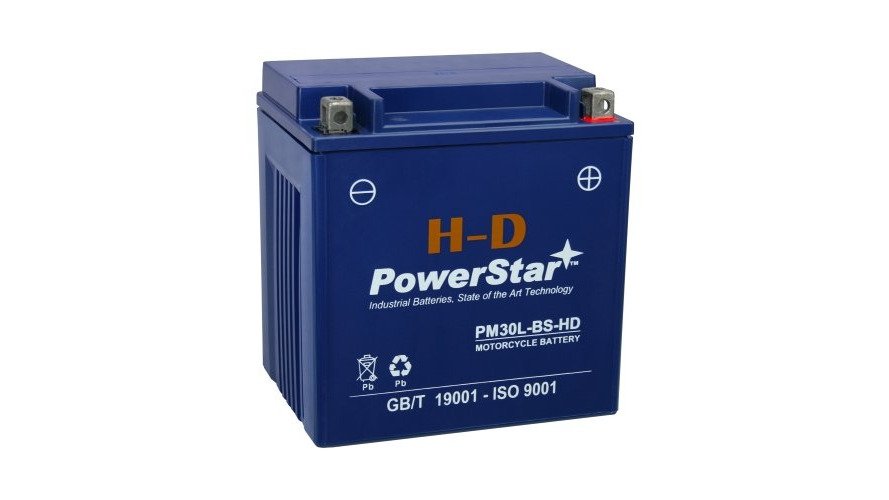
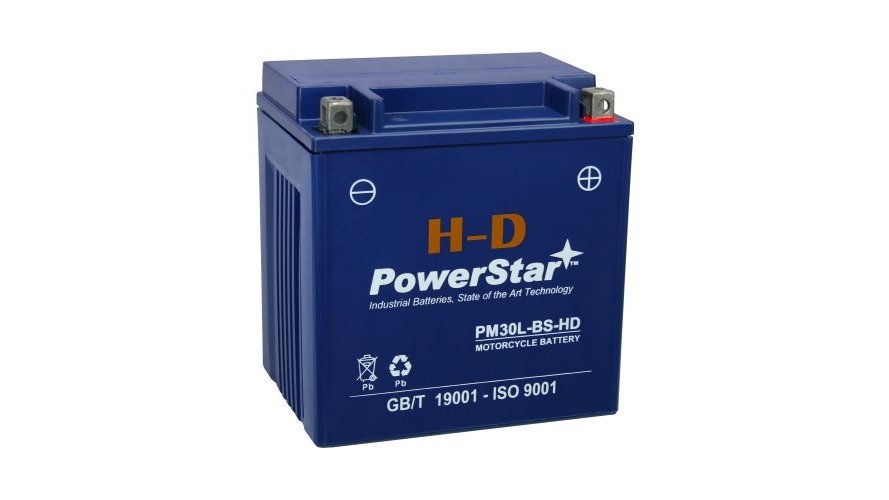
PowerStar's 12V 80AH AGM batteries from Bigtime Battery offer sealed lead-acid construction with a 2-year warranty and maintenance-free operation, delivering reliable power with insert terminals and exceptional deep discharge recovery.
Lithium Iron Phosphate (LiFePO4) Batteries
Lithium iron phosphate chemistry delivers 3,000-5,000 full discharge cycles and weighs significantly less while maintaining voltage stability. Lithium handles partial discharge cycles better, allowing safe use of 80% of capacity without degradation.
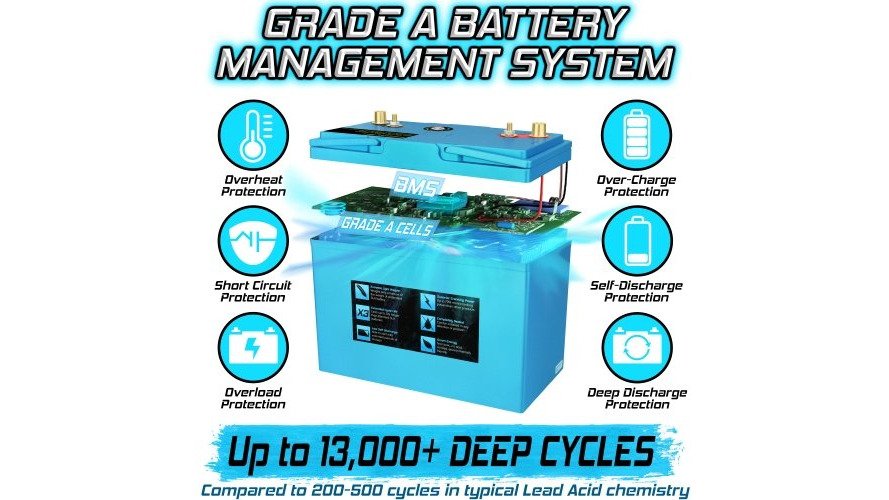
The barrier is cost and complexity. Lithium batteries require a battery management system to prevent thermal runaway and monitor state of charge. They're sensitive to cold weather, a 50-degree temperature drop can reduce capacity by 20-30%, and integration with marine electronics demands more planning since not every boat's charging system is optimized for lithium's voltage profiles.
According to Mordor Intelligence's marine battery growth analysis, the market is growing at a CAGR of 8.29% through 2031, driven primarily by lithium adoption in new vessel construction. However, retrofit applications still favor AGM because the infrastructure exists.
Choosing the Right Battery Capacity and Type
Selecting the correct amp-hour rating and battery type depends on your actual power demands, not what sounds impressive.
Banshee Group 24 AGM battery →
Deep Cycle vs Starting Batteries
Starting batteries deliver high cranking amps for engine ignition but prioritize burst capacity over longevity. Deep cycle batteries handle sustained discharge and repeated partial discharges without degradation, required for trolling motors, navigation electronics, cabin lighting, and refrigeration. These are not interchangeable, a starting battery discharged repeatedly will fail within weeks, while a deep cycle battery will underperform on cranking amps. Dual-purpose batteries compromise on both metrics and suit only small boats with modest demands.
Amp-Hours and Reserve Capacity Explained
Amp-hours measure how much current a battery can deliver over one hour; a 100-amp-hour battery delivers 100 amps for one hour or 50 amps for two hours. Reserve capacity measures how many minutes a fully charged battery can deliver 25 amps before voltage drops to 10.5V, essentially how long your boat can run essential systems if the engine stops charging.
Calculate your actual daily draw. If your boat consumes 50 amp-hours per day with nightly charging, a 100-amp-hour battery is sufficient. If you're anchored for three days without charging, you need 300 amp-hours. Most boat owners oversize their batteries, which is fine for AGM but expensive for lithium.
Battery Type | Best For | Cycle Life | Reserve Capacity | Cold Weather Performance |
|---|---|---|---|---|
AGM Deep Cycle | Auxiliary power, daily use | 400-600 cycles | 120-180 min | Moderate (80% capacity at 32°F) |
Lithium (LiFePO4) | Extended cruising, weight-sensitive | 3,000-5,000 cycles | 180-240 min | Poor (50-70% capacity at 32°F) |
Dual-Purpose AGM | Small boats, starting + auxiliary | 300-500 cycles | 100-140 min | Moderate |
Marine Battery Maintenance Tips for Longevity
Battery lifespan depends heavily on how you treat it. Even the best marine battery brands degrade faster with poor maintenance practices.
For AGM batteries, maintenance is minimal, they're sealed and don't require water top-offs. Use a charger designed for AGM with proper bulk charging and float voltage; overcharging creates gas buildup while undercharging leaves permanent sulfation. Lithium batteries demand active management: monitor state of charge regularly, store at 50% capacity during winter, and avoid fast charging in cold weather.
For both chemistries, terminal corrosion is a silent killer. Clean terminals quarterly with a wire brush and apply dielectric grease to add years to battery life.
Battery Weight, Installation, and Cold Weather Performance
Weight matters more on a boat than in a car. Mount batteries as low and centered as possible to maintain the boat's center of gravity and prevent bow-heavy or stern-heavy conditions. AGM batteries tolerate any angle; lithium must be mounted upright for proper cooling. PowerStar's AGM units are engineered with hard plastic cases to handle severe marine impact.
Cold Weather Performance: The Critical Limitation
Cold weather performance is where the chemistries diverge sharply, and this gap is often underestimated by boat owners planning seasonal or northern-water operations.
An AGM battery at 32°F retains roughly 80% of its rated capacity; at 0°F, expect 60-65%. This makes AGM practical for winter boating in northern climates. Lithium cannot safely charge below 32°F without risking internal damage. With Bigtime Battery's PowerStar AGM batteries, no heating system is needed, the battery operates reliably across the full temperature range.
Integration with Marine Electronics and Voltage Stability
Cold weather isn't the only performance variable that matters. How your battery integrates with your boat's charging system and sensitive electronics directly affects reliability.
Banshee 36V LifePo4 Marine Trolling Battery →
AGM batteries deliver a stable voltage curve throughout discharge, starting at 13.2V and dropping gradually to 12.0V, working reliably with legacy marine electronics.
Lifespan, Cycle Life, and Real-World Durability
Cycle life is the number of complete discharge-recharge cycles a battery survives before capacity drops to 80% of the original rating. Published numbers often don't match real-world experience.
AGM Cycle Life in Practice
AGM batteries typically deliver 400-600 full cycles under laboratory conditions. Sulfation from incomplete charging or extended storage in a discharged state is the bigger threat to AGM lifespan. Fully charge your AGM battery before storing the boat and maintain a trickle charge throughout the off-season.
Lithium Cycle Life and Temperature Sensitivity
Lithium batteries deliver 3,000-5,000 full cycles under ideal conditions, but this advantage shrinks dramatically in real-world marine environments.
End-of-Life Disposal and Environmental Impact
One overlooked aspect of battery selection is end-of-life disposal. AGM batteries are lead-acid chemistry with mature recycling infrastructure, approximately 99% are recycled in the United States. Bigtime Battery accepts used PowerStar batteries for recycling. Lithium-ion recycling is still developing. For boat owners, AGM has minimal or zero end-of-life cost with mature recycling infrastructure, making it the simpler, more economical choice for most boat owners.
Real-World Durability: The Warranty Perspective
PowerStar batteries from Bigtime Battery include a 2-year warranty with free replacement, extending to 3 years in float applications, reflecting the proven durability of AGM chemistry in marine environments.
Bigtime Battery: Reliable Marine Battery Solutions
When selecting a marine battery brand, reliability and warranty matter as much as specs. Bigtime Battery supplies PowerStar marine batteries engineered for demanding marine environments. The 12V 80AH Group 24 batteries deliver sealed lead-acid construction with maintenance-free operation and valve-regulated design that prevents spills. PowerStar batteries include a 2-year warranty with free replacement, extending to 3 years in float applications.
Frequently Asked Questions
What is the best marine battery brand in 2026?
The best marine battery brand depends on your specific needs. AGM batteries like Banshee Group 24M offer sealed, maintenance-free operation with exceptional deep discharge recovery at $179.55, making them reliable for most boaters. Lithium alternatives provide higher energy density and longer cycle life but cost significantly more. Bigtime Battery stocks proven marine battery brands that deliver consistent performance across diverse marine applications. Your choice should match your boat's electrical demands, budget, and maintenance preferences.
How do I know which amp-hour capacity I need for my boat?
Calculate your boat's total power draw in watts, then multiply by your desired runtime in hours to get watt-hours. Divide by your battery's voltage (typically 12V) to find amp-hours needed. Reserve capacity ratings also matter—they indicate how long a fully charged battery can deliver 25 amps. Bigtime Battery's PowerStar batteries come in 70-80 AH configurations suitable for standard marine applications.
What are the key differences between AGM and lithium marine batteries?
AGM (absorbent glass mat) batteries use lead-acid technology with fiberglass mat separators, offering proven reliability and lower upfront cost. They tolerate vibration well, making them marine-grade performers. Lithium iron phosphate (LiFePO4) batteries provide 3-5x longer cycle life, higher energy density, and faster charging but cost more. For budget-conscious boaters, AGM remains the practical choice; for high-performance vessels, lithium justifies the investment.
How often should I maintain my marine battery?
Sealed AGM batteries require minimal maintenance—check terminal corrosion monthly. Inspect battery cables for damage and keep terminals clean and tight. Test state of charge quarterly using a multimeter. Lithium batteries with integrated battery management systems require compatible chargers. Store batteries in cool, dry locations when not in use. Bigtime Battery's PowerStar AGM batteries are maintenance-free with safety valve installation and low self-discharge characteristics, reducing seasonal upkeep.