 review
Long Lasting ATV Replacement Batteries: 2026 Guide
Table of Contents
- What Makes Long Lasting ATV Replacement Batteries Different
- AGM ATV Battery Lifespan: Why They Outlast Standard Lead-Acid
- Lithium ATV Battery Benefits: Performance and Longevity Compared
- ATV Battery Cold Cranking Amps (CCA): Choosing the Right Power Output
- Maintenance-Free ATV Batteries: What the Label Really Means
- How to Extend Your Long Lasting ATV Replacement Battery Life
- Disposal and Recycling: Responsible Battery Replacement
- Frequently Asked Questions
Long Lasting ATV Replacement Batteries: 2026 Guide
Last Updated: July 25, 2026
When your ATV won't start on a cold morning or dies mid-ride, you're facing the most common powersports failure point: battery degradation. Long lasting ATV replacement batteries have evolved significantly, and choosing the right one means understanding the technology behind them. At Bigtime Battery, we help powersports enthusiasts find replacement batteries that deliver reliability across seasons and riding conditions. This guide breaks down what separates a battery that lasts one season from one that powers your quad reliably for 4-5 years.
Most riders replace their ATV batteries every 2-3 years, but with the right battery type and care, you can extend that interval significantly while improving cold-weather performance and eliminating unexpected failures.
What Makes Long Lasting ATV Replacement Batteries Different
A battery's longevity depends on three factors: chemistry, build quality, and maintenance. Standard flooded lead-acid batteries suffer from sulfation, where lead sulfate crystals accumulate on the plates and become permanent, causing capacity loss. This is why flooded batteries rarely last beyond 18-24 months in heavy-use applications.
AGM (Absorbent Glass Mat) and lithium batteries address this through different mechanisms. AGM batteries use a fiberglass mat to hold electrolyte, reducing water loss and slowing sulfation. Lithium batteries eliminate sulfation entirely because they use completely different chemistry.
Understanding amp-hour ratings and cold cranking amps matters too. A battery rated 14 amp-hours might deliver full power in summer but struggle to crank a cold engine below freezing. Cold reduces chemical reaction speed, which is why CCA (Cold Cranking Amps) ratings exist separately from capacity ratings.
AGM ATV Battery Lifespan: Why They Outlast Standard Lead-Acid
AGM batteries typically last 3-5 years in powersports applications, roughly double the lifespan of flooded lead-acid. The fiberglass mat holds electrolyte in place, preventing stratification and reducing water loss to nearly zero. Since ATV engines vibrate constantly, this design prevents the plate corrosion and sulfation that flooded batteries experience.
How AGM Technology Extends Cycle Life
AGM batteries can tolerate deeper discharge cycles without permanent damage. An AGM battery can handle repeated 80% discharge cycles and recover fully, while a flooded battery discharged below 50% capacity will sulfate quickly. A flooded battery rated for 200-300 full cycles might deliver 500-800 cycles from an AGM equivalent. In practical terms, if you ride 2-3 times per week and charge between rides, an AGM battery will outlast a flooded battery by 18-24 months.
However, AGM has a weakness: sensitivity to overcharging. A standard automotive charger set too high will damage an AGM battery permanently. A quality battery tender maintains voltage at exactly the right level without overcharging, making it essential for AGM owners.
Sulfation Prevention in AGM Batteries
The fiberglass mat design prevents sulfation, but AGM batteries can still sulfate if left uncharged for extended periods. An AGM battery stored with a smart charger connected will maintain charge and prevent sulfation entirely. Without a charger, even an AGM battery will lose 2-3% of charge per month sitting idle. After six months, it's at risk.
Lithium ATV Battery Benefits: Performance and Longevity Compared
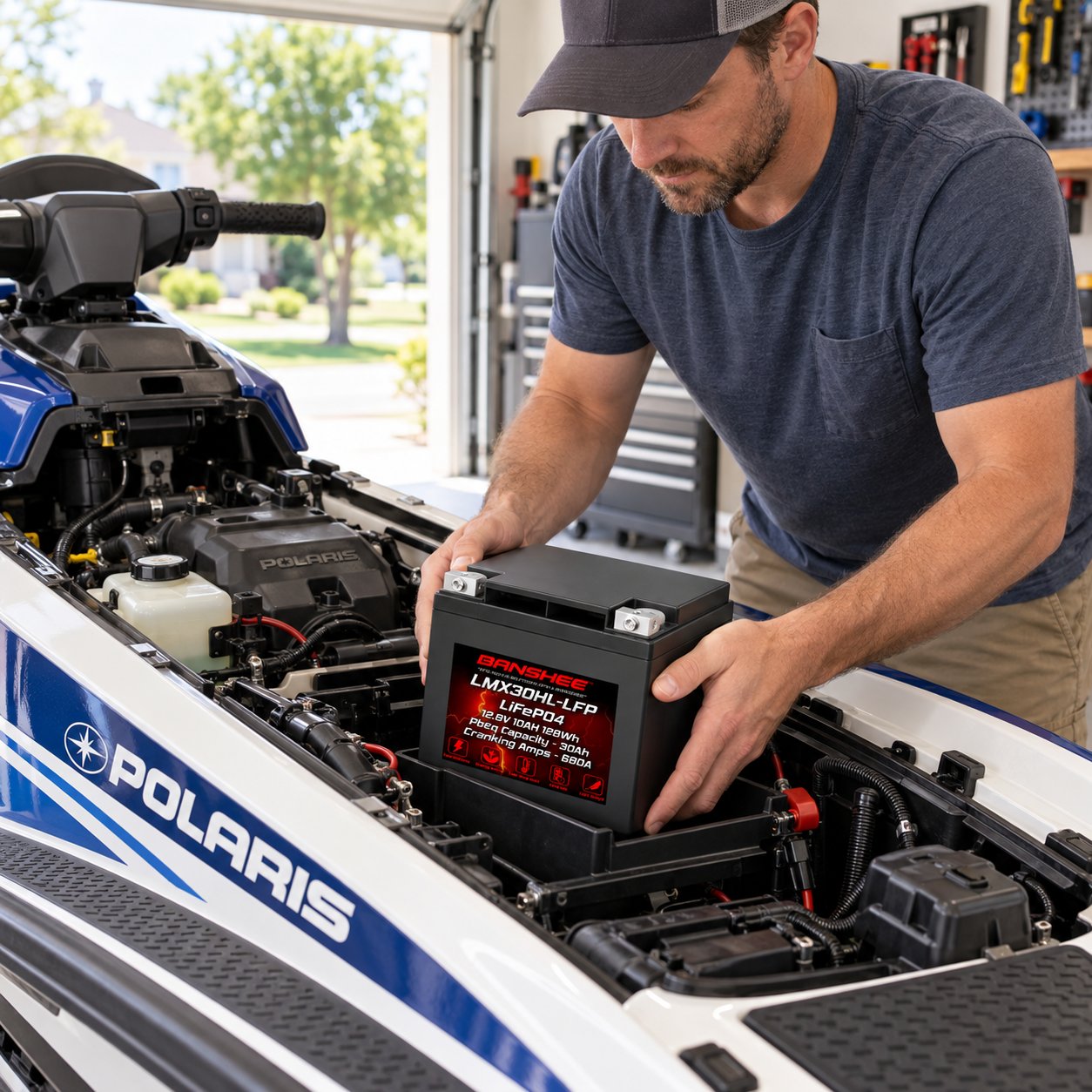
Lithium ATV batteries represent the premium tier. They last 5-10 years, weigh 60-70% less than lead-acid equivalents, and deliver consistent power in extreme cold. Lithium batteries use lithium iron phosphate (LiFePO4) chemistry, which eliminates sulfation entirely and can tolerate complete discharge without damage. This is why lithium batteries are rated for 2,000-3,000 cycles versus 500-800 for AGM.
The weight advantage improves acceleration and handling. Cold weather performance is where lithium truly excels: while lead-acid batteries lose 50% of their cranking power below freezing, lithium batteries maintain 90%+ of rated output even at 0°F.
Why Lithium Batteries Have Lower Self-Discharge Rates
A lithium battery loses less than 2% of charge per month sitting idle, compared to 2-3% for AGM and 3-5% for flooded batteries. Over a six-month off-season, this difference is significant. A lithium battery can sit for six months and still start your ATV, while a flooded battery might be too weak to crank the engine.
However, lithium has one weakness: it can't tolerate overcharging. If your ATV's charging system malfunctions and overcharges the battery, a lithium battery will be damaged.
Cost-Per-Year Analysis: Lithium vs. AGM vs. Lead-Acid
A quality flooded lead-acid ATV battery costs $40-60 and lasts 18-24 months, roughly $25-40 per year. An AGM battery costs $80-120 and lasts 36-60 months, roughly $20-35 per year. A lithium battery costs $150-250 and lasts 60-120 months, roughly $15-30 per year.
ATV Battery Cold Cranking Amps (CCA): Choosing the Right Power Output
Cold Cranking Amps measure how much current a battery can deliver at 0°F for 30 seconds while maintaining at least 7.2 volts. This matters because cold reduces chemical reaction speed, dramatically lowering a battery's effective power below freezing.
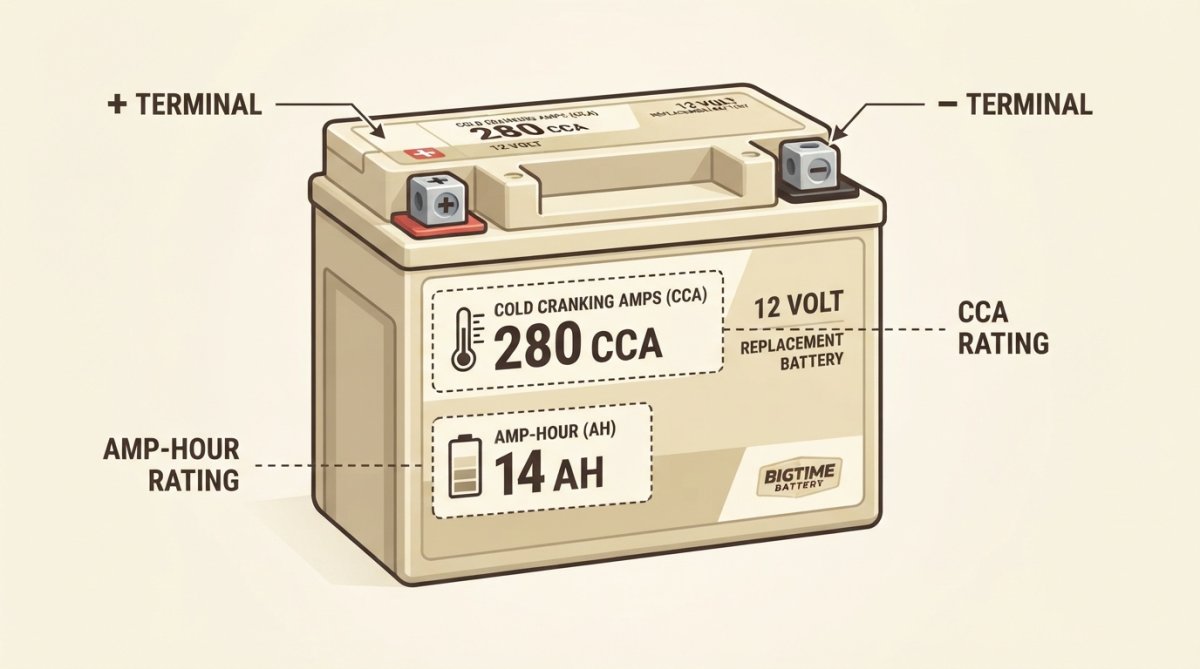
An ATV engine typically requires 150-300 CCA to crank reliably at 0°F, depending on engine displacement and compression ratio. A 250cc ATV needs roughly 200 CCA, while a 500cc ATV needs 250-300 CCA. Buy a battery with 30-50% more CCA than the minimum requirement to ensure reliable starting even when the battery has aged slightly.
Understanding CCA Ratings and Amp-Hour Capacity
CCA and amp-hour ratings are independent measurements. A battery can have high CCA but low amp-hour capacity, or vice versa. Amp-hour (Ah) capacity measures how long the battery can deliver current before depleting. For most ATV riders, the factory original battery's Ah rating is appropriate. If you're adding aftermarket accessories that draw significant power, you might need a larger Ah capacity.
Cold Weather Performance and Discharge Rate
Battery performance degrades predictably as temperature drops. At 32°F, a battery delivers roughly 65% of its rated capacity. At 0°F, it's down to 50%. At -20°F, you're looking at 30% of rated capacity. Lithium batteries handle cold significantly better than lead-acid, maintaining 90%+ of rated output even at 0°F.
Maintenance-Free ATV Batteries: What the Label Really Means
"Maintenance-free" on an ATV battery means the manufacturer sealed it so you can't access the cells to add water. It doesn't mean the battery requires no care. AGM batteries are genuinely more maintenance-friendly than flooded batteries because the fiberglass mat design prevents water loss and reduces sulfation. Lithium batteries are the closest thing to truly maintenance-free: they don't sulfate, hold charge for months without tending, and tolerate many charging voltages.
Battery Tender Compatibility and Smart Charging
A battery tender (also called a float charger or maintainer) is the single most important accessory for extending battery life. It charges the battery fully, then switches to a trickle charge that maintains voltage without overcharging. Not all tenders work with all battery types. Verify compatibility before purchasing.
Smart tenders automatically detect battery type and adjust charging parameters. A slow charger that takes 8-12 hours is gentler than a fast charger and extends battery life.
How to Extend Your Long Lasting ATV Replacement Battery Life
Battery longevity depends on proper charging, appropriate storage, and avoiding deep discharges when possible. Never let your ATV battery drop below 50% charge if you can avoid it. Charge it after every ride, even if it's just a short trip. When charging, use a charger rated for your battery type and set it to the slowest available setting.
Proper Installation and Terminal Configuration
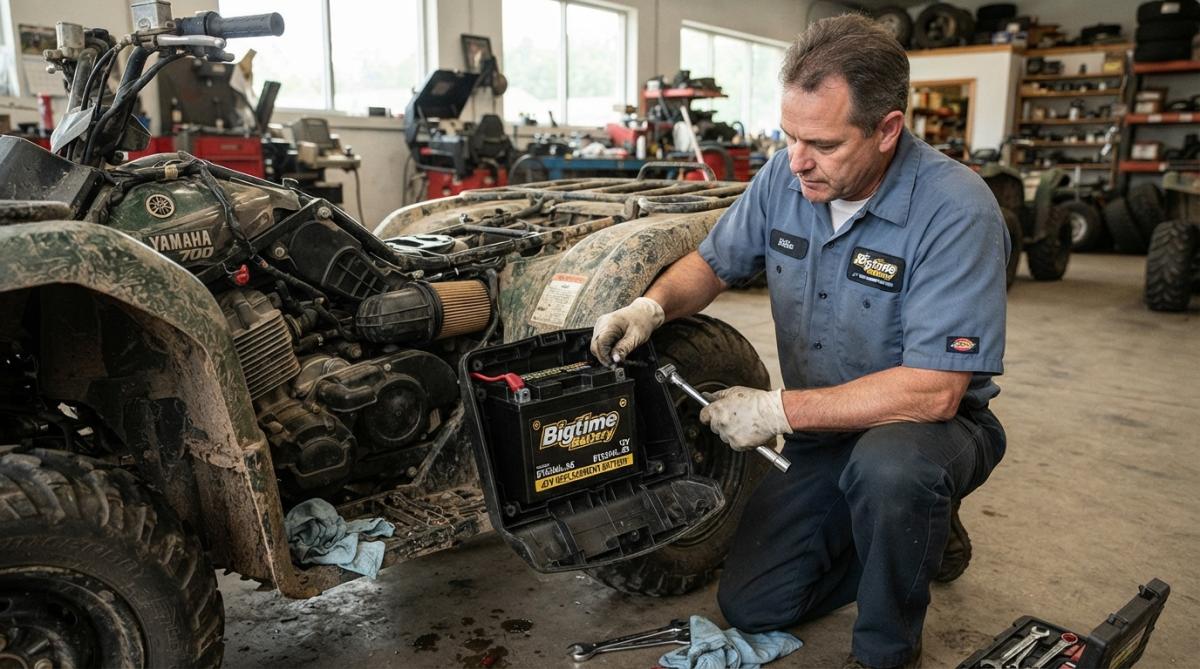
Corroded terminals are a common cause of poor battery performance. Check your battery terminals monthly. If you see white, blue, or green corrosion, disconnect the battery and clean the terminals with a wire brush. Reconnect firmly so there's no movement. Secure the battery properly so it doesn't vibrate excessively.
Storage, Charging, and Seasonal Care
Before storing your ATV for winter, fully charge the battery and connect a battery tender for the entire off-season. This maintains charge and prevents sulfation. If you don't have a battery tender, charge the battery fully, disconnect it from the ATV, and store it in a cool, dry location. Check it every month and recharge if the voltage drops below 12.4V. Ideally, store it at 50-70°F, away from direct sunlight and heat sources.
Real-World Testing: Durability and Warranty Comparison
The best way to evaluate a battery is to look at warranty length and real-world durability reports. Most flooded lead-acid ATV batteries come with 12-18 month warranties. AGM batteries typically have 24-36 month warranties. Lithium batteries often have 36-60 month warranties. Warranty length reflects the manufacturer's confidence in the product's longevity.
Disposal and Recycling: Responsible Battery Replacement
Lead-acid batteries contain toxic materials and must be recycled responsibly. Most retailers that sell ATV batteries will take your old battery for recycling when you buy a replacement, often free or included in the purchase price. Lithium batteries also require proper recycling. Never throw a battery in the trash. When you replace your ATV battery, ask your retailer about their recycling program. Bigtime Battery partners with certified recycling facilities to ensure old batteries are handled responsibly.
Choosing the right long lasting ATV replacement batteries means understanding the trade-offs between cost, longevity, and performance. AGM batteries offer the best balance for most riders, lasting significantly longer than flooded batteries and costing far less than lithium. For extreme-cold climates or year-round riders, lithium is worth the investment. Regardless of which battery you choose, proper charging and storage practices will extend its life by 30-50%, making a battery tender and seasonal maintenance more important than battery type itself. At Bigtime Battery, we stock replacement batteries for every ATV model and can help you match the right battery to your riding style, climate, and budget. Get started with a battery that's built to last and backed by our commitment to reliable power solutions.
Frequently Asked Questions
What type of ATV battery lasts the longest?
Lithium-ion batteries typically offer the longest lifespan, often exceeding 5+ years with proper maintenance and battery tender use. AGM (Absorbent Glass Mat) batteries come second, lasting 3-5 years due to their resistance to sulfation and deep-cycle capability. Standard flooded lead-acid batteries have the shortest lifespan at 2-3 years. Longevity depends on climate, charging habits, and cold weather performance. Lithium's lower self-discharge rate and superior cycle life make it ideal for long lasting ATV replacement batteries, though initial cost is higher.
How can I make my ATV replacement battery last longer?
Use a quality battery tender during off-season storage to prevent sulfation and self-discharge. Maintain proper terminal configuration and keep connections clean and corrosion-free. Avoid deep discharges when possible, recharge after each ride. Store your ATV in moderate temperatures; extreme cold reduces battery performance significantly. Check voltage regularly and replace if it drops below safe levels. For maintenance-free AGM batteries, ensure proper ventilation. Follow manufacturer warranty guidelines and avoid overcharging, which damages internal plates regardless of battery type.
Are lithium batteries better than AGM for ATVs?
Lithium batteries offer superior benefits: higher cold cranking amps, faster re-start technology, lighter weight, and longer cycle life (5+ years vs. 3-4 years for AGM). They maintain voltage better in cold weather and have minimal self-discharge. However, AGM batteries are more affordable, proven reliable, and compatible with standard chargers. Lithium requires a compatible battery tender and charger. For budget-conscious riders, AGM provides excellent durability and value. For premium performance and longevity, lithium is worth the investment. Your choice depends on budget, climate, and riding frequency.
What CCA rating do I need for my ATV battery?
Cold Cranking Amps (CCA) requirements vary by ATV engine size. Most ATVs need 200-400 CCA for reliable cold weather performance. Smaller quads (50-250cc) typically require 100-200 CCA, while larger UTVs and 4-wheelers need 300-600 CCA. Check your owner's manual or the old battery label for exact specifications. Higher CCA ratings provide better cold weather cranking power and faster re-start technology, but ensure the battery fits your terminal configuration and charging system. Undersizing risks starting failures; oversizing rarely causes problems but increases cost.
How do I know if my ATV battery needs replacement?
Signs include slow engine cranking, dim headlights, failure to hold a charge after riding, or a swollen/cracked case. If the battery is 3+ years old and shows poor cold weather performance, replacement is likely needed. Test voltage with a multimeter, a healthy battery reads 12.6+ volts at rest. If it drops below 12 volts or won't charge after using a battery tender, it's time to replace. Check the warranty period on your current battery; most last 2-5 years depending on type (flooded, AGM, or lithium). Professional testing can confirm before you buy a long lasting ATV replacement battery.