 how-to
Upgrading to LiFePO4 Batteries for Polaris Watercraft
Table of Contents
- Why Upgrade to LiFePO4 Batteries for Polaris Watercraft
- Polaris Watercraft Battery Size and Specifications
- LiFePO4 Battery Charging System Compatibility
- LiFePO4 Battery Cold-Weather Charging
- Watercraft Battery Installation and Maintenance
- Battery Management System (BMS) Protection and Reliability
- Conclusion: Is a LiFePO4 Upgrade Right for Your Polaris?
- Frequently Asked Questions
Last Updated: October 17, 2026
Why Upgrade to LiFePO4 Batteries for Polaris Watercraft
Upgrading to LiFePO4 batteries for Polaris watercraft means replacing a lead-acid starter battery with a lithium iron phosphate pack that weighs less, holds usable charge longer, and resists the slow drain that kills conventional batteries between trips.
The upside is real.
But here is what most guides get wrong: this is not a drop-in swap on every machine. Charging systems, cold weather, and fitment all need checking first. Below, we walk through each one.
Polaris Watercraft Battery Size and Specifications
Polaris watercraft battery fitment comes down to four things: physical size, terminal layout, cranking output, and reserve capacity. Get any one wrong and the battery either will not sit in the tray, will not spin the engine hard enough on a cold morning, or will fade before you finish a long ride. This is the section most generic marine guides skip, and it is the one that decides whether your upgrade works.
Model-by-Model Fitment Notes
Polaris watercraft span several generations, and the battery tray and cable routing changed across them. The models most owners are upgrading today include the Virage I, the MSX 110, the MSX 150, and the Freedom series. On these hulls, the battery sits low and forward of the engine, and the hold-down bracket is a molded strap rather than a universal clamp.
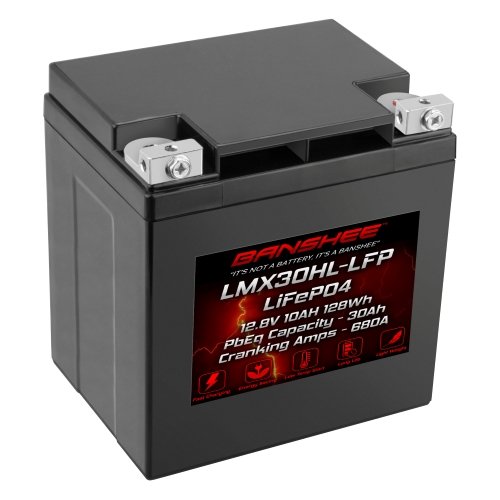
A practical pattern: measure the old case with a tape, not by reading the label. Then compare those numbers against the published dimensions of the pack you are considering. Our Banshee 20L-BS LiFePO4 motorsports battery is a 12V, 18Ah unit built for these Polaris applications, and its case dimensions are listed on the product page so you can check them against your tray before you order.
Cranking Amps vs. Amp-Hours: What Actually Matters
Owners often compare batteries by amp-hours alone, but a starter battery's job is different from a deep-cycle battery's job.
A common mistake is buying a pack with a high amp-hour rating but a low cranking rating. That pack will run accessories fine but may struggle to spin a cold engine.
Use this comparison method:
- Find the cranking amps (or cold cranking amps) on your old battery's label, or in the service manual for your model.
- Match or slightly exceed that cranking figure with the LiFePO4 pack.
- Confirm the amp-hour rating is at least equal to the old battery's lead-acid equivalent, which is the figure most lithium makers publish for comparison.
- Check the reserve capacity if your model runs accessories off the starting battery.
Our Banshee 20L-BS is rated at 18Ah (lead-acid equivalent) and is built to deliver the burst current a personal watercraft starter needs. If your model calls for a larger case or higher cranking figure, size up rather than forcing a smaller pack into the tray.
Terminal Layout, Polarity, and Battery Tray Fitment
Terminal position matters more than most owners expect. Positive and negative posts must land where your cables reach without stretching. Check polarity twice before you connect anything.
- Measure the tray length, width, and height
- Note which side the positive post sits on
- Confirm your cable ends fit the new posts (many LiFePO4 packs use M6 or M8 threaded terminals, not the lead post style)
- Check that the hold-down bracket still clamps the case
- Verify the case clears the exhaust runner and any nearby hoses
If the terminals are threaded rather than lead posts, you may need adapter lugs or new cable ends. Plan for that before the install day, not during it. A pack that fits the tray but not the cables is still the wrong pack.
LiFePO4 Battery Charging System Compatibility
LiFePO4 battery charging system compatibility is the step that decides whether the upgrade works or turns into a headache. A lithium pack has much lower internal resistance than lead-acid, so it can pull heavy, sustained current from a charging system that was never built for it. Most guides warn about this in general terms. This section gives you a measured test procedure so you can check your own watercraft before you commit.
Why the Charging System Reacts Differently
Your stator and voltage regulator were sized for a lead-acid battery. A marine electrical analysis from PKYS notes that low internal resistance can lead batteries to draw massive, sustained current from a standard alternator, which can cause overheating and premature failure.
On a personal watercraft, the stator output is modest and the regulator clamps voltage to a range intended to keep a lead-acid battery topped off without boiling it. A LiFePO4 pack accepts charge differently: it will take current until it reaches its absorption voltage, then the BMS will stop accepting charge.
Step-by-Step Charging Voltage Test
Run this test with the old lead-acid battery still in place. That gives you a baseline for the charging system alone, with no lithium pack influencing the reading.
- Set your multimeter to DC volts and confirm it reads accurately on a known-good battery.
- Measure resting voltage at the battery posts with the engine off. Write it down.
- Start the engine and let it idle. Measure voltage at the posts at idle. Write it down.
- Bring the engine to cruise RPM (or run it on the water at a steady cruising speed). Measure voltage at the posts again. Write it down.
- Compare the cruise reading against the voltage limits your battery maker publishes. Most LiFePO4 makers publish a maximum charging voltage; if your cruise reading sits above it, the regulator is not compatible without adjustment.
- Check for fluctuation. A reading that jumps around at cruise suggests a failing regulator or a loose connection, which should be fixed before any battery swap.
A common pattern is a cruise reading in the low-to-mid 14V range on a healthy system. If your reading is significantly higher, or if it climbs as the engine runs, treat that as a warning sign and have the regulator checked before installing a lithium pack.
Banshee 20L-BS LiFePO4 Motorsports Battery Compatible with Polaris Virage I →
What to Do If Your Readings Are Out of Range
If your cruise voltage sits above the pack's limit, you have three options. First, confirm the reading with a second meter, since a failing multimeter can send you chasing a problem that does not exist.
If the reading is low, the charging system may not be able to keep the pack topped off during a long ride.
Our Banshee 20L-BS LiFePO4 motorsports battery is built with a BMS that manages charge acceptance and protects the cells, and its published voltage limits are listed on the product page so you can compare them against your test readings.
LiFePO4 Battery Cold-Weather Charging
Never charge a LiFePO4 battery below the temperature its manufacturer allows. Cold slows the chemistry inside the cells, and charging a frozen lithium pack can cause permanent damage. Most quality packs include a battery management system that blocks charging when the pack is too cold.
For watercraft, this matters at both ends of the season. A cold snap in early spring or a late fall ride can leave the pack below its safe charging window. Warm the battery to a safe temperature before you put it on a charger.
- Store the battery out of freezing conditions when you can
- Let a cold pack reach room temperature before charging
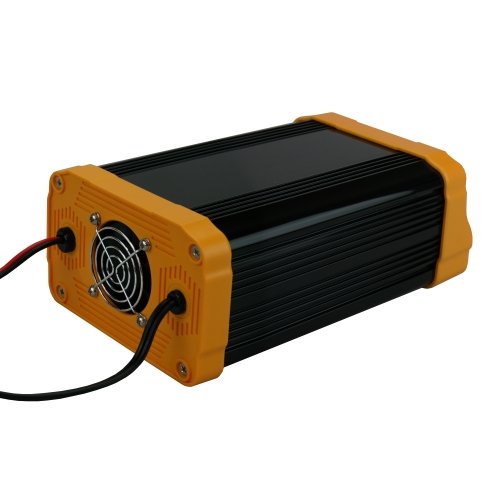
- Check your charger's lithium setting before the first charge
- Expect reduced capacity in cold weather, even on a healthy pack
Watercraft Battery Installation and Maintenance
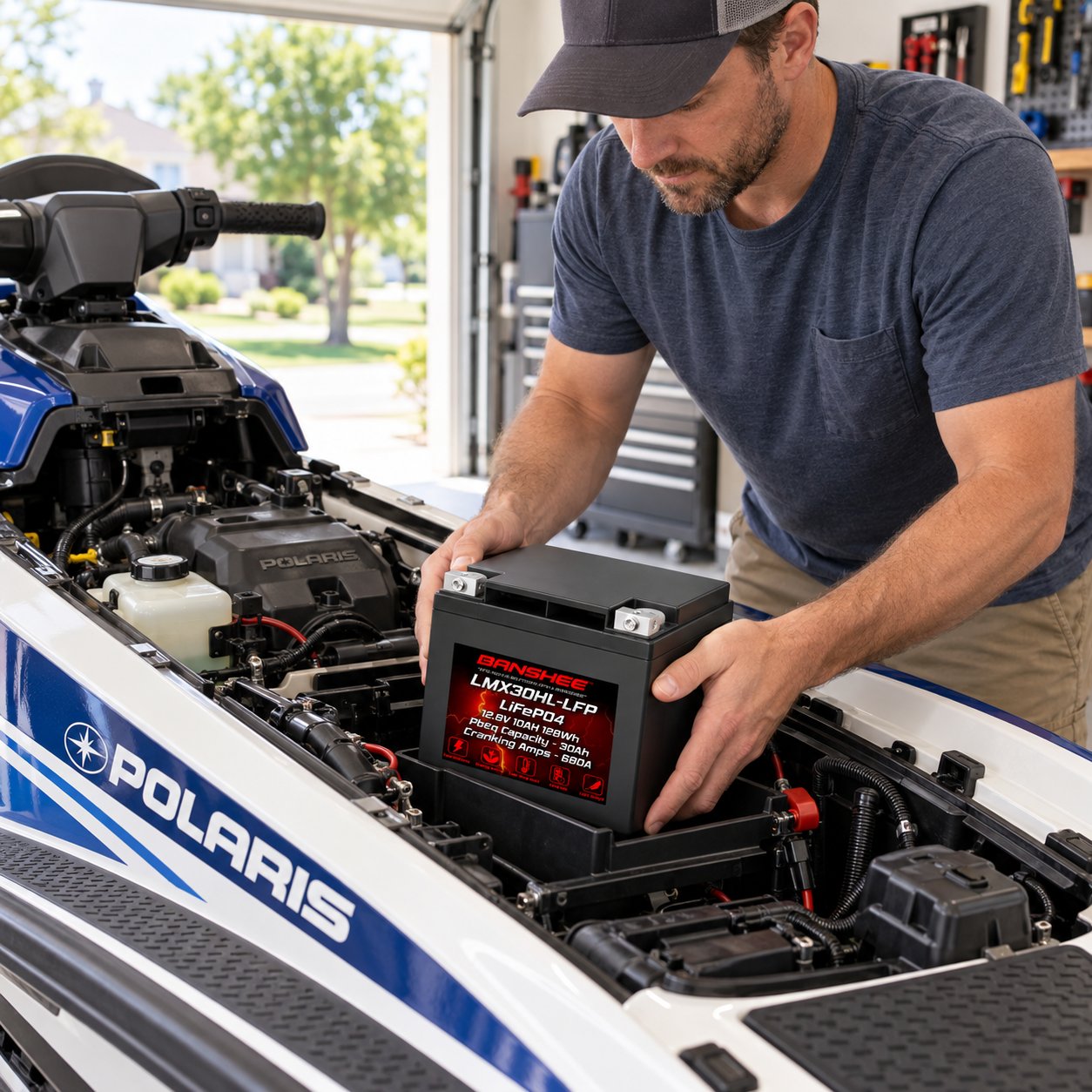
Watercraft battery installation and maintenance is straightforward once the checks are done. Plan on about an hour for a first-time swap, including the voltage test.
Step-by-Step Installation
- Disconnect the negative cable first, then the positive.
- Remove the hold-down bracket and lift the old battery out.
- Clean the tray and check for corrosion or cracks.
- Set the new battery in place and confirm the posts line up.
- Reconnect the positive cable, then the negative.
- Tighten the hold-down so the case cannot shift.
- Test charging voltage at idle and at cruise.
- Log your readings for the next service check.
Maintenance after that is light. Keep the terminals clean, keep the mounting secure, and check state of charge before winter storage. A built-in voltage meter, like the one on our Banshee packs, makes that check a glance instead of a job.
Battery Management System (BMS) Protection and Reliability
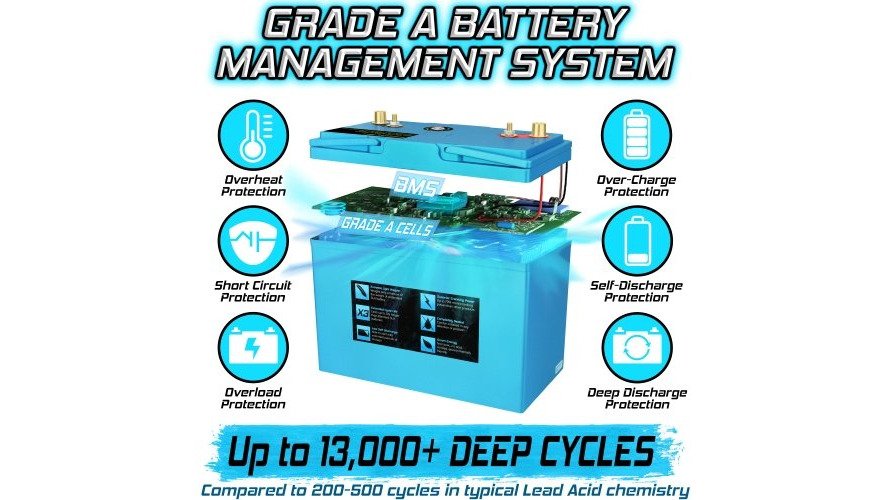
A battery management system is the internal circuit that watches cell voltage, current, and temperature, then cuts the pack off before damage occurs. It provides overcharge protection, low-voltage cutoff, and cold-temperature charging blocks.
This is where lithium earns its reputation for reliability. A lead-acid battery degrades quietly and leaves you guessing. A BMS fails safe and tells you something is wrong.
Weight is the other headline. One JetBoaters.net thread claims a 95-pound reduction at the back corner of the boat after a LiFePO4 swap. That thread does not include supporting measurements, so treat the figure as an owner report rather than a spec.
Conclusion: Is a LiFePO4 Upgrade Right for Your Polaris?
The upgrade pays off when three things line up: the pack fits your tray, your charging system tests within the battery's limits, and you ride in conditions where cold charging is not a constant problem. Skip any of those and a lead-acid replacement is the safer call.
When it does line up, the gains are real: less weight, longer life, and no more trickle-charger routine between trips. We stock LiFePO4 motorsports packs for Polaris Virage I, MSX 110, MSX 150, and Freedom models, each with a 3-year warranty and a built-in voltage meter.
Frequently Asked Questions
Can I use a LiFePO4 battery in a Polaris watercraft?
Yes, LiFePO4 batteries can work in Polaris watercraft, but fitment and charging compatibility must be checked first. Match the group size, terminal layout, and cranking amps to your model. Some owners report trouble codes or charging issues, so test your stator and voltage regulator before installing. Bigtime Battery offers Banshee LiFePO4 batteries compatible with Polaris Virage I, MSX 110, MSX 150, and Freedom models, all with a built-in voltage meter and 3-year warranty.
Will a Polaris watercraft charging system charge a LiFePO4 battery?
It can, but the charging voltage must stay within the LiFePO4 battery's acceptable range. Low internal resistance lets a lithium battery draw high current from a standard alternator or stator, which may stress the charging system. Check your service manual for the voltage regulator's output and confirm it does not exceed the battery's limit. If unsure, use a lithium-compatible charger for shore charging and monitor voltage with the battery's built-in meter.
How do I install a LiFePO4 battery in a Polaris watercraft?
Disconnect the negative terminal first, then remove the old battery. Clean the tray and terminals, check for corrosion, and confirm the new LiFePO4 battery fits securely. Connect the positive terminal first, then the negative, and tighten all connections. Verify polarity before powering up. Finally, check the voltage with a meter or the battery's built-in gauge. Secure mounting prevents vibration damage, which matters on personal watercraft.
How should I maintain a LiFePO4 battery during off-season storage?
Store the battery in a cool, dry place, ideally between 50°F and 70°F. Charge it to about 50-60% state of charge before storage, and avoid leaving it fully charged or fully drained for months. Disconnect it from the watercraft to prevent parasitic draw. Check voltage every few months and recharge if it drops. Never charge a LiFePO4 battery below freezing; wait until it warms above 32°F. Buy your replacement at bigtimebattery.com.
Not sure which pack fits your machine? Send us your model and year, and we will match it to the correct battery. Shop the Banshee LiFePO4 lineup at Bigtime Battery, compare amp-hours and terminal layout against your old unit, and ride out the season with a pack that starts clean every time. Make your purchase at bigtimebattery.com.