 ultimate-guide
How to Choose the Right Trolling Motor Battery
Table of Contents
- Match the Battery Type to Your Fishing Style
- Trolling Motor Battery Amp Hour Requirements Explained
- Match Voltage to Your Motor: 12V, 24V, and 36V
- Lithium vs AGM Trolling Motor Battery: Which Wins?
- Check Group Size and Physical Dimensions
- Marine Battery Maintenance Tips for Longer Life
- Common Mistakes to Avoid When Buying
- Conclusion: Make the Right Call for Your Setup
- Frequently Asked Questions
Choosing the Right Trolling Motor Battery: A Complete Guide
Last Updated: September 8, 2026
Choosing the wrong trolling motor battery is an expensive mistake that leaves you paddling back to the ramp. The selection process comes down to matching battery chemistry, voltage, and capacity to how you actually fish. This guide from Bigtime Battery walks through the technical specs that matter so you buy the right trolling motor battery the first time.
Industry guidance for 2026 maintains that a 110 amp hour (Ah) rating per battery is the recommended standard to achieve 6 to 8 hours of runtime for a trolling motor Minn Kota Trolling Motor Power Considerations. That benchmark assumes moderate throttle use, but your actual runtime depends on boat weight, wind, and how aggressively you work structure. Below, we break down the three battery chemistries, voltage configurations, and sizing rules you need to match a battery to your specific setup.
Match the Battery Type to Your Fishing Style
A trolling motor battery is a deep cycle battery, designed to deliver steady power over long discharge periods rather than the short bursts a starting battery provides. Current industry guides categorize your primary choices into three distinct types: LiFePO4 lithium, AGM, and traditional flooded lead-acid batteries LithiumHub Best Trolling Motor Battery Guide.
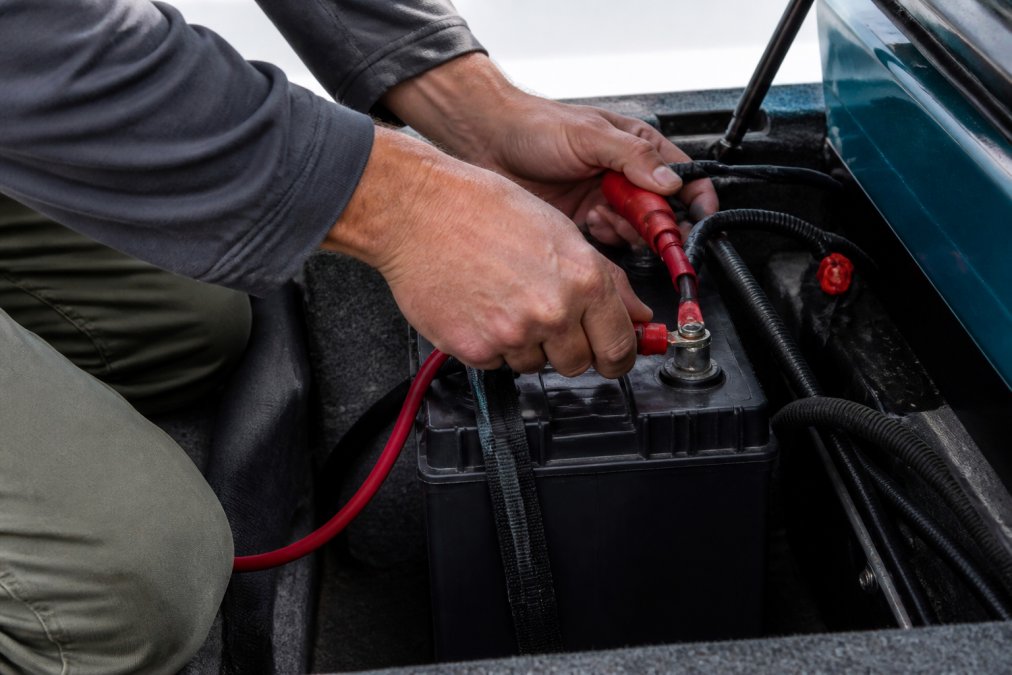
Your fishing style dictates the right chemistry. Kayak anglers and those in small aluminum boats prioritize weight savings, making lithium the clear winner since it drops significant pounds from the stern. Bass anglers running 24V or 36V systems for full days on big water need the runtime and fast recharge that lithium provides. Weekend walleye fishermen on a modest budget often find AGM delivers reliable performance without the upfront cost of lithium.
Trolling Motor Battery Amp Hour Requirements Explained
Amp hour (Ah) is the measure of how much energy a battery can deliver over time, and it directly determines your run time between charges. A 50 to 60 Ah LiFePO4 battery provides similar usable capacity to a Group 27 AGM or Group 31 flooded battery, so you can often drop a group size when switching chemistries Amped Outdoors 24V and 36V Comparison Guide.
The recommended minimum for standard 6 to 8 hour fishing days is 110 Ah per battery. That number accounts for the fact that trolling motors draw heavily at higher speeds, and your capacity requirements shift with fishing speed, boat weight, and weather conditions Minn Kota Trolling Motor Power Considerations.
A common mistake is buying a battery based on peak thrust alone. A 40 lb thrust motor on a light kayak draws far less than the same motor pushing a heavy fiberglass bass boat. Anglers running smaller craft have reported that 50 to 60 Ah lithium units provide sufficient power for their needs, challenging the assumption that bigger is always better.
How to Calculate Your Actual Run Time
To move beyond a rule-of-thumb, you need to estimate your motor's amp draw. Most manufacturers publish amp draw charts for their motors at various speed settings. For example, a 55 lb thrust motor might draw roughly 40 amps at full speed, 20 amps at medium speed, and 5 amps at low speed. A 112 lb thrust 36V motor can draw over 50 amps at full throttle.
Here is the calculation method that most practitioners use to size a battery bank:
- Estimate your typical day: Determine how many hours you spend with the motor on at each speed setting. For example, 1 hour at high speed, 2 hours at medium, and 3 hours at low.
- Calculate amp hours consumed: Multiply the draw at each speed by the hours used. Using the 55 lb thrust example: (1 hr × 40 Ah) + (2 hr × 20 Ah) + (3 hr × 5 Ah) = 40 + 40 + 15 = 95 Ah consumed.
- Apply the depth-of-discharge (DoD) limit: This is the critical step that separates lead-acid from lithium.
- For AGM or flooded lead-acid, you should only use 50% of the rated capacity. To support a 95 Ah draw, you need a battery rated at 190 Ah (95 / 0.5). This is why a single Group 31 battery often falls short for a full day on the water.
- For LiFePO4 lithium, you can safely use 80-90% of the rated capacity. To support the same 95 Ah draw, you only need a battery rated at 105-119 Ah (95 / 0.8 or 95 / 0.9). A 110 Ah lithium battery would handle this day easily.
This math explains why a 100 Ah lithium battery can outperform a 100 Ah AGM battery in real-world use. The lithium battery provides roughly 90 Ah of usable energy, while the AGM only provides about 50 Ah before you risk damaging it.
Real-World Scenarios
- Kayak Angler: A 30-40 lb thrust motor on a kayak draws 15-25 amps at full speed. A 50 Ah lithium battery provides 40-45 Ah of usable power, translating to roughly 2-3 hours at full speed or 5-6 hours of mixed-speed trolling. This is why 50-60 Ah lithium units are the sweet spot for small craft.
- Bass Angler on a 24V System: Running a 24V system with two 12V batteries in series effectively doubles your voltage and allows the motor to draw fewer amps for the same thrust. A pair of 100 Ah lithium batteries in series provides roughly 180 Ah of usable power at 24V, enough for a full day of aggressive fishing with a 70-80 lb thrust motor.
- Heavy Fiberglass Boat on 36V: A 36V system with three 100 Ah lithium batteries provides the high voltage and capacity needed to push a heavy boat against wind and current all day. The upfront cost is significant, but the usable capacity and lifespan justify it for serious tournament anglers.
Match Voltage to Your Motor: 12V, 24V, and 36V
Voltage matching is critical. A 12V trolling motor requires a single 12V battery, while 24V motors require either one dedicated 24V battery or two 12V batteries wired in series, and 36V systems require three 12V batteries LithiumHub Battery Voltage Configuration Standards. Using the wrong voltage configuration damages your motor and voids warranties.
Check the thrust rating on your motor to determine voltage. Motors up to 55 lb of thrust typically run on 12V. Motors between 55 and 80 lb generally require 24V, and anything above that needs a 36V system. When wiring multiple batteries in series, always use batteries of the same chemistry, age, and capacity to prevent one weak cell from dragging down the bank.
Lithium vs AGM Trolling Motor Battery: Which Wins?
Lithium iron phosphate batteries win for most serious anglers, but AGM remains a solid choice for budget-conscious buyers. The decision comes down to upfront cost versus long-term value.
Lithium batteries can last 10 years or more with proper care, while AGM batteries typically need replacement every 3 to 5 years Boating Magazine Best Trolling Motor Battery Guide. Lithium also provides up to 6 times the runtime of traditional lead-acid and AGM batteries at the same weight Solid State Marine Lithium Battery Selection Guide. That runtime advantage comes from lithium's higher usable capacity; you can discharge a LiFePO4 battery to 80 or 90 percent without damage, while AGM should not be discharged past 50 percent.
| Feature | LiFePO4 Lithium | AGM | Flooded Lead-Acid |
|---|---|---|---|
| Lifespan | 10+ years | 3-5 years | 2-4 years |
| Weight (Group 27) | ~25 lb | ~55 lb | ~60 lb |
| Usable Capacity | Up to 90% | ~50% | ~50% |
| Recharge Time | 2-4 hours | 6-10 hours | 8-12 hours |
| Best For | Serious anglers, kayaks | Budget buyers | Entry-level setups |
The Long-Term Cost of Ownership: A 5-Year ROI Analysis
The upfront price difference is stark, a premium 100 Ah LiFePO4 battery can cost three to four times more than a comparable AGM. But the total cost of ownership tells a different story. Here is a realistic breakdown for an angler who fishes 25 weekends per season.
The AGM Path:
- Initial Purchase: A quality 100 Ah AGM battery costs roughly $250-$350.
- Replacement Cycle: With 50% usable capacity and typical usage, an AGM battery will need replacement every 2-3 years.
- 5-Year Total: You will likely purchase 2-3 batteries. At an average of $300 each, your total cost over 5 years is $600-$900.
- Weight Penalty: You are hauling an extra 30-35 lb per battery compared to lithium for the entire period.
The Lithium Path:
- Initial Purchase: A quality 100 Ah LiFePO4 battery with a built-in battery management system costs roughly $800-$1,200.
- Replacement Cycle: A well-maintained LiFePO4 battery is rated for 3,000-5,000 cycles. At 50-75 fishing days per year, you are using 100-150 cycles annually. The battery will last 10+ years.
- 5-Year Total: Your total cost is the initial $800-$1,200, no replacements needed.
- Residual Value: After 5 years, the lithium battery still has significant usable life remaining, whereas the AGM batteries have been recycled.
The Verdict: By year 5, the lithium battery has either matched or beaten the AGM on raw cost. By year 10, lithium is clearly the cheaper option. The break-even point typically falls between year 3 and year 5, depending on how often you fish. fishing bait selection.
The Hidden Costs of AGM That Anglers Overlook
- Replacement Labor: Swapping a 60 lb battery in a tight compartment is not just inconvenient, it is a recurring maintenance task that lithium eliminates.
- Recharge Time: AGM batteries take 6-10 hours to recharge. If you fish multiple days in a row, you need a second battery or a generator. Lithium's 2-4 hour recharge means you can top off between morning and evening sessions with a standard charger.
- Voltage Sag Under Load: As an AGM battery discharges, its voltage drops more significantly under load than lithium. This means your motor's thrust output decreases as the day wears on. Lithium maintains a flatter voltage curve, delivering consistent thrust from full charge to near-empty.
- Charger Compatibility: You will need a lithium-specific charger, which is an additional upfront cost. However, most modern lithium chargers are also backward-compatible with AGM, so you can use one charger for both if you transition gradually.
When AGM Still Makes Sense
AGM is not obsolete. It remains the right choice for anglers who fish fewer than 10 days per year, have a tight budget this season, or own an older boat where the weight savings of lithium will not improve performance. AGM also requires no special charger if you already own a quality smart charger, and it is more forgiving of being stored in a partially discharged state during the off-season.
For everyone else, the long-term cost analysis is clear: lithium's higher upfront price is an investment that pays dividends in lifespan, performance, and reduced maintenance over a 5-10 year ownership period.
Check Group Size and Physical Dimensions
Group size determines whether the battery physically fits in your boat's compartment. The most common sizes for trolling motors are Group 24, Group 27, and Group 31, with each size increasing in physical dimensions and capacity.
Measure your battery compartment before purchasing. A Group 31 battery is roughly 13 inches long and will not fit in a compartment designed for a Group 27. When switching from lead-acid to lithium, you can often drop a group size because lithium packs more capacity into a smaller footprint, freeing up space for tackle or a second battery.
Terminal type also matters. Marine-grade batteries typically use either stud terminals or automotive posts. Verify which terminal configuration your trolling motor cables and charger clamps require, and check that the battery's height clears the compartment lid.
Marine Battery Maintenance Tips for Longer Life
Proper charging habits extend battery life regardless of chemistry. Use a charger with the correct charging profile for your battery type. Lithium batteries require a charger with a lithium-specific profile, while AGM and flooded batteries need their own settings. A healthy 12-volt deep cycle marine battery should measure 12.88 volts when tested to ensure it is ready for operation.
Store batteries at a partial state of charge during the off-season. Lithium batteries store best at around 50 percent charge in a cool, dry location. AGM and flooded batteries should be kept on a maintenance charger to prevent sulfation. Clean terminals annually and apply corrosion protection to maintain solid connections.
For anglers running fish finders and other electronics, industry best practice recommends running those devices on a dedicated lithium battery separate from the trolling motor battery to prevent voltage drop from affecting sensitive electronics.
Common Mistakes to Avoid When Buying
The most expensive mistake is underestimating your amp hour requirements. Buying a 75 Ah battery when your fishing style demands 110 Ah leads to shortened run times and deeper discharges that shorten battery life. Calculate your typical day on the water and buy accordingly.
Ignoring weight distribution creates handling problems. Adding a heavy Group 31 flooded battery to a small boat stern affects planing and performance. Lithium batteries solve this by cutting weight dramatically, which is why kayak anglers and small craft owners should prioritize the weight-to-performance ratio.
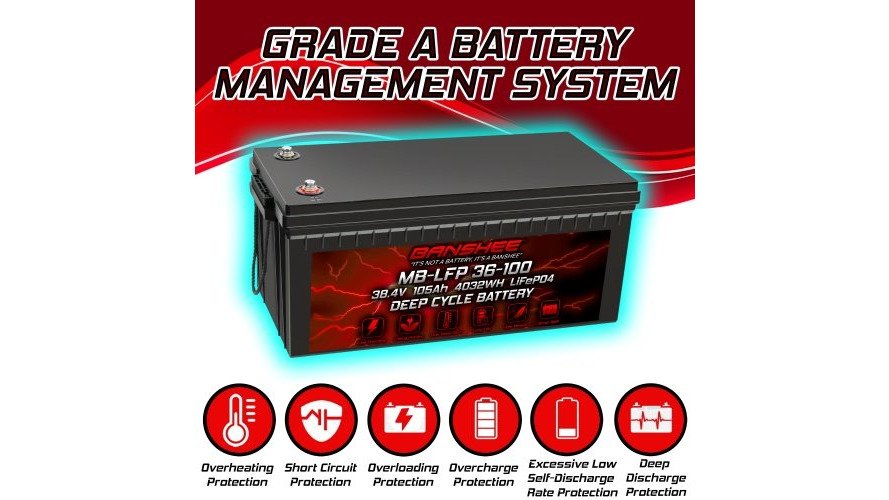
Skipping the battery management system check on lithium batteries is another common error. A quality LiFePO4 battery includes a battery management system that protects against overcharge, over-discharge, and thermal issues. Confirm the battery has thermal protection and a strong battery management system before purchasing.
Conclusion: Make the Right Call for Your Setup
Choosing the correct trolling motor battery requires matching chemistry, voltage, and amp hour capacity to your boat and fishing habits. Start with your motor's voltage requirement, calculate your daily amp hour needs, then decide between lithium and AGM based on your budget and how often you fish.
Bigtime Battery stocks a wide selection of deep cycle marine batteries across all three chemistries and group sizes, backed by competitive pricing and a one-stop shop for all your single-cell battery needs. Get started with Bigtime Battery and find the reliable power solution that keeps you on the water longer.
Frequently Asked Questions
How long will a 100Ah battery run a 55lb trolling motor?
A 100Ah battery will generally run a 55lb thrust trolling motor for 6 to 8 hours at moderate speeds. For a full day on the water, the 2026 industry standard recommends a 110Ah rating per battery to ensure you don't run out of power. Your actual run time depends on boat weight, wind, and how often you run at full speed.
Do lithium batteries hurt trolling motors?
No, lithium batteries will not hurt your trolling motor. They deliver consistent voltage, which can actually help your motor run more efficiently. Most modern trolling motors work perfectly with lithium iron phosphate (LiFePO4) batteries. Just confirm your motor's voltage requirement and make sure the battery has a built-in battery management system to protect against overcharging.
What size battery for a 55lb thrust trolling motor?
A 55lb thrust trolling motor runs on a 12V system, so you need a single 12V deep cycle battery. For a standard day of fishing, choose a Group 27 or Group 31 size with at least 110Ah. If you are running a lighter setup, like a kayak, a 50-60Ah lithium battery can provide similar performance to a larger AGM unit while saving significant weight.
How many batteries do I need for a 24V trolling motor?
A 24V trolling motor requires two 12V batteries wired in series. Always use batteries of the same type, age, and capacity to prevent performance issues. For a 24V system, industry guidance recommends two 12V batteries with at least 110Ah each, wired in series, to deliver the full day of runtime most anglers expect.