 comparison
Are Generic Sump Pump Batteries Good? A 2026 Review
Table of Contents
- Are Generic Sump Pump Batteries Actually Worth It?
- Deep Cycle vs Starting Battery for Sump Pump Backup
- Understanding Battery Chemistry: AGM and Flooded Lead-Acid
- Sump Pump Battery Life Expectancy and Replacement Intervals
- Sealed Lead Acid Battery Maintenance and Care
- Generic vs Branded Sump Pump Batteries: What Really Matters
- Real-World Runtime: How Long Will Your Battery Actually Last?
- How to Choose the Right Sump Pump Battery for Your Home
- Frequently Asked Questions
Last Updated: August 30, 2026
Are Generic Sump Pump Batteries Actually Worth It?
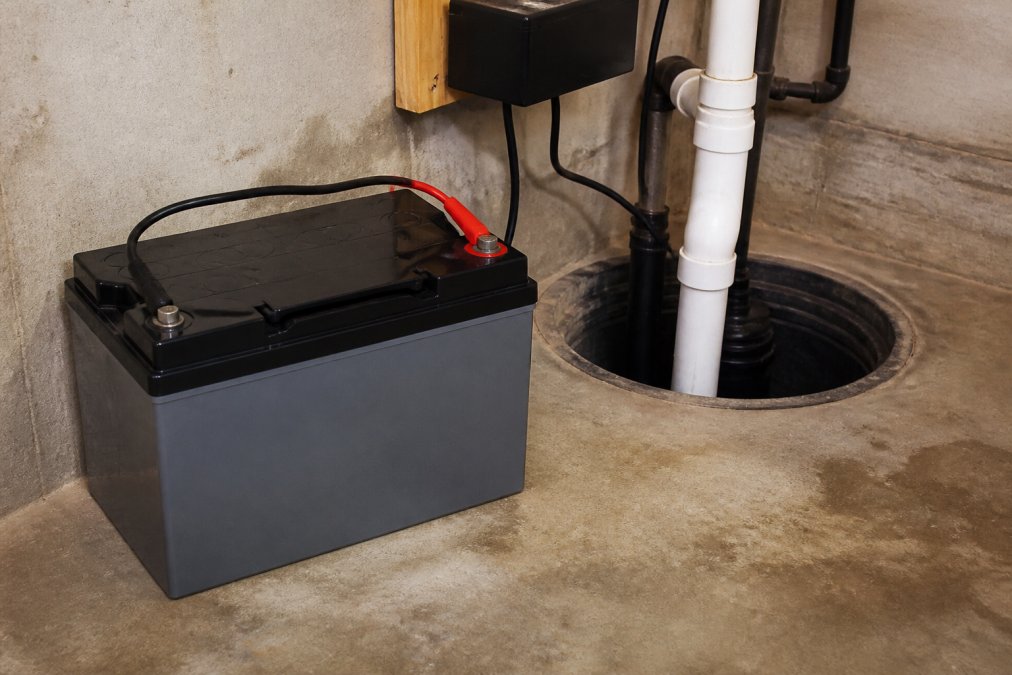
When your basement floods and the power goes out, a generic sump pump battery might be the difference between a damp floor and thousands in water damage. Yet homeowners often hesitate, wondering if a no-name deep-cycle battery can perform as well as a branded alternative costing 50% more.
Generic sump pump batteries can work reliably for years, but only if you understand what you're buying. At Bigtime Battery, we specialize in providing high-quality replacement batteries for a vast array of devices, ensuring you always have the power you need at competitive prices. The real story isn't about brand loyalty, it's about chemistry, capacity, and whether you're getting genuine deep-cycle performance or something that looks the part but underperforms when it matters most.
Deep Cycle vs Starting Battery for Sump Pump Backup
A starting battery delivers a massive burst of power for seconds, like cranking a car engine. It has thin plates that maximize surface area for quick discharge, then wants to recharge immediately.
A deep-cycle battery is built for the opposite job. It has thicker plates that handle repeated, partial discharges without degrading. Sump pumps cycle on and off unpredictably, sometimes 30 seconds, sometimes 10 minutes straight. That cycling pattern is exactly what deep-cycle batteries were engineered to handle.
The problem with generic batteries is that some retailers label starting batteries as "suitable for backup" just to move inventory. When shopping for a generic option, verify the battery is explicitly rated for deep-cycle use. Look for terms like "deep cycle," "cycle life," or "discharge depth" in the specs. If the listing emphasizes cranking amps or starting power, walk away.
Understanding Battery Chemistry: AGM and Flooded Lead-Acid
Two battery chemistries dominate the sump pump backup market: AGM (absorbent glass mat) and flooded lead-acid. Both are lead-acid batteries, but internal design creates real performance differences.
AGM Batteries Explained
AGM batteries use a fiberglass mat to absorb the electrolyte, keeping it suspended between the plates. This eliminates the need for liquid electrolyte to slosh around, no maintenance, no spills, no fumes. You can install an AGM battery indoors without ventilation concerns.
The tradeoff is cost. AGM batteries typically run 30-50% higher than comparable flooded lead-acid models. They charge faster, usually 4 to 6 hours compared to 12 to 24 hours for flooded batteries. AGM batteries hold their charge longer during standby periods and are more resistant to vibration and shock.
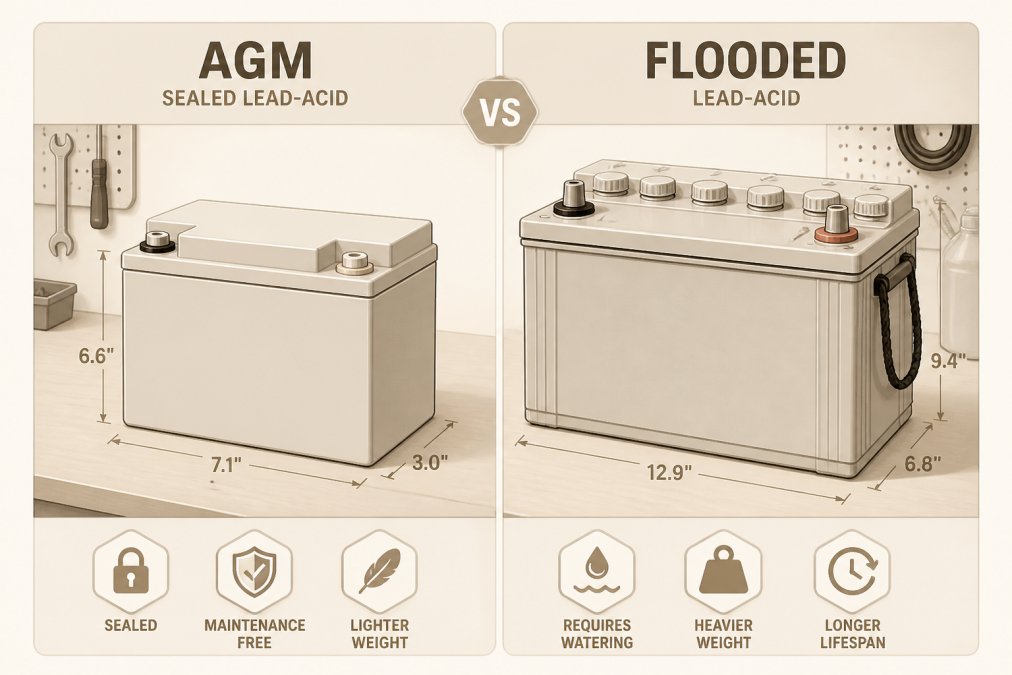
For most homeowners, AGM is the safer choice if budget allows. The maintenance-free operation and faster charging are genuinely valuable.
Flooded Lead-Acid Pros and Cons
Flooded lead-acid batteries have been around for over a century. They're simple, proven, and cheap. Lead plates sit in liquid sulfuric acid.
The main advantage is cost. A quality generic flooded deep-cycle battery runs 40-60% less than an AGM equivalent. The downsides are real. Flooded batteries require periodic maintenance, checking water levels every few months and topping off with distilled water. They produce hydrogen gas during charging, so they need ventilation. They also discharge faster during storage.
The key to buying a reliable generic flooded battery is checking the manufacturing date. Batteries sitting in warehouse inventory for more than six months start losing capacity before you even use them. Look for a date code on the battery label. If it's older than three months, ask for a recently manufactured unit.
Sump Pump Battery Life Expectancy and Replacement Intervals
A quality AGM battery typically lasts 5 to 10 years in a sump pump backup application (peer-reviewed research). Flooded lead-acid batteries typically last 2 to 3 years for sump pump duty. That's shorter than AGM, but reasonable if you maintain them properly.
Replace your battery every 3 to 5 years as preventive maintenance, even if it still seems to work. A battery that's three years old might power your pump for a few hours during an outage, but won't last the full duration you're counting on. Test the system a couple of times a year to catch aging batteries before they fail.
Sealed Lead Acid Battery Maintenance and Care
AGM batteries are maintenance-free by design. The sealed case means no water evaporation, no corrosion, no need to check levels. You install it, charge it, and leave it alone. The only maintenance is testing it annually to verify it still holds a charge.
Flooded batteries demand attention. Every few months, open the caps and check the electrolyte level. It should cover the plates completely. If it's low, add distilled water, never tap water, which contains minerals that degrade the battery.
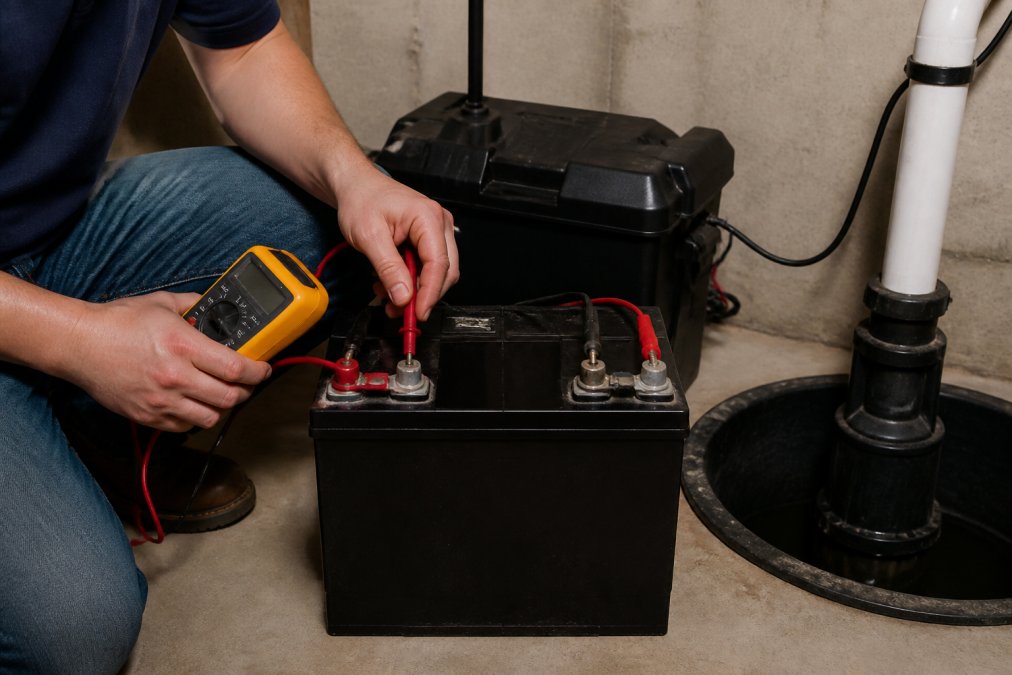
Corrosion at the terminals is another common issue. If you see white or blue crusty buildup around the posts, disconnect the battery and clean it with a wire brush and a baking soda solution.
Load testing is the real maintenance task for both types. A load tester applies a controlled electrical load to the battery and measures how well it responds. If the voltage drops too quickly under load, the battery is failing. Test twice a year, spring before storm season and fall before winter. battery backup systems.
| Maintenance Task | AGM Battery | Flooded Battery | Frequency |
|---|---|---|---|
| Check water levels | Not needed | Required | Every 2-3 months |
| Clean terminals | As needed | As needed | Annually or when corroded |
| Load test | Recommended | Recommended | Twice yearly |
| Top off distilled water | Never | As needed | When level drops |
| Replace | Every 5-10 years | Every 3-5 years | Per schedule |
Generic vs Branded Sump Pump Batteries: What Really Matters
For most homeowners, a quality generic battery works just as well as a branded one. The chemistry is identical. A generic AGM battery from a reputable supplier performs the same electrical job as a branded AGM battery.
What you're actually paying for with a brand name is predictable quality control, warranty coverage, and system compatibility assurance. Generic batteries also vary more in quality. Some are excellent. Some are mediocre. Without hands-on testing, you're making an educated guess. Branded batteries are more consistent because the manufacturer has reputation and liability on the line.
Cost Comparison and Value
Pricing for a deep-cycle battery for sump pump backup depends on quantity, dates, and delivery. If a generic battery lasts 3 years and costs less, and a branded battery lasts 5 years and costs more, the branded option could cost less per year of service. Where generic batteries lose value is when they fail prematurely. A battery that dies after 18 months instead of 36 months effectively costs twice as much per year of service. That's why buying from a reputable seller, checking reviews, verifying the manufacturing date, and confirming it's a true deep-cycle battery, matters more than the price tag.
Warranty and Reliability
Branded batteries typically come with a 1-3 year full replacement warranty. Generic batteries often have shorter warranties, sometimes just 30 days, or none at all. That warranty difference is real insurance. If your backup system fails during a storm because the battery died, the warranty cost becomes irrelevant compared to the water damage. Check the fine print before buying. A generic battery with a 1-year warranty is better than one with none.
Real-World Runtime: How Long Will Your Battery Actually Last?
A typical 1/3 HP sump pump draws 8-12 amps while running (the NIH). A 75Ah deep-cycle battery can theoretically pump 10,000 to 15,000 gallons before fully depleting. In real conditions, a fully charged 75-100Ah AGM battery on a 1/3 to 1/2 HP backup pump provides roughly 5 to 7 hours of continuous pumping, or 1 to 3 days of intermittent cycling.
Most power outages during storms are shorter than that. The average U.S. electricity customer experienced 11 hours of power interruptions in 2024 (energy.gov). Actual runtime depends heavily on how often the pump cycles. If water is pouring in and the pump runs continuously, you'll drain the battery in 5-7 hours. If water is trickling in and the pump runs for 30 seconds every 5 minutes, you might stretch that battery for 24+ hours.
The best strategy is to assume continuous pumping and ensure your battery capacity exceeds your expected outage duration. For most homeowners in areas with typical storm patterns, a 75Ah battery provides adequate backup. If you live in a flood-prone area or experience regular multi-hour outages, a 100Ah or larger battery is worth the extra cost.
How to Choose the Right Sump Pump Battery for Your Home
Start with your sump pump specifications. Check the pump's power rating (usually 1/3 to 1/2 HP for residential backup systems) and the recommended battery capacity. Don't go below the manufacturer's minimum.
Choose your chemistry. AGM batteries are maintenance-free and faster-charging. Flooded batteries are cheaper but require occasional water checks. Both work fine if you maintain them properly.
Verify it's a deep-cycle battery. Check the product listing for "deep cycle," "cycle life," or "discharge depth" language. Avoid starting batteries or general-purpose batteries labeled as "suitable for backup."
Check the manufacturer date. For flooded batteries especially, verify the manufacturing date is within the last three months.
Consider your budget and timeline. A branded battery costs more upfront but lasts longer and comes with warranty protection. A generic battery saves money if you're willing to maintain it and replace it more frequently.
Buy from a reputable seller. Bigtime Battery serves as your premier one-stop shop for all single-cell battery requirements. We specialize in providing high-quality replacement batteries for a vast array of devices, ensuring you always have the power you need at competitive prices. We offer a wide selection of deep-cycle options and reliable service.
Checking Ampere-Hour Ratings and Capacity
The amp-hour (Ah) rating tells you how much electrical energy the battery stores. A 75Ah battery can theoretically deliver 75 amps for one hour, or 1 amp for 75 hours. The Ah rating is your best indicator of total capacity.
Larger Ah ratings mean longer runtime. A 100Ah battery provides roughly 33% more runtime than a 75Ah battery. For sump pump backup systems, the sweet spot is usually 75-100Ah. Smaller batteries (50Ah or less) are inadequate for most residential pumps.
Signs of a Failing Battery
A battery doesn't usually die suddenly. It shows warning signs first. The first sign is slow charging. If your charger used to fully charge the battery in 8 hours and now takes 16 hours, the battery is aging.
The second sign is reduced runtime. If your battery used to keep the pump running for 6 hours and now only lasts 3 hours, it's degrading. The third sign is corrosion or swelling. White or blue crusty buildup around the terminals indicates chemical reactions inside the battery. A visibly swollen or deformed battery case means internal pressure is building, don't use it.
The fourth sign is voltage drop under load. Use a multimeter to check the battery voltage at rest (should be around 12.6V for a fully charged 12V battery). Then connect a load and check voltage again. If it drops below 11.5V or drops quickly, the battery is failing.
Choosing between generic and branded sump pump batteries comes down to balancing cost, reliability, and your willingness to maintain the system. Generic batteries can deliver years of dependable service at lower cost, but only if you buy from reputable sellers, verify you're getting true deep-cycle capacity, and test the system regularly. For homeowners seeking hassle-free backup power with warranty protection, branded batteries justify the premium. Either way, having a reliable battery backup is cheap insurance against flood damage that FEMA estimates can cost $25,000 or more for just one inch of water in a basement. At Bigtime Battery, we help you find the right backup solution for your needs, whether that's a branded system battery or a quality generic option. Get started with a battery that matches your pump's specifications, and test it before storm season arrives.
=== FAQ ANSWERS (audit these too, same rules) ===
[1] Q: What is the best battery for a sump pump backup system? A: A 75 to 100 amp-hour deep-cycle AGM or sealed lead-acid battery works best for most sump pump backup systems. AGM batteries are maintenance-free and charge faster (4 to 6 hours), while flooded lead-acid options cost less but require periodic water level checks. Choose based on your pump's horsepower, expected cycling frequency, and whether you prefer maintenance-free operation. Bigtime Battery carries a wide selection of replacement batteries to fit your budget and needs.
[2] Q: How long will a sump pump battery actually run during a power outage? A: A fully charged 75Ah deep-cycle battery can pump 10,000 to 15,000 gallons before depletion. Actual runtime depends on how often your pump cycles and water levels in your sump pit. During intermittent cycling (typical for most homes), a 75-100Ah AGM battery provides 1 to 3 days of protection. For continuous pumping, expect 5 to 7 hours. Test your system twice yearly to verify performance and know your actual runtime during emergencies.
[3] Q: How often should I replace my sump pump battery? A: Replace lead-acid batteries every 3 to 5 years for reliable performance. Newer LiFePO4 lithium batteries last 5 to 10 years, though they cost more upfront. Don't wait for failure, a battery that's 5 years old may not provide full capacity during an actual outage. Mark your battery's purchase date and set a reminder. Bigtime Battery can help you identify the right replacement when it's time.
[4] Q: Are generic sump pump batteries as good as branded ones? A: Generic deep-cycle batteries from reputable manufacturers perform well if they meet the correct amp-hour rating and chemistry (AGM or sealed lead-acid). The key difference is warranty length and brand support. Branded batteries often include longer warranties and guaranteed compatibility with specific backup systems. Generic options save money but require you to verify compatibility and specifications yourself. Both can deliver years of reliable backup power if properly maintained and tested regularly.
Frequently Asked Questions
Q: What is the best battery for a sump pump backup system?
A: A 75 to 100 amp-hour deep-cycle AGM or sealed lead-acid battery works best for most sump pump backup systems. AGM batteries are maintenance-free and charge faster (4 to 6 hours), while flooded lead-acid options cost less but require periodic water level checks. Choose based on your pump's horsepower, expected cycling frequency, and whether you prefer maintenance-free operation. Bigtime Battery carries a wide selection of replacement batteries to fit your budget and needs.
Q: How long will a sump pump battery actually run during a power outage?
A: A fully charged 75Ah deep-cycle battery can pump 10,000 to 15,000 gallons before depletion. Actual runtime depends on how often your pump cycles and water levels in your sump pit. During intermittent cycling (typical for most homes), a 75-100Ah AGM battery provides 1 to 3 days of protection. For continuous pumping, expect 5 to 7 hours. Test your system twice yearly to verify performance and know your actual runtime during emergencies.
Q: How often should I replace my sump pump battery?
A: Replace lead-acid batteries every 3 to 5 years for reliable performance. Newer LiFePO4 lithium batteries last 5 to 10 years, though they cost more upfront. Don't wait for failure, a battery that's 5 years old may not provide full capacity during an actual outage. Mark your battery's purchase date and set a reminder. Bigtime Battery can help you identify the right replacement when it's time.
Q: Are generic sump pump batteries as good as branded ones?
A: Generic deep-cycle batteries from reputable manufacturers perform well if they meet the correct amp-hour rating and chemistry (AGM or sealed lead-acid). The key difference is warranty length and brand support. Branded batteries often include longer warranties and guaranteed compatibility with specific backup systems. Generic options save money but require you to verify compatibility and specifications yourself. Both can deliver years of reliable backup power if properly maintained and tested regularly.