 Listicle
Best Lithium Motorcycle Battery for Harley-Davidson Touring
Quick Summary
The best lithium motorcycle battery for a Harley-Davidson Touring bike is a lithium iron phosphate (LiFePO4) replacement fitted to your exact model year and trim. Lithium cuts weight substantially versus AGM and can last longer, but it costs more and needs a lithium-compatible charger.
- Lithium can reduce a touring bike's weight by up to 17.6 pounds, according to Support Bikers.
- Lithium batteries have a potential lifespan of up to 7 years.
- Harley-Davidson does not officially recommend lithium for many 2024 and newer models.
- Confirm the model year and terminal layout before ordering any replacement battery.
- Use a charger with a lithium profile, since lead-acid chargers may not fully charge a LiFePO4 pack.
Table of Contents
- Lithium Motorcycle Battery Pros and Cons
- Choosing the Right Lithium Battery for Your Touring Model
- Lithium Battery Charger for Motorcycles: What You Need
- How to Install a Lithium Motorcycle Battery
- Cold Weather Starting, Lifespan and Failure Modes to Watch
- Order Your Touring Battery at bigtimebattery.com
- Frequently Asked Questions
Why Touring Riders Are Switching to Lithium Batteries
Touring riders carry a lot of weight, and lithium batteries are changing how they think about it. At Bigtime Battery, we see more touring owners asking about lithium options each season. The main reason is simple: a lithium battery can be far lighter than a traditional AGM, and on a heavy touring bike every pound matters.
Support Bikers reports that switching to lithium can reduce a touring bike's weight by up to 17.6 pounds (Support Bikers guide to lithium motorcycle batteries). Lithium also tends to outlast lead-acid designs. Support Bikers lists a potential lifespan of up to 7 years for lithium batteries.
Here's the catch: lithium is not the right choice for every rider or every bike. The sections below cover the real trade-offs, how to match a battery to your model, and what to watch for in cold weather.
Lithium Motorcycle Battery Pros and Cons
A lithium motorcycle battery trades a higher purchase price for lower weight and a longer expected service life. Lithium iron phosphate (LiFePO4) cells also hold their voltage well and deliver strong cranking power for their size.
How to Test Powersports Battery Voltage (2026 Guide)
The benefits are easy to name:
- Weight: Significantly lighter than AGM, which helps handling on long rides
- Lifespan: Longer expected service life than conventional lead-acid batteries
The drawbacks deserve equal attention:
- Price: Higher upfront cost than an AGM replacement
- Charging: Needs a charger suited to lithium chemistry
- Dealer policy: Harley-Davidson does not officially recommend lithium for many 2024 and newer models, according to current rider discussions (Harley-Davidson battery recommendations discussion)
Check your warranty and your dealer's position before you buy.
Choosing the Right Lithium Battery for Your Touring Model
Start with the model year and the exact battery fitment. A battery that fits one Touring model can be the wrong size or terminal layout for another.
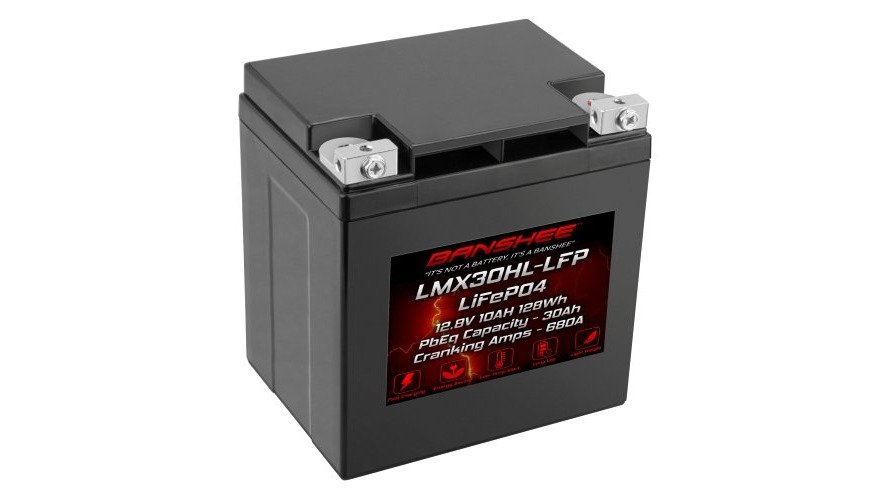
Bigtime Battery carries lithium LiFePO4 replacements built for specific Harley-Davidson Touring models, including the Banshee 30l-bs Lithium Lifepo4 Battery Compatible with 2006 Harley Davidson FLHTCUSE Screamin Eagle Ultra Classic Electra Glide, the Banshee Ytx30l-bs Lithium Lifepo4 Battery Compatible with 2014 Harley Davidson FLHTCUTG Tri Glide Ultra, and several other Ultra Classic, Ultra Limited and Tri Glide fitments (product). Each is listed at $199.99.
Matching Your Model Year and Battery Fitment
Compare your bike's model year and trim against the fitment listed on the product page before ordering. For example, the Banshee 30l-bs Lithium Lifepo4 Battery Compatible with 2012 Harley Davidson FLHX Street Glide is listed for that specific model. Confirm the terminal layout and physical dimensions match your current battery. If anything is unclear, check your owner's manual or ask your dealer before you buy.
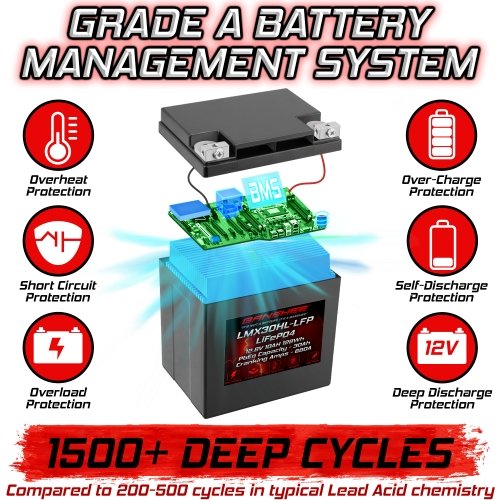
Understanding the Built-In Battery Management System
Lithium cells can be damaged by the wrong charging conditions, which is why many LiFePO4 designs use a battery management system (BMS). Ask whether a given battery includes a BMS before you buy, and confirm the rated operating temperature range on its listing.
The Bigtime Battery lithium LiFePO4 replacements listed for specific Touring models, all at the same listed price, are summarised below.
Product | Compatible model | Price |
|---|---|---|
Banshee 30l-bs Lithium Lifepo4 Battery | 2006 FLHTCUSE Screamin Eagle Ultra Classic Electra Glide | $199.99 |
Banshee Ytx30l-bs Lithium Lifepo4 Battery | 2014 FLHTCUTG Tri Glide Ultra | $199.99 |
Banshee 30l-bs Lithium Lifepo4 Battery | 2012 FLHX Street Glide | Listed for that model |
Lithium Battery Charger for Motorcycles: What You Need
A lithium battery needs a charger that uses a lithium charging profile. A standard lead-acid charger may not bring a LiFePO4 pack to full charge correctly or may not stop charging at the right voltage.
Look for a charger or tender that lists LiFePO4 or lithium support in its specifications. Keep the battery connected only to a charger designed for it, and check the charge status before long storage periods.
Watch out: using an unsuitable charger can undercharge the pack or damage its cells. Confirm charger compatibility before connecting.
How to Install a Lithium Motorcycle Battery
Installation is straightforward on most Touring models, but work carefully and in the right order.
Banshee Lithium Batteries are Versatile
- Turn off the ignition and remove the key. Confirm all accessories are off.
- Disconnect the negative (black) terminal first. Then disconnect the positive (red) terminal.
- Remove the old battery. Note the terminal orientation and how the battery is secured.
- Clean the terminals and mounting area. Remove corrosion with a wire brush.
- Set the new battery in place. Make sure the hold-down secures it firmly.
- Connect the positive terminal first, then the negative. Tighten both to the torque specified in your owner's manual.
- Test the start. Confirm the bike cranks and charging works normally.
Watch out: reversing the terminals can damage the battery and the bike's electrical system. Double-check polarity before reconnecting.
Cold Weather Starting, Lifespan and Failure Modes to Watch
Cold affects every battery, and lithium iron phosphate (LiFePO4) batteries are sensitive to charging at low temperatures. Check the rated operating temperature range on the listing before you buy, and charge the battery in a suitable environment if the garage falls below that range.
Use a lithium-compatible charger during storage, and check the listing for the rated operating temperature range before you buy.
Diagnosing a failing lithium battery versus a failing charging system is where many riders go wrong. The step-by-step voltage testing guide shows how to take each reading correctly before you decide on a replacement. A simple sequence helps:
- Measure resting voltage with the engine off and the battery fully charged. A healthy LiFePO4 pack rests at a voltage that drops only slightly over the first hours after charging. A pack that drops quickly, or that the BMS shuts down under light load, points to the battery.
- Measure charging voltage at the battery terminals with the engine running at a steady speed. If the reading stays flat and within the range your charging system is designed for, the regulator and stator are likely doing their job. A charging voltage that climbs far above normal or stays very low points to the regulator or stator.
- Check for AC ripple at the battery if you have a meter that reads it. High ripple suggests a failing stator or rectifier and will shorten the life of any battery, lithium included.
- Watch the BMS behavior. A BMS that trips the output during a start or under accessory load, while charging voltage looks normal, usually indicates a battery-side problem such as a cell imbalance or an aged pack.
Watch out: a battery that goes dead after sitting for a week often has a parasitic draw from an accessory or aftermarket wiring rather than a failed cell. Measure current draw with the key off before replacing anything.
Charging habits, storage state of charge and heat exposure all affect how long any battery lasts. Keeping clean, tight terminals and checking voltage periodically helps you spot problems early.
Order Your Touring Battery at bigtimebattery.com
If you are ready to upgrade, make your purchase at bigtimebattery.com. Bigtime Battery offers lithium LiFePO4 replacement batteries for select Harley-Davidson Touring models, with fitment listed for each, starting at $199.99. Use the Find the Right Battery tool to confirm the correct fit for your model before you order.
Frequently Asked Questions
What is the best lithium battery for Harley-Davidson?
The best choice depends on your model year and fitment, so start by matching the battery to your specific Touring model. Bigtime Battery offers Banshee lithium LiFePO4 batteries listed for a range of Harley-Davidson Touring models, priced at $199.99 each. Confirm the model listing matches your bike's year and configuration before ordering, and order at bigtimebattery.com.
Are lithium-ion batteries good for Harley-Davidson motorcycles?
Lithium batteries can be considerably lighter than traditional AGM batteries. Lithium packs are also commonly reported to offer longer service life than lead-acid designs. Check your owner documentation before switching.
How much weight can I save by switching to a lithium battery?
Lithium batteries are generally lighter than traditional AGM batteries. The exact saving depends on the battery you replace and the lithium pack you choose. Compare the listed weight of your current battery with the Banshee lithium option you plan to buy at bigtimebattery.com.
Do I need a special charger for a lithium motorcycle battery?
Lithium batteries charge on a different profile than AGM batteries, so a charger designed for lithium chemistry is the safer choice. A lead-acid charger may not charge a lithium battery correctly. Choose a charger rated for LiFePO4 and follow the manufacturer's voltage settings when maintaining the battery during storage.