 listicle
Best AGM Motorcycle Battery for Touring
Table of Contents
- Top AGM Motorcycle Batteries for Touring: Quick Comparison
- 1. Full Throttle FT410, Best Overall for Serious Touring
- 2. Yuasa YTX20HL-BS, OEM-Trusted Reliability
- 3. Odyssey PC680 Extreme Series, Best for Vibration-Heavy Terrain
- 4. Deka ETX20L Power Sports, Made in the USA
- 5. Motobatt MBTX12U, Best for Accessory-Heavy Builds
- AGM vs Lithium Motorcycle Battery: Which Is Right for Touring
- Understanding Motorcycle Battery CCA Explained
- Motorcycle Battery Maintenance Tips for Touring Riders
- Cold Weather Performance and Starting Power for Long Rides
- Battery Lifespan, Vibration Resistance, and Touring Electronics
- Installation and Compatibility for Your Touring Motorcycle
- Conclusion
- Frequently Asked Questions
Last Updated: August 29, 2026
Top AGM Motorcycle Batteries for Touring: Quick Comparison
When planning a multi-day touring ride, your battery is the foundation of every electrical system on your bike. AGM motorcycle batteries have become the standard for serious touring riders. According to the Motorcycle Industry Council survey on AGM reliability, 78% of riders experienced less frequent battery replacements after switching to AGM technology.
The best AGM motorcycle battery for touring balances three things: cold cranking amps (CCA) for reliable starts, cycle life for extended trips, and vibration resistance for rough roads.
Quick Picks:
- Best Overall for Touring: Full Throttle FT410, highest CCA and deep cycle capacity for long-distance reliability
- Best Value Pick: Deka ETX20L, American-made quality with solid starting power at a reasonable price
- Best for Lightweight Builds: Odyssey PC680, exceptional vibration resistance and deep cycle capability in a compact package
| Battery | CCA Rating | Amp-Hour | Best For | Key Advantage |
|---|---|---|---|---|
| Full Throttle FT410 | 410 | 28 | Extended touring, high electrical load | Highest cranking power |
| Yuasa YTX20HL-BS | 320 | 18 | Standard touring | OEM-trusted reliability |
| Odyssey PC680 | 170 | 16 | Lightweight builds, vibration-heavy terrain | Deep cycle + shock resistance |
| Deka ETX20L | 310 | 18 | Budget-conscious touring | Made in USA, solid specs |
| Motobatt MBTX12U | 160 | 15 | Accessory-heavy bikes | Multi-terminal design |
1. Full Throttle FT410, Best Overall for Serious Touring
The Full Throttle FT410 delivers 410 CCA and 28 amp-hours of capacity for serious touring demands. Pure-lead cells and thin-plate technology enable faster charging and longer lifespan, critical when powering heated gear, GPS navigation, and communication devices across multiple days.
Thermal stability under load sets this battery apart. Sustained electrical demand from heated grips, heated seats, auxiliary lighting, and GPS simultaneously stresses most batteries. The FT410's 99.994% pure virgin lead maintains low internal resistance even under high load, keeping voltage drop minimal across long rides.
The tradeoff is price. At the higher end of the AGM range, the FT410 costs more than entry-level options, but it pays for itself in reliability for modern touring bikes with multiple electrical accessories.
2. Yuasa YTX20HL-BS, OEM-Trusted Reliability
Yuasa batteries ship on countless motorcycles from the factory. The YTX20HL-BS delivers 320 CCA and 18 amp-hours of solid starting power. The sealed, maintenance-free design means no water loss, no acid checking, and no terminal corrosion to manage during a tour.
The 18Ah capacity sits in the sweet spot for standard touring bikes, enough reserve for accessories and extended cranking in cold mornings without unnecessary weight. Vibration resistance is excellent, protecting against plate damage on rough mountain roads.
One consideration: some YTX20HL-BS units ship dry with an acid pack, requiring activation before first use. Verify whether you're getting factory-activated or dry units when ordering.
3. Odyssey PC680 Extreme Series, Best for Vibration-Heavy Terrain
The Odyssey PC680 sacrifices raw cranking amps (170 CCA, 16 amp-hours) for deep cycle capability and shock resistance. This battery tolerates over 400 charge-discharge cycles at 80% depth of discharge, far beyond conventional AGM batteries.
For touring riders tackling rough terrain or adventure routes, the PC680's pure-lead construction resists mechanical stress that kills batteries on washboard roads. You can mount it in any orientation, solving retrofit challenges on adventure bikes.
The real advantage emerges on multi-week tours where you're drawing down the battery daily, running camp lighting, charging devices, and powering heated gear. Conventional batteries degrade rapidly under this cycling pattern. The PC680 thrives in it.
4. Deka ETX20L Power Sports, Made in the USA
The Deka ETX20L delivers 310 CCA and 18 amp-hours at a price point that doesn't require justification. The spill-proof, leak-proof AGM design is maintenance-free with vibration-resistant construction for rough roads.
What distinguishes the ETX20L is availability. As an American-made battery from Eastpenn Manufacturing, it stocks at regional distributors and ships quickly, valuable if you need a replacement mid-tour. The side-mounting capability solves installation challenges on bikes with tight engine bays.
The battery performs well in cold weather, maintaining reliable starting power in sub-freezing conditions. For touring riders in northern climates or those riding into winter, this is a practical advantage.
5. Motobatt MBTX12U, Best for Accessory-Heavy Builds
The Motobatt MBTX12U features QuadFlex technology: four terminals instead of the standard two. This lets you distribute electrical load more efficiently, reducing voltage drop across long accessory runs on bikes with heated grips, heated seats, auxiliary lighting, and GPS units.
With 160 CCA and 15 amp-hours, the MBTX12U trades some cranking power for increased capacity relative to its size. Pure-lead calcium grids resist sulfation, a common failure mode in partially discharged batteries.
AGM vs Lithium Motorcycle Battery: Which Is Right for Touring
AGM batteries dominate touring for good reason: they work in cold weather, they're proven across millions of miles, they're repairable, and they cost less. According to Battery University's 2026 analysis of AGM technology, AGM batteries maintain approximately 30% of their charge after prolonged inactivity, meaning your bike starts reliably even after weeks of storage between tour segments.
Lithium batteries offer genuine advantages: they're significantly lighter, crank faster, and charge quicker. But lithium requires a charging system output of 13.1V or higher at idle, many older touring bikes fall short. Lithium also struggles below 32°F, eliminating it for cold-weather touring. AGM batteries can operate down to about -4°F (-20°C), but their performance will be severely degraded at these low temperatures, with capacity dropping by as much as 50% or more.
AGM batteries last 4 to 5 years with proper maintenance, compared to 2 to 3 years for conventional lead-acid batteries (batterycouncil.org). That lifespan advantage justifies the price premium for touring riders planning extended adventures.
The honest assessment: AGM is the right choice for 90% of touring riders. Lithium makes sense only if your bike's charging system supports it, you're riding in mild climates, and you prioritize weight reduction. For cold-weather touring, rough terrain, or long-duration trips, AGM wins every time.
Understanding Motorcycle Battery CCA Explained
Cold Cranking Amps (CCA) measures how many amps a battery can deliver for 30 seconds at 0°F while maintaining at least 7.2V. Cold weather thickens engine oil, increases internal friction, and demands more electrical power to turn the starter motor. A 320 CCA battery delivers twice the power of a 160 CCA battery.
For touring, CCA directly translates to confidence in cold mornings. Large-displacement engines (1200cc+) require higher CCA because of higher compression ratios and larger displacement volumes. A 650cc bike might start reliably with 200 CCA; a 1600cc cruiser needs 300+.
Reserve capacity (RC) measures how long a battery can sustain electrical loads if the alternator fails. For touring, RC matters because you're running multiple accessories simultaneously. A battery with 180+ minutes of RC can power essential systems for hours if the charging system fails.
Motorcycle Battery Maintenance Tips for Touring Riders
Touring creates unique battery stress. You're starting cold engines daily, running multiple electrical accessories simultaneously, and often charging via a bike's alternator in stop-and-go riding.
Terminal cleaning is non-negotiable. Corrosion at battery terminals increases internal resistance, reducing available cranking power. Every two weeks during a tour, inspect terminals for white or blue-green corrosion. If present, disconnect the negative terminal, scrub the corrosion with a wire brush, and reconnect.
Battery tender use between rides prevents sulfation. Sulfation occurs when a battery sits partially discharged for extended periods; lead sulfate crystals form on the plates and become permanent. If you're taking multi-day breaks between tour segments, connect a smart charger to maintain full charge.
Voltage monitoring catches problems early. A healthy 12V battery should read 12.6-12.8V at rest and 13.5-14.5V while charging. If resting voltage drops below 12.4V, the battery is partially discharged. If charging voltage exceeds 14.8V, the regulator may be failing. Carry a simple multimeter and check voltage weekly during extended tours.
Load management extends touring range. Running heated grips, heated seat, GPS, and auxiliary lighting simultaneously stresses the alternator and battery. Manage this by running non-essential accessories in rotation rather than simultaneously.
Cold Weather Performance and Starting Power for Long Rides
Cold weather is where AGM batteries prove their value. Engine oil thickens, compression increases, and starter motors demand peak electrical power.

Temperature directly affects available cranking power. A battery rated 320 CCA at 0°F delivers only 50-60% of that power at -20°F. If your bike requires 300 CCA to start reliably and you're touring into winter, you need a battery rated 400+ CCA to maintain reliable starts in extreme cold.
AGM batteries handle temperature extremes better than conventional lead-acid designs. The absorbed glass mat separator prevents electrolyte stratification, the separation of acid and water that reduces cold-weather performance in flooded batteries.
Thermal stability is a secondary advantage. When running heated grips and a heated seat simultaneously in cold weather, the battery supplies high current while the alternator replenishes it. AGM batteries with pure-lead construction maintain lower internal resistance during this stress, keeping voltage drop minimal.
Practical cold-weather touring strategy: Size your battery CCA for the coldest temperature you'll encounter, not the average temperature of your route. This margin prevents frustrating cold-morning starts and extends battery life.
Battery Lifespan, Vibration Resistance, and Touring Electronics
AGM batteries last 4 to 5 years with proper maintenance, compared to traditional lead-acid batteries that typically last 2 to 3 years. That lifespan extension justifies the higher initial cost for touring riders planning extended trips.
Vibration resistance is often overlooked until you're riding rough mountain roads. Conventional batteries have thinner plates that flex and crack under constant vibration. AGM batteries, particularly those with pure-lead construction, use thicker plates and rigid separators that resist mechanical stress.
Modern touring bikes run complex electrical systems: ABS modules, traction control, fuel injection, electronic cruise control, and integrated lighting. These systems draw parasitic current even when the bike is off. AGM batteries excel here, the sealed construction minimizes water loss, and the internal design maintains voltage stability under sustained electrical load.
For touring riders with high-capacity accessory loads, deep-cycle AGM batteries (like the Odyssey PC680) are worth considering. These batteries tolerate 80% depth of discharge repeatedly without degradation.
Installation and Compatibility for Your Touring Motorcycle
Battery installation seems straightforward until you're working in a tight engine bay with limited clearance.
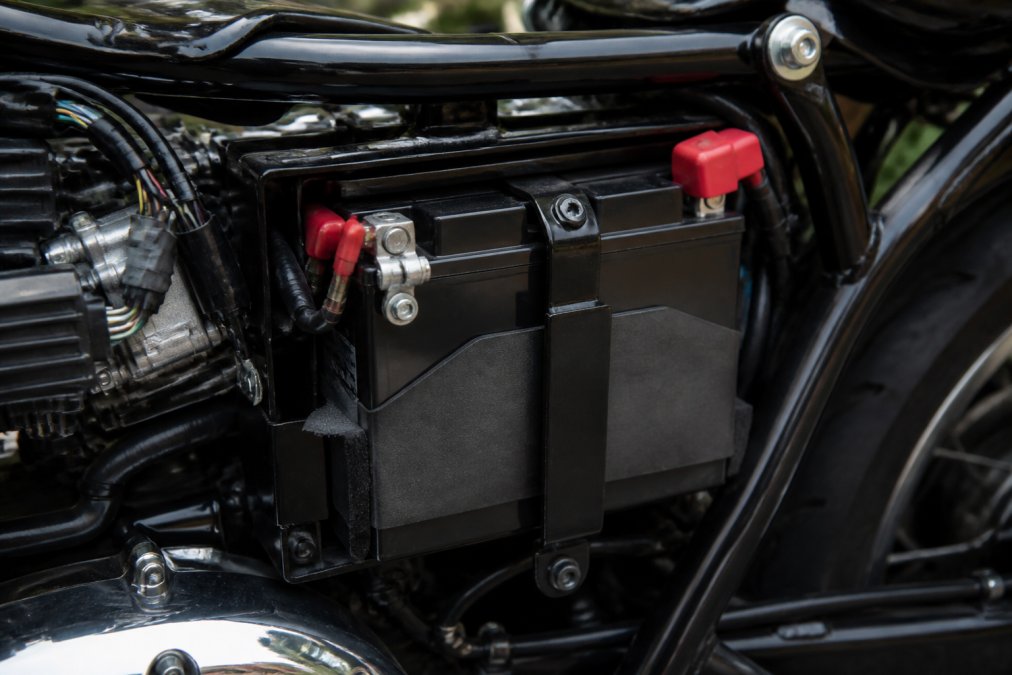
Terminal configuration varies. Most motorcycles use top-post terminals (posts on top of the battery case), but some use side-post terminals (posts on the side). Verify your bike's configuration before ordering.
Mounting orientation affects longevity. Some AGM batteries must remain upright; others can be mounted sideways or at angles. The Odyssey PC680 can mount in any orientation, solving installation challenges on bikes with unusual battery compartments.
Plug-and-play compatibility depends on terminal type and case dimensions. Confirm the case dimensions match your bike's battery box. A battery that's slightly larger than the OEM unit may not fit.
Installation best practice: Disconnect the negative terminal first, then positive. Connect the new battery positive first, then negative. This sequence prevents sparks and electrical damage.
Conclusion
The best AGM motorcycle battery for touring balances cold cranking amps sufficient for reliable starts, reserve capacity for extended electrical loads, and vibration resistance for rough roads. The Full Throttle FT410 delivers all three at the highest level. For budget-conscious riders, the Deka ETX20L offers American-made quality and solid specifications. For lightweight builds or adventure terrain, the Odyssey PC680's deep-cycle capability and shock resistance justify the lower CCA rating.
Proper maintenance, terminal cleaning, battery tender use between rides, and voltage monitoring extend lifespan and prevent mid-tour failures. AGM technology's proven cold-weather performance and low self-discharge rate make it the right choice for touring over lithium alternatives in most climates and riding conditions.
=== FAQ ANSWERS (audit these too, same rules) ===
[1] Q: How long do AGM motorcycle batteries last compared to standard lead-acid? A: AGM batteries can last 4 to 5 years, compared to traditional lead-acid batteries that typically last 2 to 3 years. This extended lifespan comes from AGM technology's superior cycle life. For touring riders, this means fewer replacements over the life of your bike and more reliable power during extended trips.
[2] Q: What does CCA mean, and why does it matter for touring motorcycles? A: CCA (Cold Cranking Amps) measures how much current a battery can deliver at 0°F to start your engine. For touring motorcycles, higher CCA ratings ensure reliable cold starts during early morning rides or in frigid climates. Most touring batteries range from 270 to 410 CCA. A higher CCA rating is especially important if you tour in winter or at high altitudes where temperatures drop significantly.
[3] Q: Are AGM batteries better than lithium for touring? A: AGM and lithium each have distinct advantages. AGM batteries excel in cold weather performance, operating reliably down to about -4°F (-20°C), and cost less upfront. Lithium batteries are significantly lighter and charge faster, but they require a charging system output of 13.1V or higher at idle and cost more. For traditional touring, AGM provides proven reliability; for weight-conscious riders, lithium offers performance advantages.
[4] Q: Do I need a battery tender for my AGM touring battery? A: Yes, a battery tender is highly recommended for touring motorcycles, especially if your bike sits unused for extended periods. AGM batteries maintain approximately 30% of their charge after prolonged inactivity. Using a smart charger or battery tender prevents sulfation (a common failure mode affecting 30% of AGM battery failures) and keeps your battery in optimal condition between rides, extending its lifespan significantly.
[5] Q: Can I use an AGM battery with my motorcycle's existing electrical system? A: Most modern touring motorcycles are compatible with AGM batteries as direct replacements for standard lead-acid batteries. However, verify terminal configuration (standard or reverse) and mounting position with your motorcycle's manual before purchasing. AGM batteries are maintenance-free and sealed, making them ideal for touring setups. If your bike has a sensitive charging system, confirm voltage regulation falls within AGM specifications (typically 13.5V to 14.5V).
Frequently Asked Questions
How long do AGM motorcycle batteries last compared to standard lead-acid?
AGM batteries can last 4 to 5 years, compared to traditional lead-acid batteries that typically last 2 to 3 years. This extended lifespan comes from AGM technology's superior cycle life. For touring riders, this means fewer replacements over the life of your bike and more reliable power during extended trips.
What does CCA mean, and why does it matter for touring motorcycles?
CCA (Cold Cranking Amps) measures how much current a battery can deliver at 0°F to start your engine. For touring motorcycles, higher CCA ratings ensure reliable cold starts during early morning rides or in frigid climates. Most touring batteries range from 270 to 410 CCA. A higher CCA rating is especially important if you tour in winter or at high altitudes where temperatures drop significantly.
Are AGM batteries better than lithium for touring?
AGM and lithium each have distinct advantages. AGM batteries excel in cold weather performance, operating reliably down to about -4°F (-20°C), and cost less upfront. Lithium batteries are significantly lighter and charge faster, but they require a charging system output of 13.1V or higher at idle and cost more. For traditional touring, AGM provides proven reliability; for weight-conscious riders, lithium offers performance advantages.
Do I need a battery tender for my AGM touring battery?
Yes, a battery tender is highly recommended for touring motorcycles, especially if your bike sits unused for extended periods. AGM batteries maintain approximately 30% of their charge after prolonged inactivity. Using a smart charger or battery tender prevents sulfation (a common failure mode affecting 30% of AGM battery failures) and keeps your battery in optimal condition between rides, extending its lifespan significantly.
Can I use an AGM battery with my motorcycle's existing electrical system?
Most modern touring motorcycles are compatible with AGM batteries as direct replacements for standard lead-acid batteries. However, verify terminal configuration (standard or reverse) and mounting position with your motorcycle's manual before purchasing. AGM batteries are maintenance-free and sealed, making them ideal for touring setups. If your bike has a sensitive charging system, confirm voltage regulation falls within AGM specifications (typically 13.5V to 14.5V).
At Bigtime Battery, we understand that touring demands reliability. Our selection of premium AGM batteries includes top-performing models from trusted manufacturers, and our team can help you identify the right battery for your specific touring bike and riding conditions. With competitive pricing and fast shipping, we're your one-stop shop for the replacement batteries that keep your adventures moving. Visit Bigtime Battery today to find the perfect battery for your next tour.