 ultimate-guide
Benefits of Lithium Motorcycle Battery: 2026 Guide
Table of Contents
- Why Riders Are Switching to Lithium Motorcycle Batteries in 2026
- Lithium Battery Weight Savings Motorcycle: Lighter Bikes, Better Handling
- Lithium vs Lead Acid Motorcycle Battery: Performance, Lifespan, and Cost
- Lithium Motorcycle Battery Charger Requirements: What You Need to Know
- Cold Weather Performance and Starting Procedures
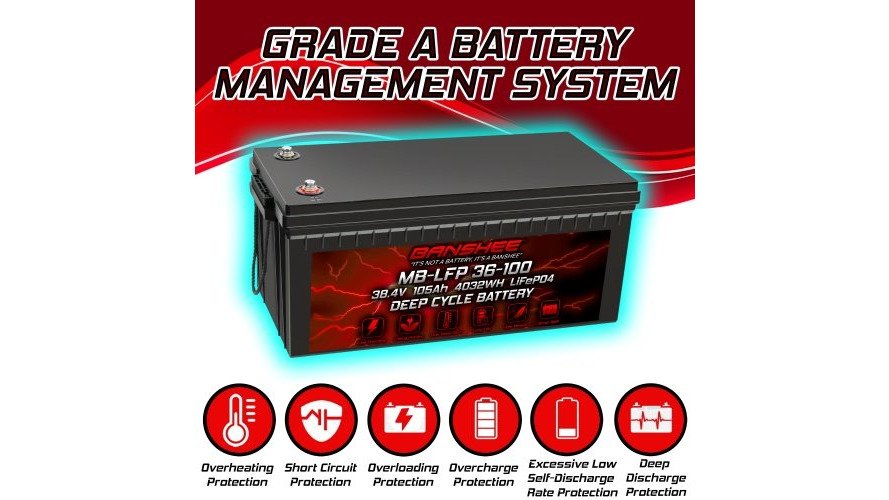
- Battery Management Systems (BMS) and Safety Features
- Maintenance, Disposal, and Recycling Logistics
- Conclusion: Is a Lithium Motorcycle Battery Right for You?
- Frequently Asked Questions
Last Updated: September 12, 2026
Why Riders Are Switching to Lithium Motorcycle Batteries in 2026
The global motorcycle battery market is estimated to reach $8.489 billion in 2026, and lithium-ion technology is capturing a growing share because it solves problems lead-acid batteries create. The benefits of lithium motorcycle battery technology come down to weight, lifespan, and how the battery behaves when your bike sits unused.
This guide breaks down what changes when you swap lead-acid for lithium, where the trade-offs are real, and how to avoid the installation mistakes that cause most failures.
A lithium motorcycle battery is a rechargeable power source that uses lithium-ion chemistry, typically LiFePO4, instead of lead plates and liquid electrolyte. That chemistry change produces a battery up to 70% lighter than a lead-acid equivalent, with a self-discharge rate 15 times lower, according to LithiumHub's starter battery performance data. The global lithium-ion market reflects that shift: it is projected to grow from $134.08 billion in 2025 to $865.33 billion by 2034, per Fortune Business Insights' market analysis.
What most riders get wrong is assuming lithium is simply "a better battery." It isn't a drop-in upgrade in every case: charging voltage, cold-start behavior, and your bike's charging system determine whether lithium delivers its advantages or underperforms.
Lithium Battery Weight Savings Motorcycle: Lighter Bikes, Better Handling
Weight savings is the most immediate benefit. A lithium motorcycle battery typically weighs 70% less than the lead-acid battery it replaces, 2.3 to 4.5 kilograms removed from a machine where every kilogram affects handling.

That mass sits high and often toward the rear, so removing it lowers the center of gravity. Riders report quicker turn-in and less low-speed effort, especially on smaller-displacement bikes where the battery is a larger share of total weight.
Lithium also delivers higher power density in a smaller case, freeing space under the seat without sacrificing cranking power.
Where it falls short: lithium batteries cost more upfront, and that gap has to be justified by lifespan and performance rather than purchase price alone.
Lithium vs Lead Acid Motorcycle Battery: Performance, Lifespan, and Cost
The lithium vs lead acid motorcycle battery comparison comes down to three measurable differences: cycle life, self-discharge, and total cost of ownership. Lithium wins on all three over time, but the upfront math requires patience.
| Factor | Lithium (LiFePO4) | Lead-Acid / AGM |
|---|---|---|
| Weight | Up to 70% lighter | Baseline |
| Cycle life | Up to 4x longer | Baseline |
| Self-discharge | 15x lower | Baseline |
| Cold cranking amps | High, stable | Lower in cold |
| Upfront cost | Higher | Lower |
| Maintenance | Maintenance-free | Terminal care needed |
Cycle Life and Self-Discharge Compared
Lithium-ion batteries can last up to four times longer than lead-acid, according to LithiumHub's lifespan comparison. A lead-acid battery that sulfates after two or three seasons may be replaced once or twice before a single lithium pack reaches end of life.
Self-discharge matters just as much. Lithium's 15x lower rate means a bike stored for months still fires up without a trickle charger, while lead-acid batteries lose charge steadily and sulfate when left partial, the leading cause of premature failure.
Upfront Cost vs Long-Term Value
The higher initial investment is the main objection, and it's a fair one. Some riders report getting three to six years from a well-maintained AGM battery and question whether lithium's price premium is justified, as discussed in ADV Rider community threads.
The counterargument is lifespan math. If a lithium battery lasts up to four times longer and eliminates replacement cycles, the per-year cost narrows considerably, and weight savings plus zero maintenance strengthen the case for riders who keep bikes long-term.
Lithium Motorcycle Battery Charger Requirements: What You Need to Know
Lithium motorcycle battery charger requirements differ from lead-acid in one critical way: voltage regulation. Lithium batteries need a charger that holds a precise absorption voltage, typically 14.2 to 14.6 volts, and stops charging cleanly when full. A standard lead-acid charger can overcharge a lithium battery because it applies a float stage lithium doesn't want. BMS over-voltage protection helps, but relying on it alone shortens battery life.
What to check before buying a charger:
- Confirm it has a dedicated lithium or LiFePO4 mode
- Verify absorption voltage lands between 14.2 and 14.6 volts
- Avoid chargers with automatic desulfation cycles, which damage lithium cells
If you're coming from lead-acid, expect to buy a lithium-compatible charger or maintainer. It's a one-time cost that protects the battery.
The Charging System on Your Bike Matters More Than the Wall Charger
Most guides stop at the bench charger. The harder problem is the charging system already bolted to your motorcycle, the stator, regulator/rectifier, and wiring harness. These were designed around lead-acid's forgiving chemistry and behave differently when asked to feed a lithium pack.
Three failure modes show up repeatedly on older machines:
1. Undercharging from a weak or tired stator. A stator that produced adequate voltage for a lead-acid battery at 60% state of charge may not push a lithium battery past 80%. Lithium's flat discharge curve means voltage stays high until it drops off a cliff, so a marginal stator can leave the pack chronically undercharged without any obvious symptom until capacity fades.
2. Overvoltage from an unregulated or failing regulator/rectifier. Older bikes, particularly pre-1990s models with separate regulator and rectifier units, can spike above 15 volts when the regulator fails. Lead-acid tolerates brief spikes; lithium does not. A BMS will cut charging to protect the cells, but repeated overvoltage stresses the protection circuit and shortens pack life.
3. Parasitic drain from accessories. USB ports, alarms, and heated grips pull current even when the bike is off, cancelling lithium's low self-discharge advantage. Measure key-off current draw with a multimeter; anything above roughly 10-20 milliamps deserves investigation.
What to Verify Before Installing Lithium on an Older Bike
Before dropping a lithium battery into a vintage or older motorcycle, run these checks:
- Measure charging voltage at the battery terminals at idle and at roughly 3,000 RPM. You want 13.8 to 14.4 volts at cruise; below 13.5 suggests undercharging, above 14.8 a regulator problem.
- Inspect the regulator/rectifier for heat damage, melted connectors, or a part number predating modern MOSFET designs. Upgrading to a modern series regulator is a common fix on older machines.
- Confirm the battery tray and hold-down hardware fit the smaller lithium case, since a loose battery can vibrate and stress terminals.
- Check that the battery's CCA rating meets or exceeds the original equipment spec. Lithium CCA ratings aren't directly comparable to lead-acid, so use the manufacturer's cross-reference rather than matching numbers.
Matching the Battery to the Charging System You Actually Have
Modern motorcycles with MOSFET regulators and CAN-bus electrical systems are generally lithium-friendly out of the box. Older bikes, bikes with known stator weaknesses, and machines with aftermarket accessories need a closer look, some riders add a voltage-sensing relay or lithium-compatible regulator to bring an older charging system into spec. Ensuring a stable electrical foundation remains the most critical step before pursuing further motorcycle performance upgrades to maximize the power delivery of your machine.
The practical rule: lithium rewards a healthy charging system and punishes a marginal one. If your lead-acid battery lasts only a season or two, the charging system needs attention before any chemistry swap.
Cold Weather Performance and Starting Procedures
Cold weather changes how lithium behaves, but not in the way most riders expect. Lithium batteries deliver strong cranking amps in cold temperatures; the limitation is that they resist accepting a charge below freezing. Understanding why separates a lithium pack that lasts a decade from one that fails in two seasons.
Why Lithium Struggles in the Cold
Lithium-ion chemistry relies on lithium ions moving between the anode and cathode through an electrolyte. As temperature drops, the electrolyte thickens and ion mobility slows. Two things happen:
- Discharge (cranking) still works, but with reduced voltage. At 32°F, a lithium battery may deliver roughly 70-80% of its rated cranking power; at 0°F, that can drop to 50% or less. The battery isn't damaged, it's simply sluggish.
- Charging below freezing causes permanent damage. Forcing current into a lithium cell below 32°F makes lithium metal plate out on the anode instead of intercalating into the graphite. This plating is irreversible and permanently reduces capacity, which is why most quality BMS units block charging below 32°F.
Lead-acid behaves differently: it loses cranking power as temperatures drop, but accepts a charge in the cold without plating damage. That is the trade-off lithium makes.
Cold-Start Procedure That Actually Works
The goal is to warm the cells internally before cranking. Internal resistance generates heat when current flows, so a brief controlled draw raises cell temperature.
- Turn on the headlight (or another accessory) for 30 to 60 seconds. This draws current and warms the cells from the inside. Don't use the starter, repeated short cranks drain the battery without warming it enough.
- Crank immediately after the warm-up draw. The cells are now at their warmest for the start attempt.
- If the first crank fails, wait 30 seconds and repeat the headlight warm-up. Do not rapid-fire the starter.
- Once running, let the bike idle briefly before riding. This lets the charging system stabilize and the battery recover from the cranking load.
Charging in Cold Conditions
This is where lithium demands discipline. If your bike is stored in an unheated garage or shed:
- Charge before the cold sets in. Bring the battery to full charge in autumn while temperatures are above freezing. A fully charged lithium battery can sit through winter with minimal self-discharge.
- Do not connect a charger below 32°F. Even a lithium-specific charger will be blocked by the BMS. If you must charge in cold conditions, bring the battery indoors, let it reach room temperature, then charge.
- Disconnect the battery for long storage. This eliminates parasitic drain and any chance of the BMS being triggered by a charger that doesn't understand cold-temperature limits.
Riding in Cold Weather
Once the bike is running, cold weather riding is fine for lithium. The charging system brings the battery back to full as the bike warms up, and the battery's internal temperature rises with use. The main caution is short trips: a 10-minute ride in freezing temperatures may not replace the charge used during starting, especially if the battery started the day cold. Winter short-distance commuters should top up periodically with a lithium-compatible maintainer, indoors, at room temperature.
Storage Temperature Limits
Lithium batteries tolerate cold storage far better than lead-acid. A fully charged lithium pack can sit at 0°F for months without damage, provided it isn't charged in that state. What lithium can't tolerate is extended storage above roughly 110°F, which accelerates capacity loss. A garage that freezes in winter and bakes in summer is harder on lithium than one that stays moderate year-round.
Battery Management Systems (BMS) and Safety Features
The BMS is the component that makes lithium safe and reliable, and it's the feature most buyers overlook. A battery management system is an electronic circuit that monitors and controls each cell's voltage, current, and temperature to prevent damage.
A quality BMS handles several jobs at once:
- Over-voltage protection during charging
- Under-voltage cutoff to prevent deep discharge
- Over-current and short-circuit protection
- Cell balancing to keep all cells at equal state of charge
- Thermal cutoff to prevent thermal runaway
Cheap lithium batteries cut corners on the BMS, which is where safety problems originate. Research published in ScienceDirect on lithium-ion energy storage confirms that high energy density and long cycle life depend on proper cell management. A battery without cell balancing will drift out of balance and fail early.
Modern lithium motorcycle batteries increasingly add Bluetooth monitoring, letting you check state of charge and cell health from your phone. It's a genuine convenience for riders who store bikes seasonally.
Maintenance, Disposal, and Recycling Logistics
Lithium motorcycle batteries are maintenance-free in daily use, but disposal requires planning. You cannot put a lithium battery in standard trash, and recycling infrastructure varies by location.
Maintenance-free operation means no terminal cleaning, no electrolyte checks, and no watering. Shelf life and capacity retention hold up during storage, so seasonal riders skip the winterization routine lead-acid demands.
Disposal logistics are the part nobody mentions at purchase. Lithium batteries should go to a dedicated battery recycler or a retailer that accepts them. Battery reuse and advanced recycling recover valuable materials and reduce environmental impact, according to MDPI's review of lithium-ion battery lifetime. The industry is also reducing reliance on high-risk minerals like cobalt while improving recovery processes.
Before disposing of any battery, check local rules for lithium-specific drop-off points. Many auto parts retailers and municipal facilities accept them.
Conclusion: Is a Lithium Motorcycle Battery Right for You?
The benefits of lithium motorcycle battery technology are real and measurable: less weight, longer life, lower self-discharge, and no maintenance. The catch is that lithium rewards riders who match it to the right charging system and understand its cold-weather limits.
If you want a battery that fires up after months of storage, sheds kilograms from your bike, and outlasts two or three lead-acid replacements, lithium is the stronger choice. If you rely on an old charger with no lithium mode, budget for a compatible unit before you buy.
Bigtime Battery stocks replacement batteries across marine, powersports, and specialty applications, with low prices and a one-stop selection for single-cell needs. Whether you're outfitting a single bike or a fleet, the team helps you match the right battery to your application.
Get started with Bigtime Battery and find a reliable power solution built for your ride.
Frequently Asked Questions
Are lithium motorcycle batteries worth the extra cost?
Lithium motorcycle batteries cost more upfront than lead-acid, but they last up to 4x longer according to LithiumHub, 2024. They also weigh up to 70% less and have a 15x lower self-discharge rate. Over several years, the longer lifespan and reduced replacement frequency often make lithium a better value for riders who plan to keep their bike. Bigtime Battery offers competitive pricing on lithium options, so check their site for current quotes.
Do lithium motorcycle batteries require a special charger?
Yes. Lithium motorcycle battery charger requirements differ from lead-acid. You need a charger with a lithium-specific profile that delivers the correct voltage and includes cell balancing. Using a standard lead-acid trickle charger can overcharge or damage the battery. Look for a charger with a LiFePO4 mode and over-voltage protection. Bigtime Battery carries compatible chargers, so you can match your battery and charger in one order.
How much weight do you save with a lithium motorcycle battery?
Lithium motorcycle batteries can be up to 70% lighter than traditional lead-acid counterparts, according to LithiumHub, 2024. For a typical 12V motorcycle battery, that means shedding several pounds. The lithium battery weight savings motorcycle riders notice most is in handling and maneuverability, especially on smaller bikes or when riding off-road. Less weight also reduces strain on the charging system and improves overall power-to-weight ratio.
Can a lithium motorcycle battery be used in cold weather?
Lithium batteries work in cold weather but need a warm-up procedure. Below freezing, internal resistance rises and cranking amps drop temporarily. Turn on your headlight for 30 to 60 seconds before starting to wake up the battery. Some premium lithium batteries include internal heating. Once warmed, they perform well. If you ride in consistent sub-freezing temperatures, consider a battery with a built-in BMS that manages cold-weather charging safely.