 comparison
12V Deep Cycle Battery: Comparison & Selection Guide
Table of Contents
- What Is a 12V Deep Cycle Battery?
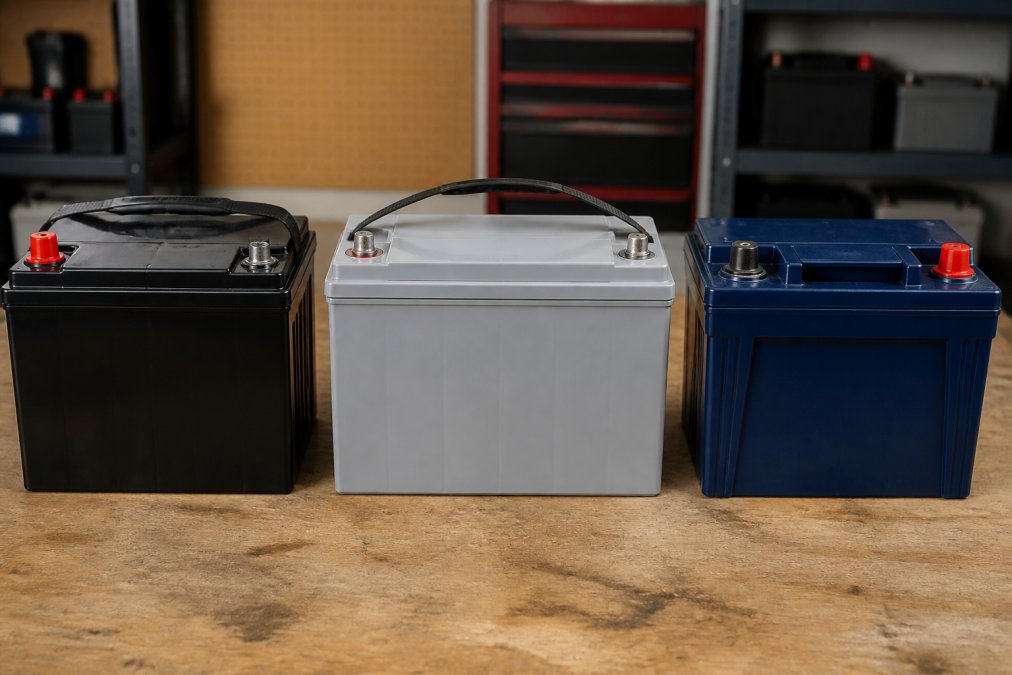
- Lithium vs. AGM Deep Cycle Batteries: Key Differences
- Understanding 12V Battery Amp Hour Capacity
- Cycle Life, Depth of Discharge, and Longevity
- How to Charge a Deep Cycle Battery Correctly
- Applications: Marine, RV, Solar, and Off-Grid Power
- Top 12V Deep Cycle Battery Options
- Frequently Asked Questions
Last Updated: August 19, 2026
What Is a 12V Deep Cycle Battery?
A 12V deep cycle battery is a rechargeable power source designed to discharge and recharge repeatedly without significant degradation. Unlike automotive starter batteries that deliver short bursts of high current, deep cycle batteries provide steady power over hours or days, then recharge for the next cycle.
The distinction matters: starter batteries sacrifice longevity for cranking power; deep cycle batteries sacrifice cranking power for cycle life. According to DMR's 2026 deep cycle battery market analysis, the U.S. deep cycle batteries market is projected to reach USD 1.7 billion by 2034, growing at 4.9% annually, driven by renewable energy adoption and marine electrification.
The 12V format remains standard for small boats, recreational vehicles, portable power systems, and backup solutions. The three dominant chemistries are flooded lead-acid (FLA), absorbed glass mat (AGM), and lithium iron phosphate (LiFePO4). Flooded lead-acid held 65.8% of the deep cycle market in 2024, but lithium adoption is accelerating.
Lithium vs. AGM Deep Cycle Batteries: Key Differences
The chemistry you choose determines performance, cost, and maintenance burden. Lithium iron phosphate (LiFePO4) and absorbed glass mat (AGM) represent the two directions the market is moving.
LiFePO4 Chemistry and Performance
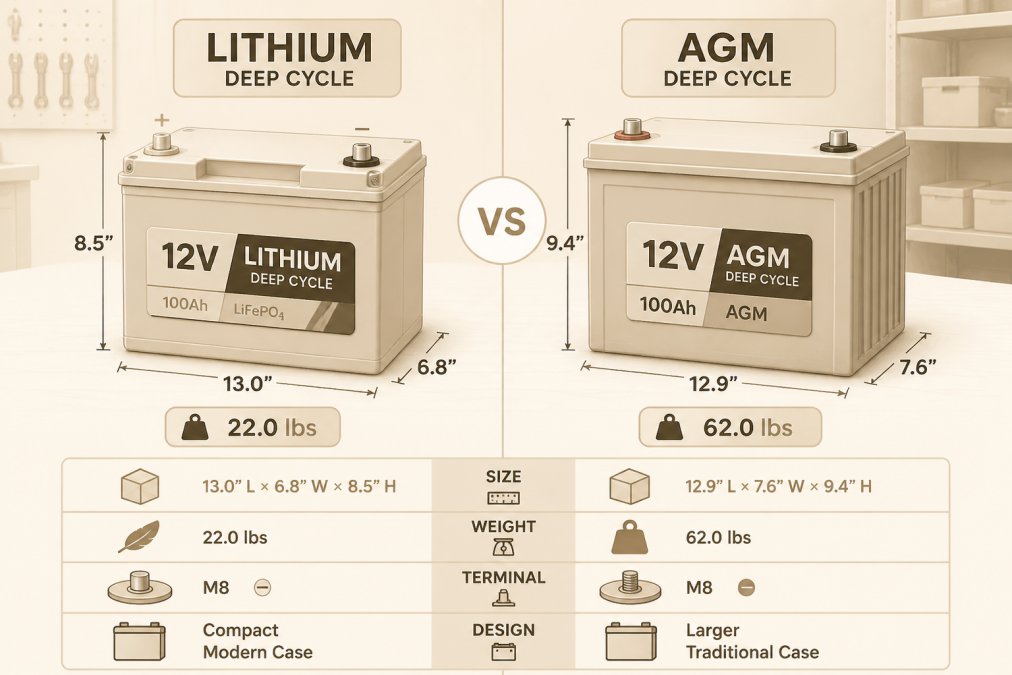
Lithium iron phosphate batteries deliver 3,000 to 5,000 cycles at 80% depth of discharge, compared to 500-1,000 cycles for lead-acid, a 5-10x lifespan advantage. They're 60-70% lighter than equivalent AGM batteries, critical when weight affects performance and fuel efficiency.
A 100Ah LiFePO4 battery stores roughly the same energy as a 200Ah lead-acid battery but weighs half as much. You can safely discharge lithium to 100% depth of discharge without damage, whereas lead-acid degrades rapidly below 50% DoD. This means a smaller lithium battery often delivers the same usable capacity as a much larger lead-acid alternative.
LiFePO4 batteries include an internal battery management system (BMS) that protects against overcharge, over-discharge, and thermal runaway. The tradeoff is cost: a quality 100Ah LiFePO4 battery starts around $800, while a comparable AGM costs $250-350. Over a 10-year lifespan, the per-cycle cost favors lithium. Temperature performance is another advantage: lithium operates efficiently from -4°F to 140°F, whereas lead-acid performance drops sharply below 32°F.
AGM Technology and Reliability
Absorbed glass mat batteries use a fiberglass separator soaked in electrolyte, eliminating free liquid found in flooded lead-acid batteries. This design makes AGM batteries spill-proof, maintenance-free, and resistant to vibration. They recharge faster than flooded lead-acid and tolerate overcharging better.
The Optima YellowTop D34/78 delivers 750 cold cranking amps and 55Ah capacity with 15 times greater vibration resistance than traditional batteries. Cycle life for AGM batteries typically ranges from 400-800 cycles at 50% depth of discharge. The VMAXTANKS SLR125 AGM achieves up to 1,600 cycles at 25% DoD, competitive for AGM technology but still trailing lithium by 2-3x.
Cost is the primary advantage. An AGM battery costs 30-50% less than equivalent lithium, making it practical for budget-conscious buyers or applications where cycle life isn't critical.
Lead-Acid Batteries: Cost vs. Performance
Flooded lead-acid batteries remain the cheapest option, starting around $150-200 for 100Ah capacity. They're proven and work with any standard charger, but demand maintenance: checking electrolyte levels, adding distilled water, and managing sulfation.
Cycle life is limited: 300-500 cycles at 50% DoD. They're heavy (60+ lbs for 100Ah) and perform poorly in cold temperatures. According to U.S. Battery Storage Capacity Growth Report 2023, battery storage capacity in the U.S. grew from 9.3 gigawatts in 2022 to 16.2 gigawatts in 2023, with AGM and lithium chemistries driving growth. Lead-acid's share is declining.
For applications where batteries sit unused for months (backup power, emergency lighting), lead-acid's low cost still makes sense. For active cycling, solar systems, marine propulsion, and RV house batteries, the per-cycle economics favor AGM or lithium.
| Chemistry | Cycle Life | Weight (100Ah) | Cost | Best For | Maintenance |
|---|---|---|---|---|---|
| LiFePO4 | 3,000-5,000 | ~31 lbs | $800+ | RV, marine, solar | None |
| AGM | 400-800 | ~60 lbs | $250-350 | Dual-purpose, vibration | None |
| Flooded Lead-Acid | 300-500 | 60+ lbs | $150-200 | Budget, backup | Water checks required |
Understanding 12V Battery Amp Hour Capacity
Amp-hour (Ah) measures how much charge a battery can store and deliver. A 100Ah battery can theoretically deliver 100 amps for one hour, or 10 amps for 10 hours. Undersizing leads to frequent deep discharges and premature failure; oversizing wastes money and adds weight.
For a marine application, calculate your average power draw in amps, then multiply by hours without recharging. A trolling motor drawing 30 amps for 8 hours needs at least 240Ah of capacity. With lithium (100% safe DoD), a 240Ah battery works. With AGM (50% safe DoD), you'd need 480Ah. With lead-acid, you'd want 600Ah.
Watt-hours (Wh) is another useful metric: multiply voltage by amp-hours. A 12V 100Ah battery stores 1,200 watt-hours. Reserve capacity measures how many minutes a fully charged battery can deliver 25 amps before dropping below 10.5V. The VMAXTANKS SLR125 has 260 minutes reserve capacity, useful for estimating real-world runtime.
Cycle Life, Depth of Discharge, and Longevity
Cycle life is the number of charge-discharge cycles a battery survives before capacity drops to 80% of its rated value. Depth of discharge (DoD) is how much of a battery's capacity you use before recharging. A 100Ah battery discharged to 50% DoD means you're using 50Ah and leaving 50Ah in reserve.
Lead-acid batteries should never be discharged below 50% DoD. Doing so accelerates sulfation, permanently reducing capacity. Flooded lead-acid discharged to 50% DoD achieves 500-800 cycles; discharged deeper, that drops to 200-300 cycles. Lithium batteries are different: LiFePO4 chemistry is stable at 100% DoD, you can discharge the entire capacity without damage. This is why a 100Ah lithium battery often replaces a 200Ah AGM or 300Ah lead-acid system.
The VMAXTANKS SLR125 achieves 1,600 cycles at 25% DoD. In real-world applications cycling deeper (50-75% DoD), expect 400-600 cycles. A Battle Born 100Ah LiFePO4, rated for 3,000-5,000 cycles, will outlast it by 5-10x. Temperature affects cycle life significantly: optimal storage temperature is 50-77°F. A battery stored at 100°F ages roughly twice as fast as one stored at 77°F.
How to Charge a Deep Cycle Battery Correctly
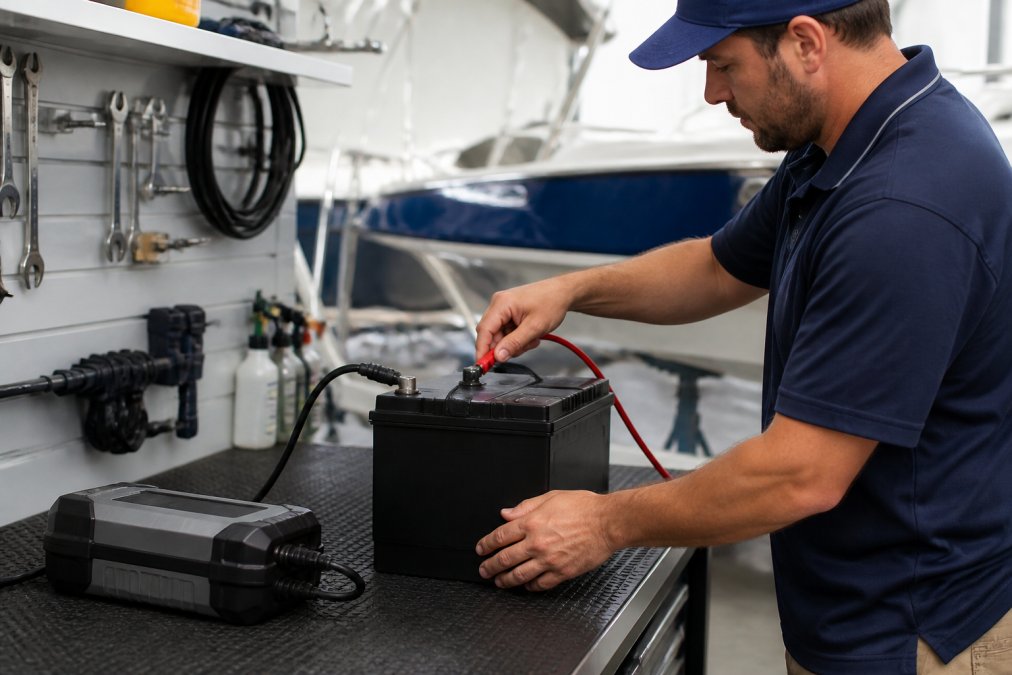
Charging a 12V deep cycle battery correctly prevents premature failure and maximizes cycle life. The process has distinct phases: bulk charging, absorption, and float.
Bulk Charging and Float Voltage
Bulk charging is the initial phase where the charger delivers maximum current (typically 10-20% of battery Ah capacity) at constant current until voltage reaches a set threshold, usually 14.4V for a 12V lead-acid or AGM battery. This phase recharges 80% of capacity quickly.
Once bulk charging completes, the charger enters absorption phase, holding voltage at 14.4V while current tapers gradually. This phase finishes the remaining 20% of charge but takes longer. Absorption typically lasts 4-8 hours. Float voltage is the final phase where the charger maintains a lower voltage (13.2-13.8V for lead-acid, 13.6V for AGM) to keep the battery fully charged without overcharging.
Lithium batteries require different voltage profiles. LiFePO4 batteries charge to 14.6V bulk, then float at 13.6V. Using a lead-acid charger on lithium will either fail to charge fully or damage the battery. A 20-amp charger on a 100Ah battery takes roughly 5-7 hours to fully charge from 50% DoD. A 50-amp charger cuts that to 2-3 hours.
Battery Management Systems and Temperature Impact
Modern lithium batteries include a battery management system (BMS) that monitors individual cells, preventing overcharge, over-discharge, and thermal runaway. Temperature during charging is critical. Charging a cold battery (below 32°F) can damage it permanently. Optimal charging temperature is 50-85°F.
Overcharging is a common mistake. Leaving a battery on a charger indefinitely causes water loss in flooded batteries, plate corrosion in AGM, and potential cell damage in lithium. Use a smart charger with automatic float mode or a charger matched to your battery chemistry.
Applications: Marine, RV, Solar, and Off-Grid Power
The 12V deep cycle battery market is dominated by four use cases: marine propulsion and accessories, RV house batteries, solar energy storage, and off-grid backup power.
Marine applications range from small trolling motors to electric propulsion systems. A trolling motor drawing 30-50 amps for 8 hours needs 240-400Ah of usable capacity. AGM or lithium batteries are standard because they tolerate vibration and don't require ventilation.
RV house batteries power lights, refrigeration, water pumps, and entertainment systems while parked or boondocking. A 200-400Ah battery bank is common. Lead-acid and AGM dominate because of cost, but lithium adoption is accelerating due to weight savings and full-capacity usability.
Solar energy storage was the largest application segment for deep cycle batteries in 2024, holding 36.3% of the market. Lithium dominates new installations because cycle life justifies the higher cost. A 10kWh lithium system costs $8,000-12,000 but lasts 10-15 years. A lead-acid system costs $3,000-4,000 but needs replacement every 3-5 years.
Off-grid power for remote cabins, rural electrification, and emergency backup relies on 12V battery banks. According to Deep Cycle Battery Market Share Analysis 2026, the off-grid power segment is expected to hold the largest share of 33.80% in 2026.
Top 12V Deep Cycle Battery Options
We've selected four batteries that represent the best balance of performance, reliability, and value across different chemistries and price points.
Battle Born Batteries 100Ah LiFePO4
The Battle Born Batteries 100Ah 12V LiFePO4 deep cycle battery is the top pick for anyone willing to invest in longevity and performance. It delivers 3,000-5,000 cycles, weighs approximately 31 lbs, and includes an internal BMS that protects against overcharge, over-discharge, and thermal runaway.
Key specifications: 100 amps continuous current, 200 amps surge current for 30 seconds, and 100% depth of discharge without damage. In a marine or RV application, this replaces a 200Ah AGM bank, saving 60+ lbs. Charging requires a compatible LiFePO4 charger, adding to total system cost. The battery itself starts around $800. Over a 10-year lifespan with moderate cycling (3-4 cycles weekly), the per-cycle cost is roughly $0.05-0.07.
Optima YellowTop D34/78 AGM Battery
The Optima YellowTop D34/78 is the go-to choice for dual-purpose applications needing both starting power and deep cycling. It delivers 750 cold cranking amps and 55Ah capacity, suitable for vehicles and marine equipment demanding both capabilities.
The AGM construction eliminates maintenance. The battery is vibration-resistant (15 times more so than traditional batteries), spill-proof, and works with standard lead-acid chargers. The 120-minute reserve capacity means you can run moderate loads for 2+ hours after partial discharge. Pricing starts around $300, making it accessible for most budgets.

VMAXTANKS SLR125 AGM Deep Cycle Battery
The VMAXTANKS SLR125 is purpose-built for deep cycling and off-grid applications. At 125Ah capacity with 260 minutes reserve capacity, it delivers significantly more usable energy than the Optima YellowTop. Military-grade lead-tin alloy plates are designed for durability.
The battery achieves up to 1,600 cycles at 25% DoD. Real-world cycling at 50% DoD yields 400-600 cycles. At roughly $280, it's a mid-range option between cheap lead-acid and expensive lithium. The 125Ah capacity suits solar systems, RV house batteries, and marine applications.
PowerStar GC12 AGM Deep Cycle Battery
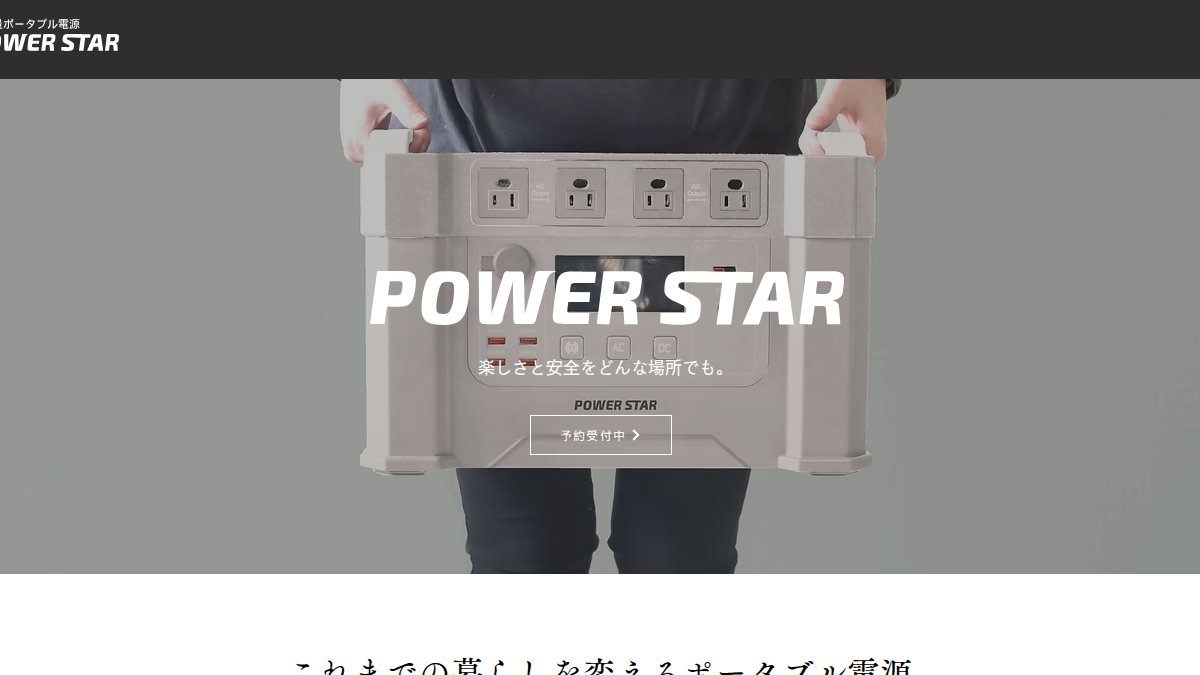
The PowerStar GC12 is a 135Ah AGM battery designed for industrial and commercial applications like floor cleaning machines, golf carts, and utility vehicles. The sealed, maintenance-free design eliminates ventilation requirements. The low self-discharge feature suits equipment sitting unused for weeks or months. Pricing requires direct contact with the manufacturer, but expect $300-400 based on comparable AGM batteries.
The choice between these four batteries comes down to your priorities. If longevity and weight matter most, Battle Born lithium is worth the premium. If you need dual-purpose starting and cycling power, the Optima YellowTop is practical. For pure deep cycling at lower cost, VMAXTANKS AGM delivers solid performance. For commercial applications, PowerStar offers capacity and durability.
At Bigtime Battery, we offer a wide selection of replacement batteries and can help you match the right battery to your specific application. Our team understands the technical requirements and can guide you through selection without guesswork.
Choosing the right 12V deep cycle battery requires understanding your load, runtime, and budget. The market has shifted decisively toward AGM and lithium chemistries. Lithium iron phosphate batteries deliver the longest lifespan and lightest weight but demand higher upfront investment and compatible charging equipment. AGM batteries offer a practical middle ground: maintenance-free, reliable, and affordable for applications not requiring extreme cycle life.
Prioritize cycle life and depth of discharge compatibility with your charger. A properly sized and charged battery will outlast your equipment. Contact Bigtime Battery for a consultation on sizing, compatibility, and current pricing.
Frequently Asked Questions
How long does a 12V deep cycle battery last?
Lifespan depends on battery type and depth of discharge. AGM deep cycle batteries typically deliver 1,000-1,600 cycles at 25% depth of discharge, lasting 3-5 years in moderate use. Lithium iron phosphate (LiFePO4) batteries achieve 3,000-5,000+ cycles, extending to 10+ years. Lead-acid flooded batteries offer fewer cycles and shorter lifespans. Proper charging, maintenance, and temperature control extend cycle life significantly.
What is the difference between a deep cycle battery and a marine cranking battery?
Deep cycle batteries discharge slowly over extended periods, designed for steady power delivery in trolling motors, solar storage, and RV systems. Marine cranking batteries deliver high bursts of power for engine starts, measured in cold cranking amps (CCA) or marine cranking amps (MCA). Some dual-purpose AGM batteries combine both capabilities, but true deep cycle batteries prioritize sustained discharge over starting power.
How do I choose the right amp hour capacity for my 12V battery?
Calculate your total power needs in watt-hours, then divide by 12 volts to get required amp-hours. For example, a 1,200-watt-hour load requires a 100Ah battery. Account for depth of discharge: use only 50% of capacity in lead-acid systems, up to 80-100% safely in lithium systems. Marine trolling motors, RV house banks, and solar systems require different capacity calculations based on runtime and discharge rates.
Can I use a deep cycle battery to start an engine?
Traditional deep cycle batteries lack sufficient cold cranking amps (CCA) for reliable engine starting. However, dual-purpose AGM batteries like the Optima YellowTop deliver both starting power (750 CCA) and deep cycling capability, making them suitable for vehicles with heavy electrical demands. For applications requiring both starting and deep cycling, choose a hybrid AGM battery rather than a dedicated deep cycle model.
What maintenance does a deep cycle battery require?
AGM and lithium deep cycle batteries are maintenance-free and sealed. Flooded lead-acid batteries require periodic water level checks and distilled water top-ups. All types benefit from proper charging protocols: use a smart charger with bulk charging and float voltage stages. Store batteries in cool, dry conditions to minimize self-discharge. Avoid complete discharge cycles when possible, and load-test annually to verify voltage and capacity.