 blog
blog
Battery Mart Alternative: Wholesale Batteries for Every Need
Table of Contents
- Why Businesses Switch from Battery Mart to Wholesale Batteries Alternatives
- How to Choose a Battery Wholesaler That Fits Your Operation
- Wholesale Specialty Battery Distribution Program Options
- Benefits of Buying Batteries in Bulk
- Comparing Wholesale Pricing and Delivery Speed
- Warranty, Compatibility, and Quality Assurance
- Conclusion: Finding Your Ideal Wholesale Battery Partner
- Frequently Asked Questions
Last Updated: August 23, 2026
Why Businesses Switch from Battery Mart to Wholesale Batteries Alternatives
When you've been ordering from the same supplier for two years, switching feels risky. You know their system, they know your account, and the relationship works. But here's what we're seeing across the industry: businesses that evaluate wholesale batteries alternatives discover they're leaving significant money on the table.
The battery market has shifted dramatically. According to Grand View Research's 2024 Battery Market Analysis, the U.S. battery market was valued at USD 16.9 billion in 2023 and is expected to grow at a compound annual growth rate of 13.8% from 2024 to 2030. This explosive growth has created new competitors, better pricing models, and faster fulfillment options that didn't exist even 18 months ago.
At Bigtime Battery, we've analyzed why customers make the switch. The reasons cluster into three categories: cost, selection, and service speed. But price alone doesn't tell the story. Businesses also switch because they need batteries your current supplier doesn't stock, or they require faster turnaround when equipment fails. When your AED units go down or a boat fleet needs emergency replacements, a 48-hour delivery window becomes critical. The right wholesale batteries alternative gives you both the economics and the operational flexibility.
The question isn't whether to explore alternatives. It's which alternative actually delivers on all three fronts: competitive pricing, deep inventory, and speed. That evaluation process is exactly what we'll walk through below.
How to Choose a Battery Wholesaler That Fits Your Operation
Choosing a battery wholesaler isn't like picking a general supplier. Your decision directly impacts equipment uptime, maintenance budgets, and customer satisfaction. The wrong choice creates hidden costs that compound over time.
Start by defining what "fit" means for your specific operation. Are you a small marine shop ordering 50 batteries monthly, or a warehouse operation managing forklift fleet replacements? Are you stocking for retail customers, or maintaining internal equipment? Your volume and application type determine which wholesaler can actually serve you well.

Evaluate three core dimensions. First, inventory depth. A true wholesale batteries alternative maintains stock across multiple battery chemistries, alkaline, rechargeable, lead-acid, lithium-ion, and AGM batteries. When you need a specific terminal type or voltage configuration, can they fulfill it same-day, or do you wait a week? Ask directly about their stock levels for your most-used items. Second, compatibility support. The worn label problem is real. Many businesses can't identify which battery they actually need. Ask whether the wholesaler's customer service will help you match specifications to your device, or if you're on your own. Third, pricing transparency. Request a detailed quote for your typical monthly volume. Legitimate wholesalers show volume-based discounts clearly. If pricing feels opaque or changes unpredictably, that's a signal.
Technical specifications matter more than most buyers realize. Voltage stability, discharge rate, CCA (Cold Cranking Amps) for automotive applications, and amp-hour capacity all affect performance. A wholesaler who understands these specs and can explain which battery suits which application is worth the relationship. Industrial-grade batteries for emergency lighting systems perform differently than consumer alkaline batteries. That distinction isn't academic, it's the difference between compliance and liability.
Finally, assess their supply chain resilience. The battery market experienced significant Q1 2026 volatility, with transportation battery shipments decreasing 4.6% compared to Q1 2025, according to Battery Council International Statistics Program. However, stationary lead batteries surged 12% in the same period. A wholesaler who understands these market dynamics and maintains diversified inventory can protect you from shortages. Ask about their supplier relationships and whether they're building stock in growth categories like lithium-ion and LFP batteries.
Wholesale Specialty Battery Distribution Program Options
The wholesale batteries alternative landscape includes several distinct models. Understanding the differences helps you pick the right structure for your business.
Direct wholesale retailers operate like Bigtime Battery, you order directly from their inventory, receiving wholesale pricing based on volume. This model works best if you need variety across battery types and applications. You get one point of contact, simplified ordering, and immediate access to their full catalog. The tradeoff: you're buying at their wholesale margin, not at distributor-to-distributor pricing.
Authorized distributor partnerships are different. You become an authorized reseller for a specific manufacturer. Duracell, Energizer, and other major brands offer distributor programs with deeper volume discounts and co-op marketing support. This model suits retail shops and larger operations. The constraint: you're locked into their product line and their pricing tiers.
Bulk procurement cooperatives pool smaller buyers together to achieve larger volume discounts. These work for associations, nonprofits, and small business networks. You sacrifice some flexibility but gain pricing that approaches true distributor rates.
Drop-ship wholesale arrangements let you offer batteries without holding inventory. The wholesaler ships directly to your customer. This eliminates storage concerns but reduces your control over delivery timing and packaging quality.
The medical battery segment illustrates why specialization matters. According to Coherent Market Insights Medical Batteries Analysis, North America accounts for 33.6% of the global medical batteries market in 2026, with the segment valued at USD 3.18 billion. Medical devices require specific battery types, often compact, high-capacity cells for pacemakers, insulin pumps, and diagnostic equipment. A general wholesaler might not stock the specialized medical-grade batteries your healthcare facility needs. A wholesaler with a dedicated medical battery program can.
Each model has legitimate use cases. Your choice depends on volume, application diversity, and whether you need flexibility or deep discounts in a narrow category. Most growing operations use a hybrid approach: a primary wholesaler for core inventory, plus a specialized distributor for niche applications.
Benefits of Buying Batteries in Bulk
The financial case for bulk purchasing is straightforward, but the operational benefits run deeper than most buyers expect.
Cost per unit drops significantly at volume. For a business managing multiple locations or equipment fleets, bulk purchasing often represents a significant controllable cost reduction available.
But procurement strategy matters as much as price. Buying in bulk without understanding shelf life and manufacturing dates creates a hidden cost: expired inventory. Batteries degrade over time, and manufacturers include production dates on packaging. A wholesaler who prioritizes recent manufacturing dates ensures you're not sitting on stock that loses capacity while waiting to be used. Ask about their inventory rotation practices.
Bulk purchasing also stabilizes your supply chain. When you order units monthly from a reliable wholesaler, you're not scrambling to find emergency stock when equipment fails. You have buffer inventory. This reduces downtime costs, especially critical for emergency lighting systems, UPS backups, and marine applications where failure isn't an option.
Warehousing and inventory management improve with bulk purchasing, counterintuitively. You consolidate your supplier relationships, which simplifies procurement workflows. One invoice per month instead of multiple small orders. One point of contact instead of juggling three suppliers. That consolidation reduces administrative overhead and improves forecasting accuracy.
The rechargeable versus alkaline decision also shifts at bulk volumes. Rechargeable batteries have higher upfront costs but lower total cost of ownership when you're purchasing in volume. A wholesaler can help you model this decision based on your specific discharge rates and usage patterns. For applications with frequent battery replacement, rechargeable systems often deliver significant savings over the battery's lifecycle.
Comparing Wholesale Pricing and Delivery Speed
Price and speed are inversely related in most industries, but the best wholesale batteries alternatives optimize both simultaneously.
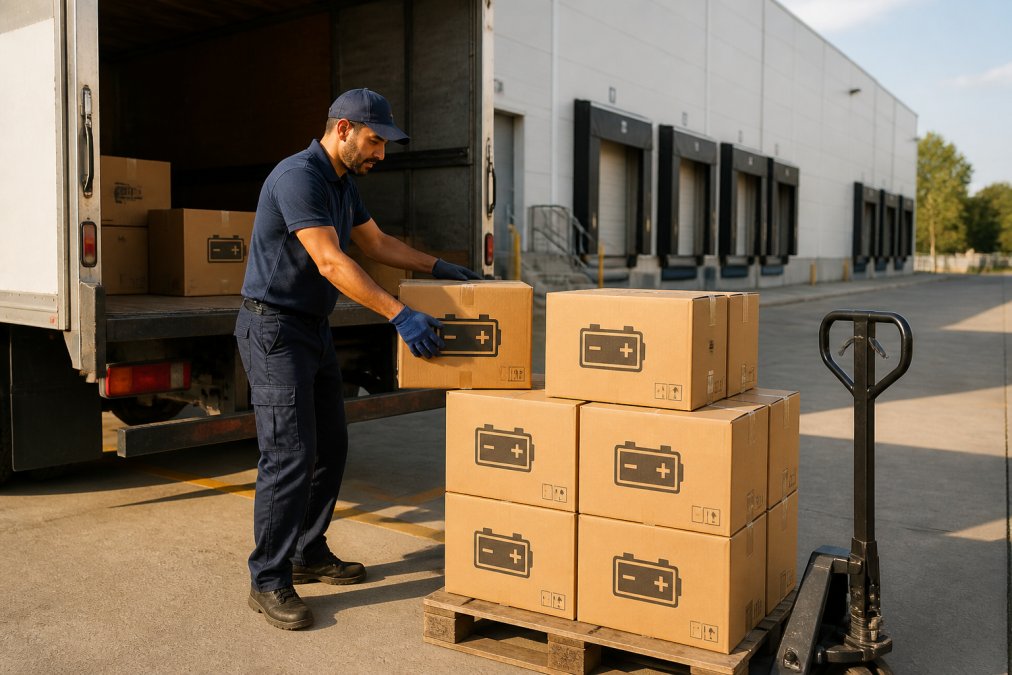
Wholesale pricing varies by battery type, volume tier, and order frequency. Alkaline batteries typically command lower wholesale margins than specialty batteries like medical-grade cells or deep-cycle marine batteries. A wholesaler's pricing structure should reflect this spectrum. You're not paying the same per-unit rate for a commodity alkaline battery as you are for a specialized lithium-ion cell. If pricing looks uniform across categories, that's a red flag, it usually means they're either inflating some prices or not actually offering true wholesale rates.
Volume tiers matter enormously. Bigtime Battery's pricing reflects your monthly purchasing volume. A customer ordering 100 batteries monthly receives a different rate than a customer ordering 10,000. The tier structure should be transparent and published. Opaque pricing that changes based on negotiation creates friction and makes forecasting impossible.
Delivery speed has accelerated across the industry. Standard wholesale fulfillment used to mean 5-7 business days. The current baseline is 2-3 business days for in-stock items, with expedited options available. Battery demand surpassed 1 terawatt-hour from January to July 2026, according to Benchmark Source Battery Demand Report, creating both supply pressure and competitive urgency among wholesalers. The wholesalers investing in regional distribution centers and automated fulfillment are winning the speed race.
Ask specific questions about delivery commitments. What's their standard fulfillment window for in-stock items? What's the expedited option, and what does it cost? What happens if they're out of stock, do they backorder with a committed delivery date, or do they cancel the order? A professional wholesaler provides written SLAs (service level agreements) for fulfillment.
Shipping costs are often overlooked in wholesale pricing comparisons. A wholesaler might offer lower per-unit pricing but charge steep shipping fees that erase the savings. Request all-in pricing for your typical order volume. The total landed cost, product price plus shipping, is what actually matters.
The relationship between pricing and delivery speed creates a decision matrix. Budget-conscious operations might accept 4-5 day delivery for discounts. Time-critical operations (emergency equipment, healthcare facilities) might pay a premium for 24-hour delivery. Neither choice is wrong. What's wrong is not knowing the tradeoff exists.
Warranty, Compatibility, and Quality Assurance
Battery failures create cascading problems. A dead battery in an emergency lighting system isn't just a replacement cost, it's a compliance violation. A failed deep-cycle battery in a boat fleet means downtime and customer dissatisfaction. Quality assurance and warranty coverage protect you from these scenarios.
Legitimate wholesale batteries alternatives stand behind their products with clear warranty terms. Standard consumer batteries typically carry 1-2 year manufacturer warranties. Specialty batteries, medical-grade, industrial, marine, often include extended warranties or performance guarantees. Ask whether the wholesaler handles warranty claims or if you're responsible for contacting the manufacturer directly. A wholesaler who manages the warranty process on your behalf saves you significant time and frustration.
Compatibility assurance is where customer service quality separates good wholesalers from great ones. You have a worn battery label. You know it powered a device for three years, but the specs are unreadable. A knowledgeable wholesaler's team can help you identify the replacement. They'll ask about the device type, voltage requirements, and form factor. They'll cross-reference manufacturer specifications. They'll confirm the replacement before you pay. This service prevents costly mistakes, ordering the wrong battery, discovering it on installation, and losing a day to returns and reordering.
Quality control matters more than many buyers realize. Ask about their quality assurance process. Do they test batteries before shipping? Do they have agreements with manufacturers about defect rates? What's their return policy if a battery arrives dead or fails prematurely? Professional wholesalers inspect shipments, maintain defect tracking, and have recourse agreements with suppliers.
OEM specifications matter for equipment-critical applications. If you're replacing batteries in medical devices, aviation equipment, or military applications, the battery must meet specific OEM requirements. A wholesaler familiar with these applications can confirm compatibility against the official specs. This is non-negotiable for regulated industries.
Battery chemistry knowledge is also essential. Alkaline batteries work for low-drain applications. Rechargeable NiMH batteries suit high-cycle-use scenarios. Lithium-ion batteries deliver maximum capacity in minimal space. AGM batteries provide reliable power for automotive and stationary applications. A wholesaler who understands these distinctions and recommends based on your actual application, not just what they have in stock, is worth the relationship.
Conclusion: Finding Your Ideal Wholesale Battery Partner
The wholesale batteries alternative decision ultimately comes down to fit. You need a partner who understands your specific application, maintains inventory depth, delivers reliably, and prices transparently.
Bigtime Battery serves as your premier one-stop shop for all single-cell battery requirements, specializing in high-quality replacement batteries for medical, marine, and specialty applications. Our wide selection, competitive wholesale pricing, and commitment to reliable power solutions mean you get both the economics and the operational support your business needs. Explore our full battery inventory, request a wholesale quote for your volume, and experience the difference a true wholesale batteries alternative delivers.
=== FAQ ANSWERS (audit these too, same rules) ===
Frequently Asked Questions
Q: What should I look for when choosing a wholesale battery distributor?
A: Evaluate distributors on five key criteria: product selection (alkaline, rechargeable, lithium-ion, lead-acid, AGM), bulk pricing structure and volume discounts, shipping speed and reliability, warranty coverage and replacement guarantees, and customer service responsiveness. Verify OEM specifications compatibility, check shelf-life and manufacturing dates on inventory, and confirm they support your specific applications, whether marine, medical, industrial, or emergency lighting. Request references from existing customers to assess real-world performance.
Q: How do wholesale battery prices compare to retail outlets?
A: Wholesale pricing typically offers significant savings on bulk orders compared to retail. The savings depend on order volume, battery chemistry (lithium-ion commands different rates than alkaline), and supplier terms. However, retail pricing includes operational costs and convenience factors that justify the markup for smaller, individual purchases. Calculate your total cost of ownership including storage, shelf-life management, and potential obsolescence when comparing options.
Q: Are there reliable alternatives to Battery Mart for industrial-grade batteries?
A: Yes. Multiple wholesale specialty battery distribution programs exist for industrial applications. Leading alternatives offer competitive pricing on bulk orders, fast shipping, and specialized support for industrial applications like UPS systems, emergency lighting, and forklift fleet batteries. The key difference lies in inventory management, distribution network speed, and customer service responsiveness. Verify that any alternative carries the specific battery types you need, deep cycle for marine, AGM for stationary applications, lithium-ion for modern equipment, and confirm they stock OEM-compatible replacements.
Q: What are the benefits of using a dedicated specialty battery supplier?
A: Dedicated suppliers provide access to high-performance batteries optimized for specific applications, deep cycle for marine, industrial-grade for commercial operations, compact medical batteries for healthcare devices. Specialty distributors offer faster problem resolution when equipment fails, technical support for compatibility questions, and bulk discount programs that scale with your growth. They also manage shelf-life concerns through regular inventory rotation and provide disposal and recycling program guidance for compliance.
The challenge isn't finding a battery supplier, it's finding one that matches your operation's actual needs. Bigtime Battery offers the selection, pricing, and service speed you require to reduce costs while improving equipment reliability.