 listicle
Where to Buy Industrial Specialty Batteries
Table of Contents
- Top Suppliers for Industrial Specialty Batteries
- Wholesale Specialty Battery Distribution Program Options
- Battery Types and Chemistry Comparison
- Industrial Battery Replacement Guide
- Bulk Procurement and Custom Battery Solutions
- Battery Recycling and Disposal Regulations
- Total Cost of Ownership Analysis
- Frequently Asked Questions
Last Updated: August 17, 2026
Top Suppliers for Industrial Specialty Batteries
Finding the right supplier for industrial specialty batteries means balancing quality, pricing, and reliability. Whether you're sourcing deep cycle batteries for marine operations, motive power solutions for warehouse equipment, or medical-grade batteries for critical devices, the supplier you choose directly impacts your operational costs and uptime.
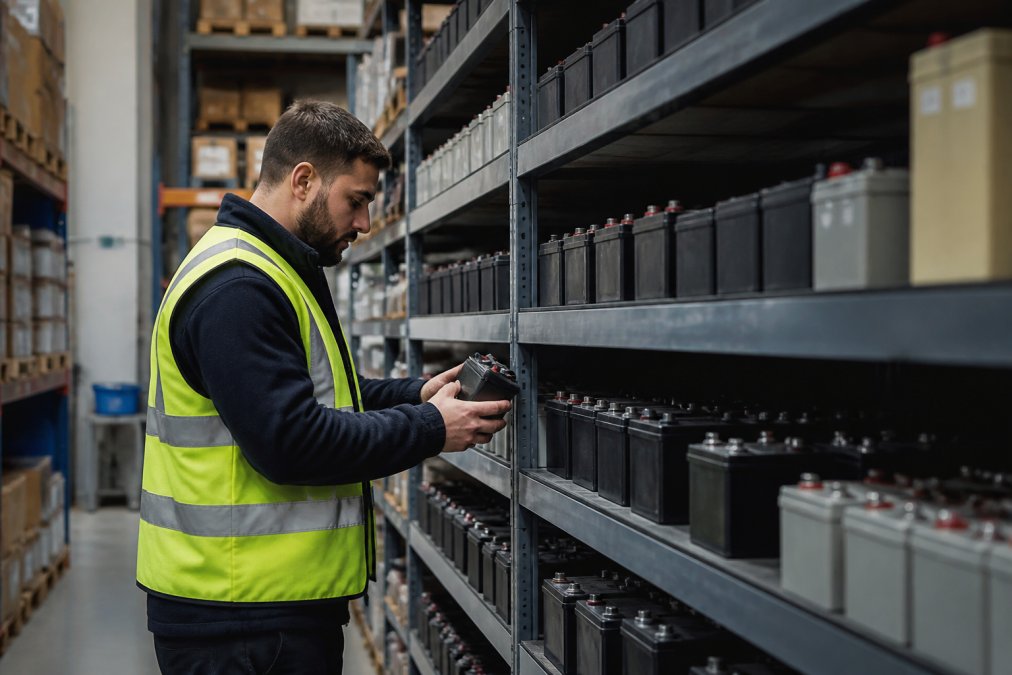
Bigtime Battery: One-Stop Shop for Replacement Batteries
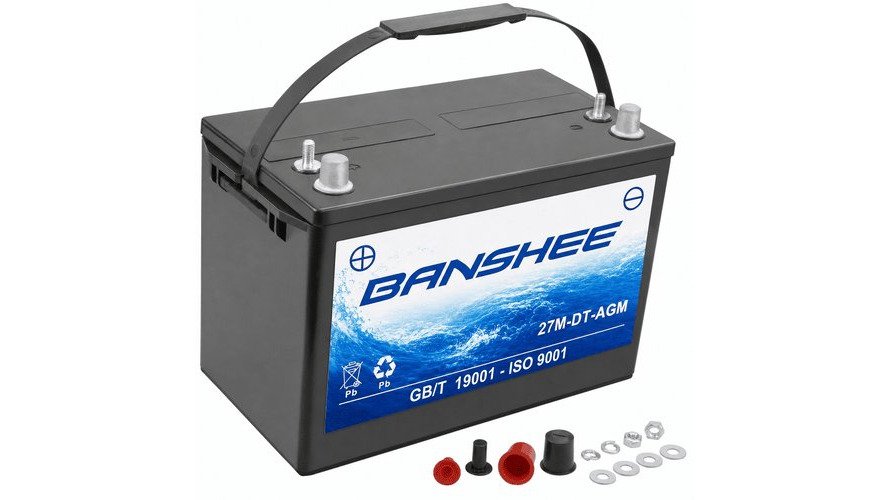
Bigtime Battery serves customers across multiple industries by maintaining an extensive selection of single-cell and specialty batteries. The company carries well-known brands like PowerStar and Banshee, offering AGM maintenance-free and standard flooded lead-acid options alongside lithium-ion solutions. For businesses and individuals seeking reliable replacement batteries with fast shipping, Bigtime Battery delivers competitive pricing and broad compatibility across device types.
Marine business owners, ATV enthusiasts, and property managers all find solutions through Bigtime Battery's catalog. The website includes detailed product specifications, making it easier to identify the correct battery without guesswork. For wholesale operations or fleet purchases, reaching out for a custom quote typically yields better pricing than online retail rates.
OSI Batteries: Factory-Direct Distribution with Custom Quotes
OSI Batteries operates as a factory-direct distributor specializing in professional battery solutions for communication, medical, industrial, and safety applications. With nearly 50 years in the industry, the company has built expertise in serving B2B customers, businesses, medical organizations, and government agencies that require specialized solutions and dedicated support.
Rather than publishing retail pricing, OSI provides custom quotes tailored to your volume, delivery schedule, and specific battery chemistry needs. The company develops its own line of aftermarket replacement batteries, which often provides cost advantages for high-volume buyers. For warehouse operations, fleet managers, or organizations with recurring battery needs, this personalized approach often results in better pricing and service terms.
Energy Products: Wide Inventory Across Multiple Distribution Centers
Energy Products operates as an independent battery distributor maintaining one of the largest specialty battery inventories in the United States. The company stocks automotive, commercial, marine, powersports, and deep cycle batteries across 5 distribution points in 4 states. The scale of their operation, 18,000 SKUs in active inventory, means most specialty battery types are available with relatively quick turnaround.
Multiple warehouses reduce shipping times for regional customers and provide backup inventory if one location experiences supply constraints. Energy Products specializes in serving battery distributors and specialists, though direct purchases are possible. Pricing and ordering require direct contact, as the company does not publish retail pricing online.
Industrial Battery Products (IBP): Motive Power and Critical Systems
Industrial Battery Products focuses specifically on motive power solutions for industrial operations, particularly warehouses and logistics centers using forklift fleets. The company supplies batteries, chargers, and battery handling equipment alongside critical power systems like UPS units and lighting inverters. IBP's PowerCare programs offer battery data tracking, maintenance scheduling, and recycling services designed to optimize fleet uptime and total cost of ownership.
IBP operates primarily in the Mid-Atlantic and Southeast regions. For warehouse operations where equipment downtime directly impacts productivity, the combination of supply, maintenance, and data management means fewer surprises and more predictable operational costs.
Wholesale Specialty Battery Distribution Program Options
Organizations purchasing batteries in volume benefit from wholesale distribution programs that offer tiered pricing, dedicated account management, and supply chain optimization.
Allegiant Power operates a network of over 300 independent battery specialists across the United States and Canada, functioning as a buying group that leverages collective purchasing power. Members benefit from negotiated pricing and combined volume agreements that individual retailers cannot achieve alone. Membership requires application and approval, positioning it as a program for established battery specialists and distributors. For independent battery shops and specialized distributors, Allegiant Power's model provides access to wholesale pricing and a network of peer specialists.
Bigtime Battery also offers wholesale options for resellers and retail partners. Organizations interested in stocking Bigtime Battery products should inquire directly about wholesale pricing, volume discounts, and reseller support programs.
Battery Types and Chemistry Comparison
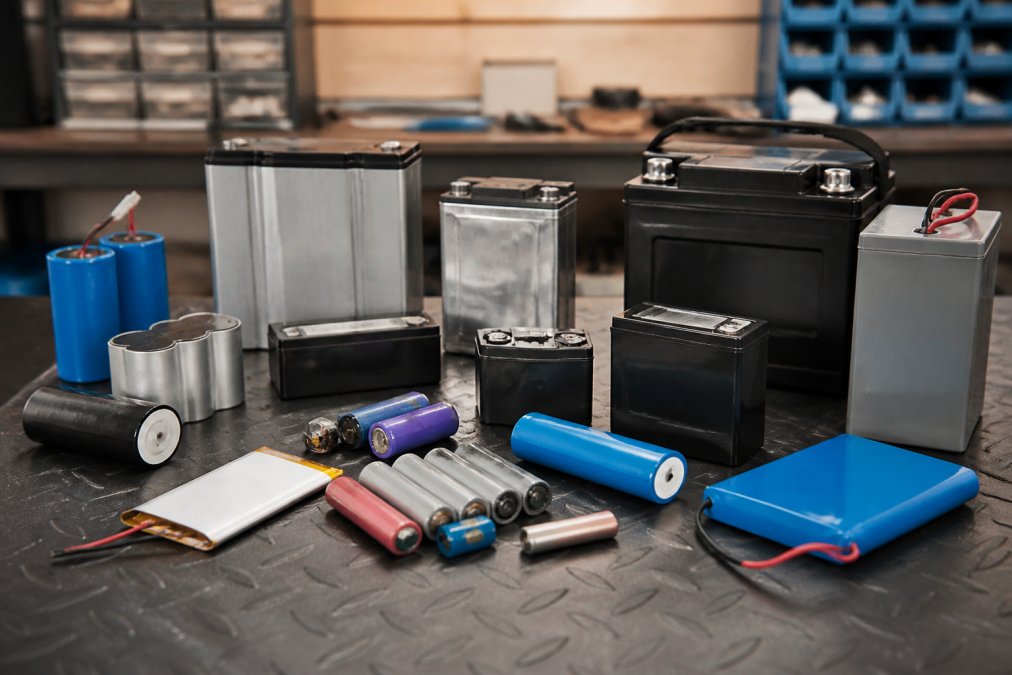
Industrial specialty batteries fall into distinct chemistries, each optimized for specific applications.
Flooded Lead-Acid Batteries remain the most common choice for motive power applications like forklifts and golf carts. These batteries are typically less expensive than alternatives, making them cost-effective for high-volume industrial operations. The tradeoff is maintenance requirements, flooded batteries need periodic water level checks and equalization charging. Cycle life typically ranges from 500 to 1,000 cycles.
AGM (Absorbed Glass Mat) Batteries use a fiberglass mat design that eliminates the need for water additions and makes batteries spill-proof and vibration-resistant. AGM batteries work well for applications with frequent vibration or where maintenance accessibility is limited. They cost more than flooded batteries but offer longer cycle life, typically 1,000 to 2,000 cycles. Medical devices, marine applications, and emergency lighting systems often use AGM technology.
Lithium-Ion Batteries have emerged as the premium option for applications where weight, space, and cycle life matter most. Lithium-ion batteries deliver 2,000 to 5,000+ cycles and charge significantly faster than lead-acid alternatives. The higher upfront cost is offset by extended service life and reduced maintenance.
Deep Cycle Batteries are designed for repeated discharge and recharge cycles, making them ideal for renewable energy storage, marine applications, and backup power systems. Deep cycle batteries have thicker plates and different chemistry than starting batteries, allowing them to discharge 80% of capacity without damage.
| Battery Type | Typical Cycle Life | Maintenance Required | Best Applications | Relative Cost |
|---|---|---|---|---|
| Flooded Lead-Acid | 500-1,000 | Water level checks, equalization | Forklifts, golf carts, industrial vehicles | Low |
| AGM Lead-Acid | 1,000-2,000 | Minimal | Marine, medical devices, emergency systems | Medium |
| Lithium-Ion | 2,000-5,000+ | Minimal | Premium marine, powersports, modern applications | High |
| Deep Cycle | 1,000-2,000+ | Variable by chemistry | Renewable energy, backup power, marine | Medium-High |
Industrial Battery Replacement Guide
Replacing an industrial specialty battery correctly prevents downtime and safety issues. The process involves identifying your current battery, understanding your application requirements, and sourcing the correct replacement.
Identifying Your Battery Requirements
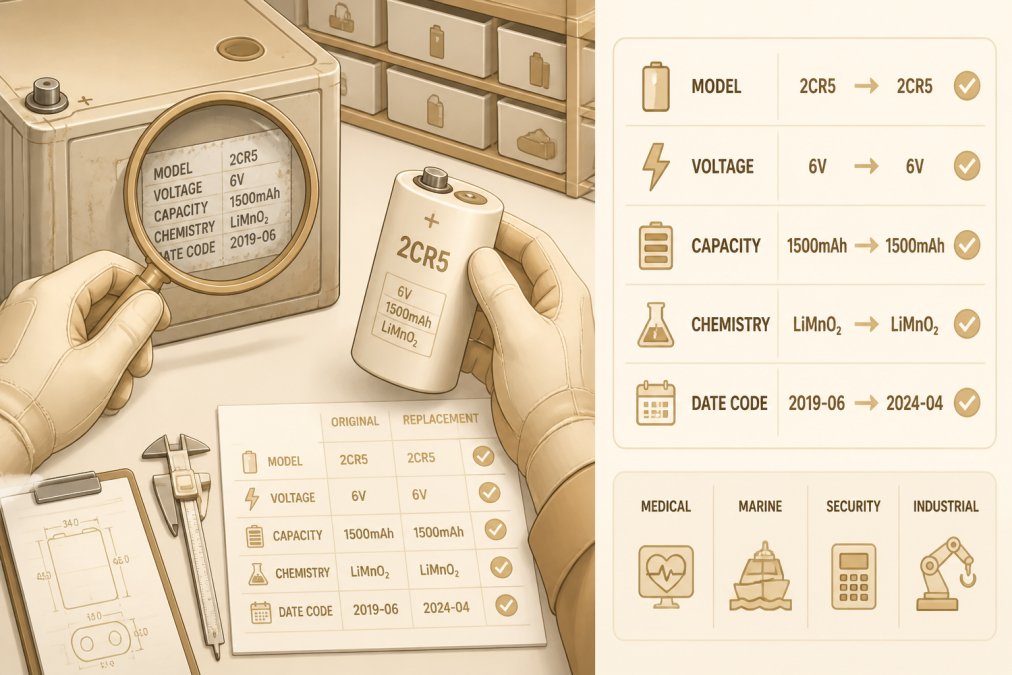
Start by locating your current battery and examining its label. The label typically includes voltage (6V, 12V, 24V, 48V), amp-hour capacity, battery chemistry type, and sometimes a date code. Write down these specifications precisely. If the label is illegible, check your equipment's manual or documentation for battery specifications.
Voltage is your starting point. Most industrial equipment uses 12V, 24V, or 48V systems. You can verify voltage using a multimeter. Next, identify the discharge rate your application requires. Motive power applications like forklifts demand high discharge rates during operation, while backup power systems tolerate slower discharge.
Amp-hour capacity indicates how long a battery can deliver power. A 100 amp-hour battery supplies 100 amps for one hour. Your application's power requirements determine the capacity you need. For marine applications, calculate your actual requirements based on equipment load and typical operating time between charges rather than guessing.
Troubleshooting Common Battery Issues
Not every battery problem requires replacement. Understanding common issues helps you diagnose whether replacement or repair is appropriate.
Dead Battery on Startup: If your equipment won't start and the battery reads zero voltage, try charging the battery fully using an appropriate charger. If voltage recovers and holds, the battery may be salvageable. If voltage remains zero after charging, the battery has likely failed internally and needs replacement.
Slow Cranking or Weak Power: Equipment that cranks slowly typically indicates a weak battery. Check battery connections for corrosion or loose terminals, as poor connections reduce available power. Clean terminals and tighten connections. If performance doesn't improve, the battery may be nearing end-of-life.
Rapid Discharge: If a fully charged battery loses capacity quickly without use, internal failure or a parasitic load drain is likely. Check for equipment left running or charging systems that remain active when they shouldn't. If discharge still occurs with proper shutdown, the battery has likely failed internally.
Swelling or Leaking: Physical damage to a battery case indicates internal failure and safety hazard. Swollen batteries should be removed immediately and disposed of properly. Never attempt to repair or recharge a damaged battery.
Corroded Terminals: White, blue, or green corrosion on battery terminals reduces electrical connection quality. Clean terminals using a wire brush and baking soda solution. Corroded terminals often indicate overcharging or poor ventilation.
Bulk Procurement and Custom Battery Solutions
Organizations requiring large quantities of industrial specialty batteries benefit from custom procurement arrangements. Bulk purchasing offers volume discounts, simplified ordering, and supply chain reliability that retail channels cannot match.
When approaching bulk procurement, prepare detailed specifications: voltage, amp-hour capacity, battery chemistry, required delivery schedule, and total quantity. Many industrial suppliers offer custom battery pack configurations combining multiple cells into specialized configurations for specific applications. If your equipment requires a non-standard voltage or capacity, custom assembly may be more cost-effective than purchasing individual batteries.
Volume commitments often unlock better pricing. Suppliers prefer predictable, recurring orders over sporadic large purchases. If your organization uses batteries regularly, discussing ongoing supply agreements typically results in better terms. Verify that suppliers can meet your delivery schedule, especially for critical applications. Discuss payment terms and financing options during the quoting process, as established distributors often offer net-30 or net-60 payment terms for qualified business customers.
Battery Recycling and Disposal Regulations
Industrial batteries contain hazardous materials and cannot be disposed of as regular waste. Federal regulations and state laws govern battery recycling and disposal, and compliance is mandatory.
The Universal Waste Rule under the Environmental Protection Agency establishes federal requirements for battery disposal. Lead-acid batteries are classified as universal waste and cannot enter landfills or incinerators. Retailers selling lead-acid batteries are required to accept used batteries for recycling. Lithium-ion batteries face additional regulations due to fire risk in landfills and recycling facilities. Many states restrict lithium-ion batteries from solid waste streams entirely.
State regulations vary significantly. Some states impose deposit fees on battery sales, refunded when you return the used battery for recycling. Check your state's specific requirements at EPA's battery recycling guidelines. When purchasing batteries through industrial suppliers, ask about their recycling programs. Many established distributors coordinate battery recycling as part of their service. Lead-acid batteries are highly recyclable, with approximately 99% of the material recoverable. Lithium-ion recycling recovers valuable materials and prevents environmental contamination.
Total Cost of Ownership Analysis
Selecting an industrial specialty battery based solely on purchase price overlooks the true financial impact. Total cost of ownership includes purchase price, installation, maintenance, downtime costs, and replacement frequency.
Flooded Lead-Acid Batteries offer low upfront cost but require ongoing maintenance. Water level checks, equalization charging, and terminal cleaning add labor costs over the battery's life. Cycle life of 500-1,000 cycles means more frequent replacement, every 1-3 years depending on usage intensity.
AGM Batteries cost more initially but eliminate water maintenance. Reduced maintenance labor and longer cycle life (1,000-2,000 cycles) lower total cost despite higher purchase price. For operations where technician time is expensive, AGM batteries often deliver better economics.
Lithium-Ion Batteries represent the highest upfront investment but deliver 2,000-5,000+ cycles with minimal maintenance. For applications where equipment operates continuously, lithium-ion's extended cycle life and fast charging capability reduce downtime and total replacement costs.
Downtime costs deserve careful consideration. Equipment that generates revenue while operating creates financial impact when unavailable. A battery failure causing 4-8 hours of downtime might cost more than the price difference between battery types. Charging infrastructure compatibility also matters financially, lithium-ion batteries often require specialized chargers, while flooded and AGM batteries use standard chargers. Calculate your true cost by adding purchase price, estimated maintenance labor, expected replacement frequency based on cycle life, and estimated downtime costs.
Selecting the right supplier for industrial specialty batteries requires matching your application requirements with supplier capabilities. Bigtime Battery delivers broad inventory, competitive pricing, and reliable shipping across the United States, making it an excellent choice for businesses and individuals sourcing replacement batteries across marine, medical, industrial, and powersports applications. For bulk procurement or specialized requirements, OSI Batteries, Energy Products, and Industrial Battery Products offer tailored solutions with dedicated support. Start by identifying your exact battery specifications, then reach out to suppliers for quotes and technical guidance. Get started with Bigtime Battery's industrial battery selection and access competitive pricing on the replacement batteries your equipment needs.
Frequently Asked Questions
What's the difference between industrial-grade and consumer-grade batteries?
Industrial-grade batteries are engineered for demanding environments with higher cycle life, deeper discharge rates, and better thermal management. They handle continuous operation, extreme temperatures, and frequent charging cycles that consumer batteries cannot sustain. Industrial batteries use robust battery chemistry like flooded lead-acid or lithium-ion with advanced battery management systems, while consumer batteries prioritize cost over durability. For applications like forklifts, marine vessels, or emergency systems, industrial-grade batteries deliver the reliability and operational efficiency required for commercial use.
How do I identify the correct specialty battery for my industrial equipment?
Start by locating the original battery label or manufacturer documentation, which specifies voltage, amp-hour capacity, and chemistry type. Note the terminal configuration and physical dimensions. If the label is worn off, contact the equipment manufacturer with the device model number. Describe your application's power demands and discharge rate to a supplier's technical team. Most distributors, including those offering wholesale specialty battery distribution programs, provide identification assistance. Verify OEM replacement compatibility before ordering to avoid downtime from incorrect batteries.
Where is the best place to buy industrial batteries in bulk?
Factory-direct distributors like OSI Batteries and Energy Products offer custom quotes and volume pricing for bulk orders. Allegiant Power operates a network of battery specialists with combined purchasing power for competitive wholesale rates. For direct retail bulk purchases, Bigtime Battery provides competitive pricing and fast shipping across the USA. Wholesale specialty battery distribution programs typically require membership or account setup but deliver the lowest per-unit costs. Contact suppliers directly with your volume requirements and application details to receive tailored pricing and delivery timelines.
What should I look for in a wholesale battery distribution partner?
Evaluate suppliers based on inventory depth, geographic distribution network, technical expertise, and dedicated account support. Verify they stock the specific battery chemistries and types you need, such as motive power, deep cycle, or lithium-ion solutions. Confirm they offer custom quotes, volume discounts, and flexible ordering. Check if they provide battery management support, charger compatibility, and recycling services. Fast shipping capability and reliable stock availability are critical for minimizing operational downtime. Ask about return policies and technical assistance for battery identification and troubleshooting.