 how-to
Troubleshooting Marine Battery Problems: A Step-by-Step Guide
Table of Contents
- Understanding Common Marine Battery Problems
- Signs of a Bad Marine Battery
- How to Test Marine Battery with a Multimeter
- Cleaning Battery Terminals and Posts
- Marine Battery Maintenance Tips
- Parasitic Load Testing and Ground Fault Detection
- Lead-Acid vs. Lithium Battery Troubleshooting Differences
- When to Replace Your Marine Battery
- Frequently Asked Questions
Last Updated: October 1, 2026
Understanding Common Marine Battery Problems
A dead battery at the dock is rarely a sudden failure. According to Battery Tender's 2026 marine battery research, when a boat battery dies unexpectedly, it's almost always caused by one of three specific issues: parasitic drain, sulfation, or inadequate recharging. Understanding what's actually happening inside your battery is the first step to troubleshooting marine battery problems and preventing them from happening again.
Sulfation and Chronic Undercharging
Sulfation is the single biggest killer of marine batteries. When a lead-acid battery sits partially discharged for extended periods, lead sulfate crystals form on the plates. Over time, these crystals harden and become permanent, reducing the battery's ability to hold a charge.
The problem compounds itself. A sulfated battery charges more slowly, so it stays in a partially discharged state longer. According to Battery Tender's analysis of marine battery failure mechanisms, 80% of lead-acid battery failures are attributed to sulfation. Batteries that sit between 70-85% state of charge chronically are the most vulnerable.
The fix requires prevention more than cure. Keep your battery fully charged when not in use. If your boat sits idle for weeks, use a smart charger that maintains proper float voltage automatically.
Parasitic Drain and Dead-at-Dock Scenarios
Parasitic drain is current flowing from your battery even when the engine is off. A bilge pump running constantly, a radio in standby mode, or an inverter drawing power can drain a fully charged battery in days.
The challenge: parasitic drain is invisible until you test for it. Many boat owners replace a "dead" battery only to find the new one dies the same way. According to research from Mobile Marina's three-month electrical case study on a 27-foot vessel, systematic replacement of failed batteries combined with proper load testing is required to resolve recurring electrical failures.
When troubleshooting marine battery problems, identifying parasitic drain requires performing a parasitic load test. Disconnect the negative battery terminal. Connect a multimeter in series between the terminal and the battery. A reading above 50 milliamps indicates excessive drain. Most boats should draw less than 20 milliamps at rest.
Charging System Failures
Your alternator should charge your battery while the engine runs. A weak or failing alternator means your battery never fully recharges between trips. Over time, this leads to chronic undercharging and sulfation.
Test your charging system by measuring voltage at the battery terminals while the engine idles. You should see 13-14V. If the reading is below 13V, your alternator isn't charging properly. A failing voltage regulator or worn alternator brushes are common culprits.
Signs of a Bad Marine Battery
Visual Warning Signs
A swelling or bloated battery case is a red flag. This happens when internal pressure builds, usually from overcharging or a failing voltage regulator. A swollen battery should be replaced immediately.
Corrosion on the terminals looks like white, blue, or green crusty deposits. This increases resistance and prevents proper charging. Terminal oxidation also signals poor electrical connections throughout your system.
Cracks in the plastic case allow electrolyte to leak. A leaking battery is unsafe and cannot be recharged. Replace it immediately.
Performance Indicators
A battery that cranks slowly when cold is losing capacity. If your boat starts fine in summer but struggles in winter, your battery is weakening. Cold temperatures reduce battery output, so a marginal battery fails first in cold weather.
A battery that holds charge for only a few days when the boat sits idle is either sulfated or has excessive parasitic drain. A healthy battery should hold 12.5V or higher for weeks.
Clicking sounds when you turn the key indicate insufficient cranking amps. Your battery may be too small for your engine, or the battery is failing.
How to Test Marine Battery with a Multimeter
Testing with a multimeter tells you whether your battery is healthy, weak, or failing. You'll need a digital multimeter set to the DC voltage setting.
Measuring Open Circuit Voltage
Open circuit voltage is the battery's resting voltage with no load. This is your first diagnostic step.
Step 1: Disconnect the negative battery terminal. This ensures you're measuring resting voltage, not charging voltage from the alternator.
Step 2: Set your multimeter to DC voltage (usually marked with a V and a straight line with dots below it).
Step 3: Touch the red probe to the positive terminal and the black probe to the negative terminal.
PowerStar--12V 80AH Replacement Battery UB12750 Group 24, Marine Sealed Lead →
Step 4: Read the voltage. A healthy fully charged battery reads 12.7V. Between 12.5V and 12.7V means the battery is partially discharged but acceptable. Below 12.5V means the battery needs charging. Below 12V means the battery is deeply discharged and may be damaged.
Testing Under Load
A battery may show healthy resting voltage but fail under load. This test reveals whether your battery can actually deliver power when you need it.
Checking for Voltage Drop Across Terminals
Voltage drop across terminals indicates poor connections or corrosion. High resistance at the connection prevents current from flowing efficiently.
Cleaning Battery Terminals and Posts
Corrosion prevents proper charging and creates resistance that weakens your electrical system. Cleaning terminals is one of the highest-impact maintenance tasks you can do.
What you'll need:
- Wire brush or battery terminal cleaner
- Baking soda and water (or a commercial battery cleaner)
- Wrench to disconnect battery cables
- Petroleum jelly or marine grease
Step 3: Rinse with fresh water and dry completely.
Marine Battery Maintenance Tips
Preventing Sulfation
The best defense against sulfation is keeping your battery fully charged. A battery that sits at 80% state of charge will sulfate. A battery that sits at 100% will not.
Monitoring State of Charge
Check your battery's resting voltage monthly. A reading below 12.5V means it's time to charge. A reading below 12V means the battery is deeply discharged and may be damaged.
Battery Bank Balancing and Isolator Setup
If you have multiple batteries, a battery isolator automatically charges them in the correct sequence. The isolator directs charging current from your alternator to the engine start battery first, then to the auxiliary battery once the start battery is fully charged.
Parasitic Load Testing and Ground Fault Detection
Parasitic drain is the silent killer of marine batteries. A boat that sits for two weeks with a parasitic drain of 100 milliamps will lose 50% of its charge.
How to perform a parasitic load test:
Step 2: Disconnect the negative battery cable.
Lead-Acid vs. Lithium Battery Troubleshooting Differences
Lead-acid and lithium batteries fail differently and require different troubleshooting approaches.
When to Replace Your Marine Battery
Replace your battery if:
- Resting voltage is below 12V and doesn't recover after charging
- Voltage drops below 10V under load (cranking or heavy draw)
- The battery case is cracked, swollen, or leaking
- The battery is more than 3-5 years old and showing signs of weakness
- Load testing shows the battery cannot deliver rated cold cranking amps
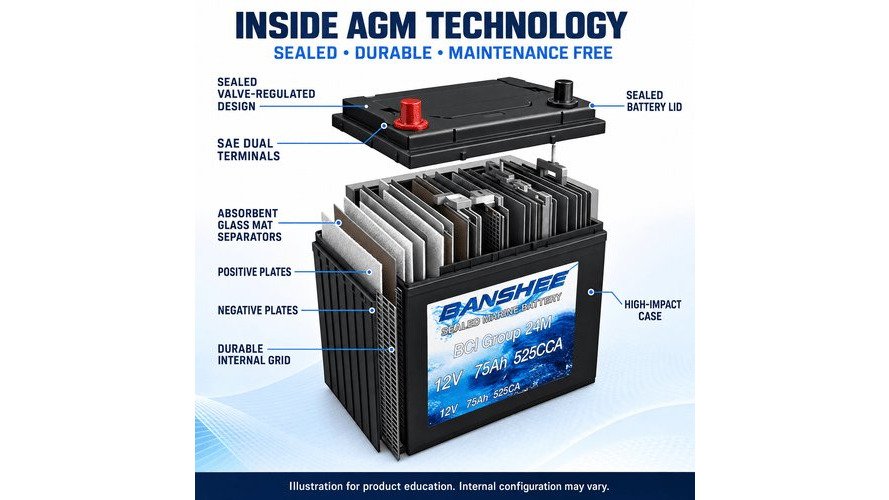
A new marine battery from Bigtime Battery ensures you have reliable power when you need it. The PowerStar 12V 80AH Group 24 marine sealed lead-acid battery is a solid choice for boats that need 80 amp-hours of capacity. It's sealed and maintenance-free, with a 2-year warranty. For larger boats or higher power demands, the Banshee Group 27M AGM marine battery at $199.55 delivers 95 amp-hours and 730 cold cranking amps.
Frequently Asked Questions
How do I tell if a deep cycle marine battery is bad?
A bad deep cycle marine battery typically shows a resting voltage below 12.7V when fully charged, fails to hold voltage under load, or exhibits terminal corrosion and swelling. If your battery won't accept a charge or shows capacity loss after normal use, it's likely failing. Load testing with a multimeter is the most reliable way to confirm. Replace it with a quality alternative like the PowerStar 12V 80AH or Banshee Group 24M AGM from Bigtime Battery.
Can you bring a dead marine battery back to life?
Sometimes. If your battery is dead due to sulfation or chronic undercharging (the cause of 80% of lead-acid failures), a smart charger designed for marine use may restore partial capacity. However, if internal damage or internal resistance is severe, replacement is necessary. Parasitic drain is another common culprit, identify and eliminate the drain source before attempting recovery. For a reliable solution, purchase a replacement from Bigtime Battery and make your purchase at bigtimebattery.com.
What is the average lifespan of a marine battery?
A well-maintained lead-acid deep cycle marine battery typically lasts 3-5 years, depending on charging practices and environmental conditions. Batteries kept at 70-85% state of charge without proper recharging fail much sooner due to sulfation. Proper float voltage maintenance (13-14V during charging) and regular cleaning of terminals extend life significantly. Investing in quality batteries from Bigtime Battery ensures reliable performance and longer service life.
How do I use a multimeter to test a boat battery?
Set your multimeter to DC voltage mode. First, measure open circuit voltage with no load, a healthy lead-acid battery reads 12.7V. Next, measure voltage while the engine cranks; it should stay above 10.5V. Finally, check for voltage drop across corroded terminals by placing probes on both sides of a connection point, significant drop indicates poor contact. If readings fall below expected ranges, your battery needs testing under load or replacement from Bigtime Battery.
Troubleshooting marine battery problems requires a systematic approach: test voltage, check for parasitic drain, and verify your charging system is working. Most battery failures are preventable with proper maintenance and monitoring. When replacement is necessary, Bigtime Battery offers marine batteries built for reliability and backed by strong warranties. Shop our full selection of marine batteries at bigtimebattery.com and get the power you need to stay on the water.