 how-to
Replacing Dead AED Battery Fast: Step-by-Step Guide
Table of Contents
- How to Replace a Dead AED Battery in 5 Minutes
- Warning Signs Your AED Battery Is Failing
- AED Battery Compatibility and Model Matching
- Emergency Troubleshooting When Replacing Dead AED Battery
- AED Maintenance Checklist and Battery Life Expectations
- AED Battery Expiration Date and Storage Best Practices
- DIY vs. Professional Maintenance for AED Batteries
- AED Battery Recycling Programs and Safe Disposal
- Frequently Asked Questions
Replacing Dead AED Battery Fast: Step-by-Step Guide
Last Updated: August 4, 2026
When an AED battery fails, minutes matter. A non-functional defibrillator can't save lives, and replacing dead AED battery fast isn't just about speed, it's about maintaining operational readiness of critical emergency equipment. At Bigtime Battery, we understand that facility managers, medical professionals, and business owners need reliable guidance on getting their devices back online immediately. This guide shows you how to identify a failing battery, perform rapid replacement, and verify your device is ready for the next emergency.
How to Replace a Dead AED Battery in 5 Minutes
Replacing a dead AED battery is straightforward if you follow the manufacturer's process. The entire procedure typically takes three to eight minutes, depending on your device model.
What You'll Need Before You Start
Gather these items before opening your AED: a new replacement battery matching your device model exactly, the AED device itself, your device's user manual if available, and a clean, dry workspace. Do not attempt replacement in wet conditions or near moisture, as water exposure can damage both the battery and internal electronics.
Step-by-Step Replacement Process
-
Power down the device completely. Press and hold the power button for three seconds until all lights extinguish. Wait ten seconds before proceeding.
-
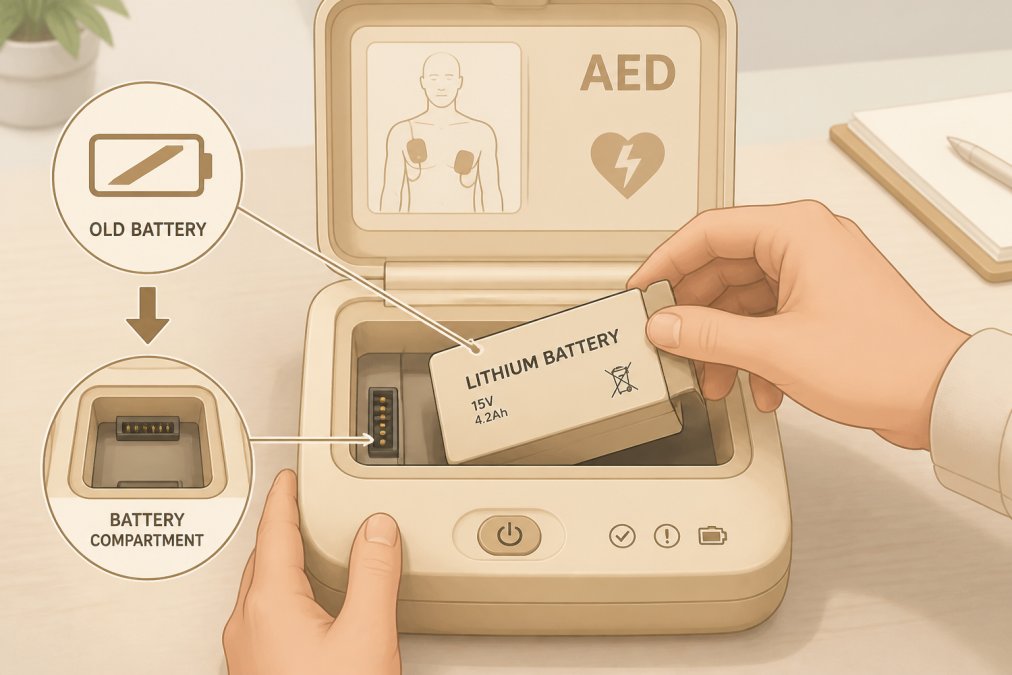
Locate the battery compartment. Most AED models have a battery door on the side or rear of the unit. Consult your device manual if you cannot locate it immediately.
-
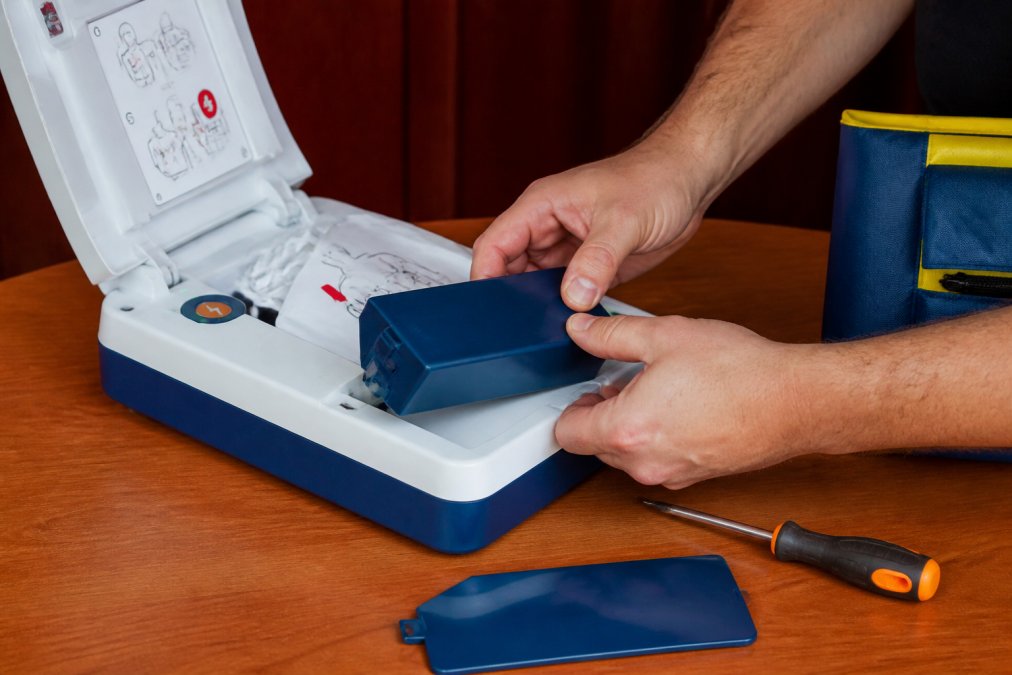
Remove the old battery. Open the compartment door and gently pull the battery straight out. Do not force it. Note the battery's orientation, the replacement must face the same direction.
-
Inspect the battery contacts. Look inside the compartment for corrosion or debris on the metal contacts. If you see white or green discoloration, wipe the contacts gently with a dry cloth.
-
Insert the new battery. Slide the replacement battery into the compartment, matching the orientation of the old one. Push firmly until you hear or feel a click, indicating it's seated correctly.
-
Close the compartment door. Secure the door until it latches fully.
-
Perform a self-test. Press the power button. The device should power on and display a readiness indicator within five seconds. Listen for an audible alarm or watch for a green light confirming operational status.
If the device shows a red light or emits a warning tone after replacement, the new battery may be defective or incompatible. Do not attempt to use the device; contact your supplier immediately.
Warning Signs Your AED Battery Is Failing
A battery doesn't fail without warning. Learning to recognize these signals prevents you from discovering a dead battery during an actual emergency.
The most obvious sign is a readiness indicator light that turns red or amber instead of green. Listen for audible alarms, some devices emit periodic beeping when battery voltage drops below acceptable levels. Check the device's digital display for a low-battery warning message like "BATTERY LOW" or "CHECK BATTERY."
Do not ignore the expiration date printed on the battery itself. Even if the device powers on and shows a green light, a battery past its service life should be replaced. Lithium batteries degrade over time regardless of usage, with shelf life typically ranging from three to five years.
An unusually warm battery compartment during standby can indicate internal failure. Normal operation produces minimal heat. Excessive warmth suggests the battery is struggling to maintain voltage and should be replaced immediately.
AED Battery Compatibility and Model Matching
Installing the wrong battery is worse than having no battery at all. An incompatible battery can damage the device's internal circuits, void your warranty, and create a false sense of security that the AED is operational when it actually isn't.
Every AED model requires a specific battery type. Check your device's documentation for the correct part number, which appears in the user manual, on the device's exterior label, and often on the battery compartment door itself. Write this number down and keep it accessible.
The voltage must match precisely. Most AED devices use either 9-volt or 12-volt batteries. A 9-volt battery installed in a 12-volt device will not provide sufficient power. A 12-volt battery in a 9-volt device can damage components.
Battery chemistry matters as well. Lithium batteries deliver consistent voltage throughout their discharge cycle, while alkaline batteries experience voltage drop as they deplete. AED devices are calibrated for one chemistry or the other. Using the wrong chemistry results in inconsistent device behavior.
Bigtime Battery maintains an extensive catalog of AED batteries across all major manufacturers. When you're uncertain about compatibility, providing your device's model number allows our team to identify the exact replacement you need.
| Battery Type | Voltage | Chemistry | Typical Service Life | Best For |
|---|---|---|---|---|
| Standard Lithium | 9V | Lithium | 3-5 years | Most portable AED models |
| High-Capacity Lithium | 12V | Lithium | 4-5 years | Larger stationary devices |
| Alkaline | 9V | Alkaline | 2-3 years | Older device models |
Emergency Troubleshooting When Replacing Dead AED Battery
Sometimes a battery replacement doesn't immediately restore full functionality. Understanding what to check next saves critical time during an emergency.
Device Won't Power On After Battery Replacement
If the device remains dark after inserting a new battery, the battery may not be fully seated. Remove the battery, inspect the compartment contacts for debris or corrosion, and reinsert with firm, steady pressure. You should feel or hear a distinct click.
If the device still won't power on, the battery itself may be defective. Remove it and replace with another unit from a different batch. Check that the power button is fully functional and the battery compartment door is completely closed and latched.
Self-Test Failures and Readiness Indicators
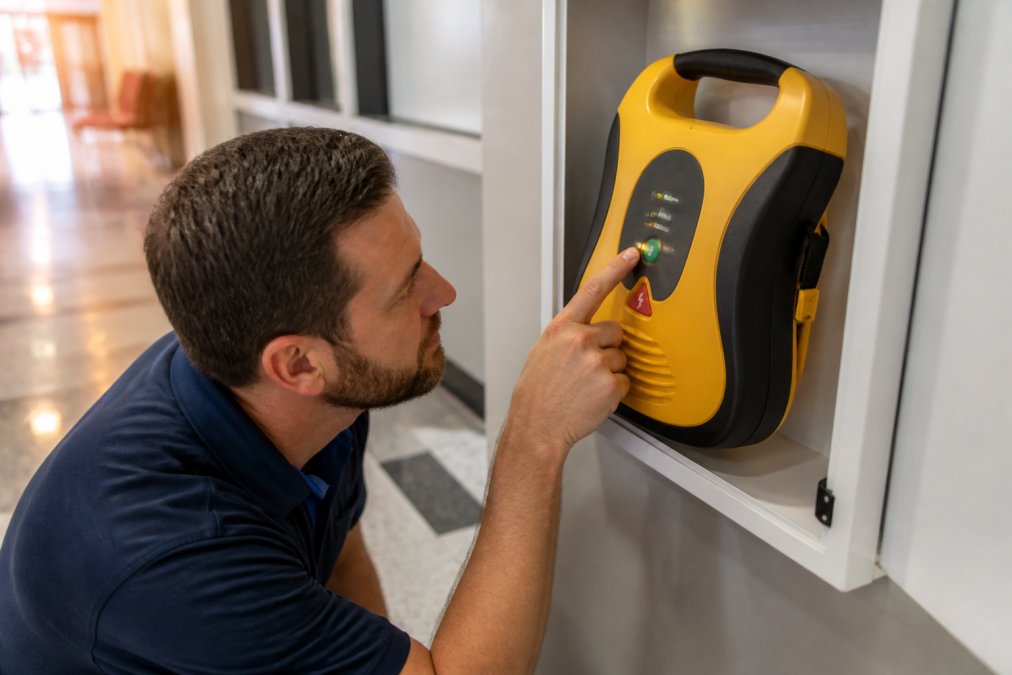
After the device powers on, it performs an automatic self-test, typically completing within 10 to 30 seconds. A green light or "READY" message indicates the self-test passed and the device is operational. A red light or "CHECK DEVICE" warning means the self-test detected a problem.
If the self-test fails immediately after battery replacement, remove the battery and verify you installed the correct part number. Reinsert the correct battery and wait a full 30 seconds before concluding the self-test has failed. If the self-test continues to fail with the correct battery, the device's internal electronics may require professional service. Do not rely on a device that fails self-test.
AED Maintenance Checklist and Battery Life Expectations
Replacing batteries reactively is expensive and risky. A structured maintenance schedule catches problems before they become emergencies.
Lithium Battery Standby Life and Service Life
Lithium batteries used in AED devices maintain consistent voltage throughout their operational life, then fail relatively suddenly. The standby life typically ranges from three to five years. After the service life expires, the battery must be replaced regardless of whether the device has been used.
Periodic Inspection and Replacement Intervals
Establish a maintenance cycle with monthly visual inspections and quarterly functional tests. During visual inspection, check that the readiness indicator shows green and no warning lights are active. Quarterly functional tests involve powering on the device and allowing the self-test to complete. Record the result and investigate immediately if the device fails.
Replace batteries on a fixed schedule regardless of the device's apparent condition. If your device uses a three-year service-life battery, replace it every 36 months. Mark the replacement date on the device's exterior label and set a calendar reminder.
AED Battery Expiration Date and Storage Best Practices
Every replacement battery carries an expiration date. Understanding how to read and track these dates prevents you from installing expired batteries that may fail prematurely.
How to Read and Track Expiration Dates
Battery expiration dates appear on the battery label in one of two formats: MM/YY (month/year) or a printed date like "EXP 08/2028." A battery labeled "06/2028" expires in June 2028. Do not confuse the manufacturing date with the expiration date.
Create a spreadsheet tracking each AED device, its current battery's expiration date, and the date you last performed maintenance. Set automatic reminders three months before expiration so you have time to order and install replacements before the battery fails.
Battery Storage and Shelf Life Management
Store replacement batteries in a cool, dry location between 50°F and 77°F (10°C to 25°C). Avoid basements prone to moisture, vehicles that heat up in sunlight, or outdoor storage. Never store batteries in sealed plastic bags without ventilation, as condensation can form inside the packaging.
Inspect spare batteries every six months for visible corrosion, leakage, or damage to the battery casing. If you notice any of these signs, dispose of the battery safely and order a replacement.
DIY vs. Professional Maintenance for AED Batteries
The question of whether to handle battery replacement yourself or hire a professional depends on your facility's size, staff training, and local regulations.
DIY Battery Replacement
Replacing an AED battery yourself is straightforward if you follow the manufacturer's instructions. The procedure takes five to ten minutes and requires no specialized tools. Any staff member can perform this task after receiving brief training. To mitigate installation error, verify the battery part number three times before installation, follow the manufacturer's instructions precisely, and always perform a self-test after replacement.
Professional Maintenance Programs
Many facilities contract with medical equipment suppliers or AED manufacturers for managed maintenance programs. These programs typically include quarterly inspections, automatic battery replacement on a fixed schedule, and electrode pad replacement. Professional programs cost more than DIY maintenance but eliminate the risk of human error. A hybrid approach works well for many facilities: perform monthly visual inspections yourself, but contract with a professional for annual comprehensive service and battery replacement.
AED Battery Recycling Programs and Safe Disposal
Lithium batteries are classified as hazardous waste in most U.S. states. Improper disposal creates environmental and safety risks. Understanding your disposal options ensures compliance with regulatory requirements.
Hazardous Waste Disposal and Regulatory Compliance
The Environmental Protection Agency (EPA) classifies lithium batteries as hazardous waste due to their potential to cause fires in landfills and water contamination from heavy metals. Many states have enacted additional regulations that make it illegal to dispose of lithium batteries in standard trash.
Contact your state's environmental protection agency for specific disposal requirements. Never throw an old AED battery in the trash, down a drain, or into a recycling bin designated for household recyclables.
Many battery retailers, including Bigtime Battery, participate in battery recycling programs. When you purchase a replacement battery, ask whether the retailer accepts old batteries for recycling. Certified e-waste recycling facilities accept AED batteries and extract valuable materials like lithium and cobalt for reuse. Search online for "lithium battery recycling near me" to find certified facilities in your area.
Document your battery disposal by keeping receipts or certificates of destruction showing that you properly disposed of old batteries. This documentation demonstrates regulatory compliance if you're ever audited by local authorities.
Maintaining AED readiness requires attention to battery management, but the process is straightforward once you understand the fundamentals. Bigtime Battery provides a complete range of replacement batteries for all major AED manufacturers, verified for compatibility and tested before shipment. When you need a battery that works the first time, our one-stop selection ensures you get the right part without guesswork or delays. Start with an accurate inventory of your AED models and their required batteries, then establish a replacement schedule that keeps your devices ready for emergencies.
Frequently Asked Questions
How do I know if my AED battery is actually dead or just low?
Most AED devices display a readiness indicator light or audible alarm when the battery voltage drops below operational status. Check your device's self-test results, which typically run automatically and show battery capacity. If the audible alarm sounds during self-test or the readiness indicator shows red, the battery needs replacement. Some devices display the exact voltage; if it's below the manufacturer specifications, it's time to replace it. Never wait for complete failure during an emergency.
Can I replace an AED battery myself, or do I need professional service?
Most AED batteries can be replaced by the device owner without professional help. The process typically takes 2-5 minutes and requires no special tools. However, check your manufacturer specifications first. After replacement, run the device's self-test to confirm operational status. If the device fails self-test after battery replacement, contact professional support. Some managed AED programs include service support, so verify your program terms before attempting DIY replacement.
How often should I replace my AED battery to maintain emergency preparedness?
Lithium batteries in AED devices typically have a standby life of 4-5 years, though this varies by manufacturer and model. Check your specific device's documentation for the recommended replacement interval. Most facilities replace batteries every 4 years as part of routine maintenance cycles, even if the device hasn't been used. Mark your calendar and set reminders based on the expiration date printed on the battery. Regular replacement ensures your device is always ready for emergency use.
What should I do with my old AED battery after I replace it?
AED batteries contain lithium and are classified as hazardous waste, so they require proper disposal. Do not throw them in regular trash. Many battery retailers and medical supply distributors accept old batteries for recycling. Check if your area has AED battery recycling programs or hazardous waste collection events. Some managed AED programs handle disposal as part of their service. Contact your local environmental agency for approved disposal locations, or ask your battery supplier about their take-back program.