 how-to
How to Safely Store Powersports Batteries
Table of Contents
- Why Proper Powersports Battery Storage Matters
- Prepare Your Battery Before Storage
- How to Charge a Powersports Battery Before Storage
- Choosing the Right Storage Location
- How to Store a Motorcycle Battery Safely
- Using a Motorcycle Battery Tender for Long-Term Storage
- AGM Battery Storage Guidelines
- Monthly Maintenance and Inspection During Storage
- Frequently Asked Questions
Last Updated: October 10, 2026
Why Proper Powersports Battery Storage Matters
Powersports batteries lose power during weeks or months of inactivity. A battery left unprepared can discharge completely, leaving you stranded when you return to riding. Learning how to safely store powersports batteries is essential for seasonal riders.
This guide covers charging, location selection, and maintenance steps to store powersports batteries safely and keep them in peak condition.
Prepare Your Battery Before Storage
Clean the battery terminals. Corrosion buildup blocks electrical connections. Use a wire brush to remove white, blue, or green crusty deposits and wipe dry.
Inspect for damage. Look for cracks, leaks, swelling, or loose terminals. Replace any damaged battery before storage.
Check voltage. A healthy battery reads 12.6 volts when fully charged. Charge any battery reading below 12 volts before storage.
Preparation Step | What to Check | Why It Matters |
|---|---|---|
Clean terminals | Corrosion buildup | Blocks power flow |
Inspect case | Cracks or leaks | Safety risk during storage |
Check voltage | Reading below 12V | Prevents over-discharge |
Tighten connections | Loose posts | Maintains electrical contact |
How to Charge a Powersports Battery Before Storage
Fully charge your battery before storage, it resists self-discharge far better than a partially charged one. The correct charging method depends on your battery chemistry, as using the wrong charger can damage the battery or create a fire risk.
Charging by Battery Type
Flooded Lead-Acid Batteries Charge at 1 to 5 amps for 4 to 8 hours until the battery reaches 12.6-12.8 volts. Use a trickle charger with float or maintenance mode to prevent overcharging during storage.
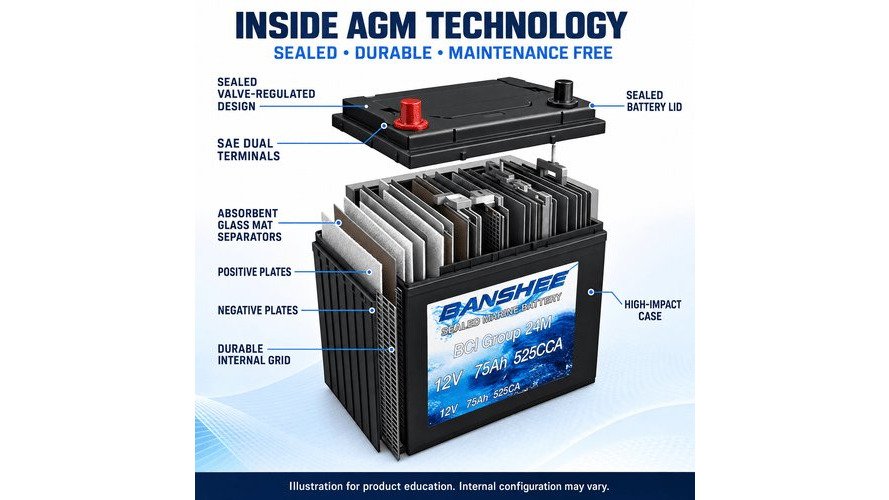
AGM (Absorbent Glass Mat) Batteries Use a charger rated for AGM chemistry only, standard chargers can damage AGM batteries. Charge at 2 to 4 amps for 4 to 6 hours to 12.8-13.2 volts. Check your owner's manual to confirm your battery type. Bigtime Battery stocks AGM-compatible chargers and tenders.
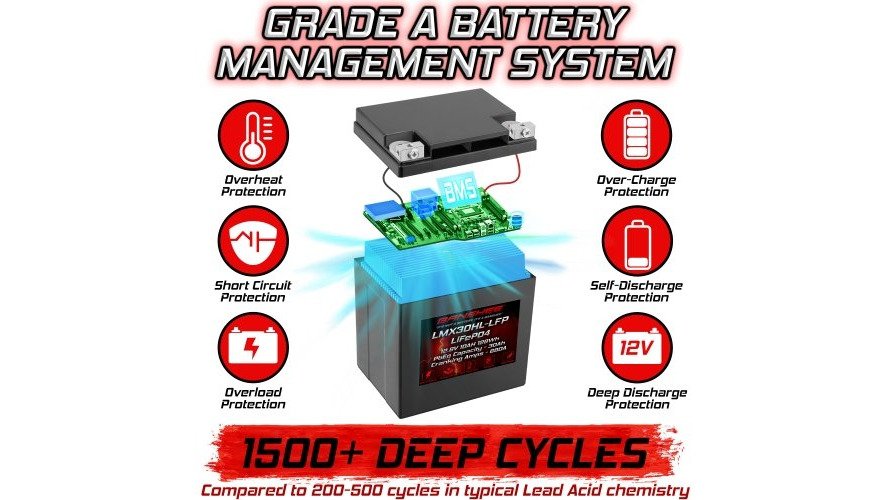
Lithium Batteries Lithium batteries require a dedicated lithium charger, never use lead-acid or AGM chargers, which can damage the battery management system and cause fire. Charge at 2 to 5 amps for 2 to 4 hours to 13.6 volts. Confirm your charger is lithium-rated before connecting.
Safe Charging Practices
Charge in a well-ventilated space. Charging produces hydrogen gas. Never charge in an enclosed garage, shed, or basement. Charge outdoors or in a garage with the door open.
Inspect before charging. Do not charge a cracked, leaking, or swollen battery, replace it instead, as it poses a fire or chemical burn risk.
Check the charger for damage. Do not use a charger with visible cracks, burns, or damage to the cord or connectors.
Use a slow charger (2-5 amps), not a fast charger. Fast chargers generate heat and stress the battery, while slow charging extends lifespan.
Monitor the battery during charging. If it becomes hot, swells, leaks, or smells like burning plastic or rotten eggs, disconnect immediately and move it outdoors.
Disconnect once fully charged. Leaving a charger connected indefinitely can cause slow overcharging over weeks or months.
Banshee Sealed AGM Powersport Replacement Battery for YTX4L-BS, YT4L, YTX4L →
Choosing the Right Storage Location
Where you store your battery matters as much as how you prepare it. Temperature, moisture, and light all affect battery health during storage.
Pick a cool, dry location. Store between 50-80°F. Heat accelerates discharge; extreme cold damages chemistry. A climate-controlled garage or storage unit works well.
Keep away from direct sunlight. UV light degrades cases and accelerates breakdown. Store in a dark corner or cabinet.
Avoid damp areas. Moisture promotes corrosion. In humid climates, store in an airtight container with silica gel packs.
Store the battery on a non-conductive surface. Place it on wood, plastic, or rubber, not directly on concrete. Concrete can draw moisture and promote discharge.
How to Store a Motorcycle Battery Safely
Proper storage technique protects your battery and keeps it ready for the next riding season. While the fundamentals apply across all powersports, the specific steps vary slightly depending on your vehicle type and whether you're removing the battery or leaving it installed.
Disconnect the Battery from Your Vehicle
Removing the battery prevents parasitic drain, the slow power draw from alarm systems, fuel pumps, clocks, GPS, and computers that occurs even when the engine is off. Over weeks or months, parasitic drain can completely discharge your battery.
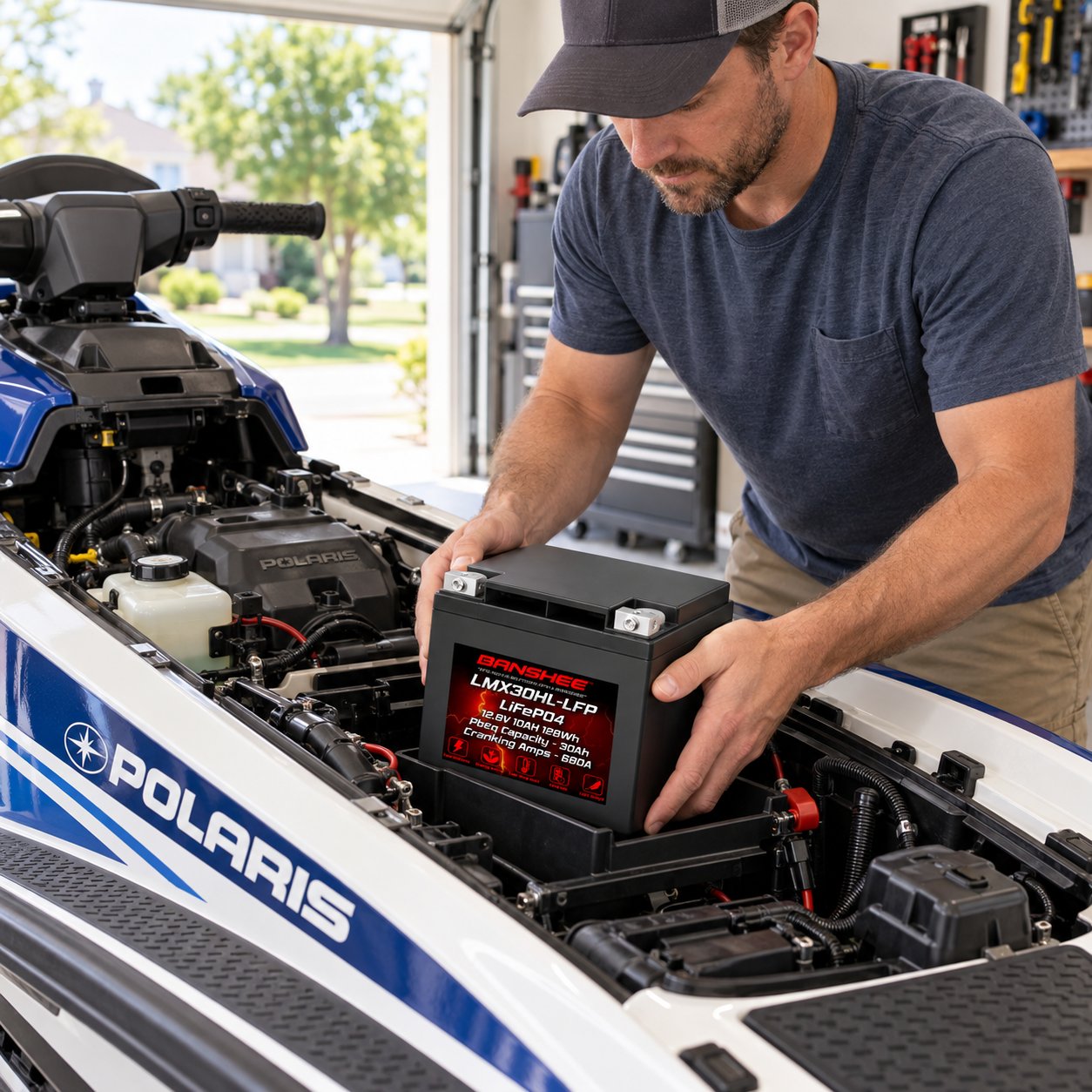
For motorcycles: Remove mounting brackets or straps. For ATVs and UTVs: Remove the seat or access panel, unbolt from the tray, and note orientation. For snowmobiles: Remove mounting bolts from the engine compartment. For personal watercraft: Remove the seat or access panel, unbolt, and ensure the area is dry.
Identify Parasitic Drain Before Deciding to Disconnect
To check parasitic drain: turn off the engine and accessories, set a multimeter to DC amps, disconnect the negative terminal, and connect the meter in series. A healthy vehicle draws 10-50 milliamps in sleep mode. If drain exceeds 100 mA, disconnect the battery to prevent deep discharge during storage.
Remove the Negative Terminal First
Always remove the negative (black) terminal before the positive (red) one. This prevents accidental short circuits that can damage your vehicle's electrical system, destroy the battery, or cause dangerous sparks.
- Loosen the negative terminal nut with a wrench. Use the correct wrench size (typically 8-10 mm for powersports batteries).
- Pull the cable away from the post. Gently wiggle it free if it's stuck.
- Remove the positive terminal the same way. Loosen the nut, then pull the cable away.
- Store the terminal covers in a safe place so you remember which cable goes where and prevent accidental contact.
If you're leaving the battery installed but want to reduce parasitic drain, you can disconnect only the negative terminal and leave the positive connected. This is less effective than full removal but better than no disconnection.
Storage Setup for Different Powersports Vehicles
Motorcycles: After disconnecting both terminals, remove the battery and store it indoors in a cool, dry location. Connect a battery tender if storage will exceed 30 days.
ATVs and UTVs: Remove the battery and store it indoors. These vehicles often have higher parasitic drain due to GPS, fuel injection computers, and security systems, so disconnection is especially important. Use a battery tender for storage longer than 2 weeks.
Snowmobiles: Remove the battery and store it indoors in a temperature-controlled space (snowmobiles are typically stored during warm months, but cold storage areas can damage batteries). Snowmobile batteries benefit from a tender during the off-season.
Personal Watercraft: Remove the battery and store it in a dry location away from the watercraft. Moisture and salt spray accelerate corrosion, so keep the battery indoors. Use a tender if storage exceeds 30 days.
Banshee Sealed AGM Powersport Replacement Battery for YTX4L-BS, YT4L, YTX4L →
Reconnection and Return to Service
When you're ready to use your powersports vehicle again:
- Inspect the battery for damage. Look for cracks, leaks, or swelling. If found, replace the battery before reconnecting.
- Check the voltage. A stored battery should read 12.4-12.8 volts. If it reads below 12 volts, connect a tender for a few hours before reconnection.
- Reconnect the positive terminal first, then the negative terminal. This is the reverse of disconnection and prevents short circuits.
- Tighten both terminal nuts securely so they don't vibrate loose during riding.
- Test the vehicle. Start the engine and confirm all electrical systems (lights, gauges, accessories) work correctly.
Proper disconnection and storage of your powersports battery ensures it will be ready to deliver reliable starting power when the season returns. Bigtime Battery offers quality batteries for motorcycles, ATVs, UTVs, snowmobiles, and personal watercraft, plus battery tenders and chargers. Make your purchase at bigtimebattery.com to get the right battery and charging solution for your powersports vehicle.
Using a Motorcycle Battery Tender for Long-Term Storage
A battery maintainer, also called a trickle charger or battery tender, keeps your battery charged during months of storage. This is the single best tool for maintaining powersports batteries.
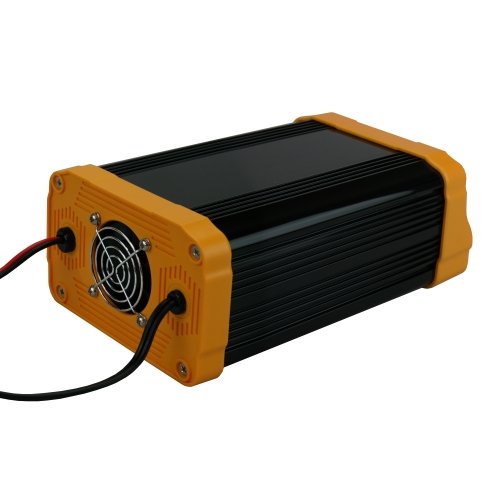
A quality battery tender charges slowly and stops automatically when the battery reaches full charge. Unlike regular chargers, tenders can stay connected for weeks without damaging the battery. They compensate for self-discharge automatically, keeping voltage stable.
Connect the tender to your fully charged battery before storage. Run the positive cable to the positive terminal and the negative cable to the negative terminal. Plug the tender into a standard outlet. The tender will monitor the battery and recharge whenever voltage drops.
Many tenders have indicator lights showing charging status. A green light means the battery is fully charged. Some tenders switch to maintenance mode, delivering tiny pulses of charge to offset natural discharge.
AGM Battery Storage Guidelines
AGM batteries are sealed and self-discharge more slowly than flooded batteries, requiring less frequent maintenance. Never use a standard car charger, use one rated for AGM chemistry. Charge to full capacity before storage in a cool, dry location. For storage longer than two months, use a tender designed for AGM chemistry.
Check voltage every 30 days. If it drops below 12 volts, connect a tender immediately. Proper storage protects your investment and ensures reliable performance.
Monthly Maintenance and Inspection During Storage
Monthly checks prevent problems. Check voltage monthly, a healthy stored battery holds 12.4-12.8 volts. If below 12 volts, connect a tender. Inspect terminals for corrosion and the case for cracks, leaks, or swelling.
Maintenance Task | Frequency | What to Look For |
|---|---|---|
Voltage check | Monthly | Below 12.4V indicates discharge |
Terminal inspection | Monthly | Corrosion or loose connections |
Case inspection | Monthly | Cracks, leaks, or swelling |
Pre-season test | Before use | Voltage below 12.6V after charging |
Storing your powersports battery correctly extends its lifespan and ensures it starts reliably next season. Follow these steps: prepare your battery by cleaning and charging, choose a cool dry location, disconnect it from your vehicle, and use a battery tender for storage longer than a month. Monthly checks catch problems early.
When you're ready to replace your battery or need a quality tender, Bigtime Battery has you covered. We stock a wide selection of powersports batteries including AGM options and all the charging solutions you need. Our Banshee and PowerStar batteries deliver reliable performance with multi-year warranties.
Frequently Asked Questions
Should a powersports battery be fully charged before storage?
Yes. Charge your powersports battery to full capacity before storing it. A fully charged battery resists self-discharge better than a partially charged one. For AGM batteries, a full charge protects the internal plates and extends storage life. Check the voltage with a multimeter—aim for 12.6 volts or higher for a 12V battery. Disconnect the battery from your vehicle first to prevent parasitic drain.
Can you leave a motorcycle battery tender connected all winter?
Yes, a motorcycle battery tender is designed for continuous connection during long-term storage. Modern tenders automatically switch to maintenance mode once the battery reaches full charge, preventing overcharging. This keeps your battery at optimal voltage throughout the winter months. Choose a tender compatible with your battery chemistry—AGM batteries need AGM-specific chargers. Bigtime Battery carries quality powersports batteries.
Where is the safest place to store a powersports battery?
Store your powersports battery in a cool, dry location away from direct sunlight and moisture. Ideal temperatures range from 50°F to 80°F. Avoid freezing temperatures below 32°F, which slow chemical reactions and reduce charge retention. Keep the battery off concrete floors—use a wooden shelf or plastic rack instead. Ensure good air circulation and keep the area away from metal objects that could cause a short circuit.
How often should you check a battery in storage?
Check your stored powersports battery at least monthly. Verify the voltage with a multimeter and look for signs of corrosion, leaks, or physical damage. If using a battery tender, confirm it's still connected and functioning. For batteries without a tender, recharge if voltage drops below 12.4 volts. Monthly inspections catch problems early and ensure your battery is ready when you need it. High-quality batteries like those from Bigtime Battery maintain charge well, but regular checks keep you ahead of issues.