 how-to
Finding the Correct Medical Device Battery: A 2026 Guide
Table of Contents
- Understanding Medical Device Battery Specifications
- FDA Medical Device Battery Standards and Compliance
- Identifying Your Device's Battery Requirements
- Medical Device Battery Replacement Guide
- Thermal Management and Operating Temperature Considerations
- How to Dispose of Medical Device Batteries Safely
- Troubleshooting Common Medical Device Battery Failures
- Supply Chain and Lead Time Considerations
- Frequently Asked Questions
Last Updated: August 5, 2026
Understanding Medical Device Battery Specifications
Selecting the correct medical device battery starts with understanding your device's power requirements, chemistry, and form factor. Medical device batteries fall into distinct categories: lithium-ion and lithium-polymer for high-drain applications, alkaline and zinc-carbon for low-power devices, and specialized chemistries like LiFePO4 for extreme temperature or safety-critical environments. Each delivers different energy density, cycle life, and thermal characteristics.
Energy density defines how much power your battery stores relative to physical size. High energy density lets manufacturers shrink devices without sacrificing runtime, critical for portable equipment like handheld diagnostic tools or wearable monitors.
Battery Chemistry and Energy Density
Lithium-ion batteries offer the highest energy density among rechargeable options (150-250 Wh/kg), ideal for devices requiring frequent charging and extended use. Lithium-polymer variants provide similar performance in flexible form factors for oddly-shaped medical devices.
Alkaline primary cells deliver moderate energy density (100-150 Wh/kg) but cannot be recharged. They excel in low-drain applications like emergency lighting where discharge rates stay minimal.
LiFePO4 chemistry prioritizes safety over raw energy density. It resists thermal runaway and maintains performance across extreme operating temperatures, appearing frequently in medical device battery standards because it meets stringent safety requirements.
Smart battery systems integrate a battery management system (BMS) that monitors state of charge and state of health, preventing over-discharge damage and extending cycle life. Devices like portable defibrillators or infusion pumps benefit from BMS integration for accurate remaining runtime display.
Voltage, Capacity, and Load Current Requirements
Your device documentation specifies voltage in volts (V) and capacity in milliamp-hours (mAh) or watt-hours (Wh). Voltage mismatch causes immediate failure, a 3V device cannot use a 9V battery. Capacity tells you runtime: a 2000 mAh battery powering a 100 mA device delivers roughly 20 hours of continuous use.
Load current, the peak current your device draws, matters equally. A battery rated for 500 mA continuous discharge cannot safely handle a device pulling 1500 mA peaks without voltage sag or internal heating. Medical device batteries must match both average and peak current demands to prevent mid-operation shutdown.
FDA Medical Device Battery Standards and Compliance
The FDA requires medical device manufacturers to validate battery performance as part of the complete system. If you're sourcing replacement batteries for an FDA-cleared medical device, the battery must maintain the device's original performance specifications. Installing non-validated batteries voids the device's clearance and creates liability.
The FDA's Quality System Regulation (21 CFR Part 820) requires manufacturers to establish procedures for component selection, including battery validation. Replacement batteries from reputable suppliers come with compatibility verification, eliminating guesswork for hospitals, clinics, and home care providers managing device fleets.
Regulatory Certification and Testing Requirements
Medical device batteries undergo standardized testing before approval. IEC 62133 defines safety and performance for rechargeable batteries in portable equipment. ISO 13485 establishes quality management systems for medical device manufacturers. Testing protocols measure capacity retention, cycle life, thermal stability, and failure modes under real-world stress.
Thermal cycling tests expose batteries to temperature swings, then verify capacity remains intact. Mechanical shock testing simulates drops and vibration. Electrical stress testing applies extreme discharge rates to confirm the battery won't fail catastrophically. The battery's impedance, internal resistance, gets measured throughout its lifecycle, high impedance indicates aging or internal damage.
Safety Standards: IEC 62133 and ISO 13485
IEC 62133 specifically addresses portable rechargeable batteries and battery packs, mandating testing for thermal runaway prevention, mechanical abuse tolerance, and electrical safety. ISO 13485 ensures the manufacturer's quality system produces consistent, safe batteries through documented procedures for design validation, manufacturing controls, and post-market surveillance.
Regulatory compliance documentation travels with medical device batteries. Legitimate suppliers provide test reports, certificates, and compatibility statements proving the battery meets the device manufacturer's specifications and applicable standards.
Identifying Your Device's Battery Requirements
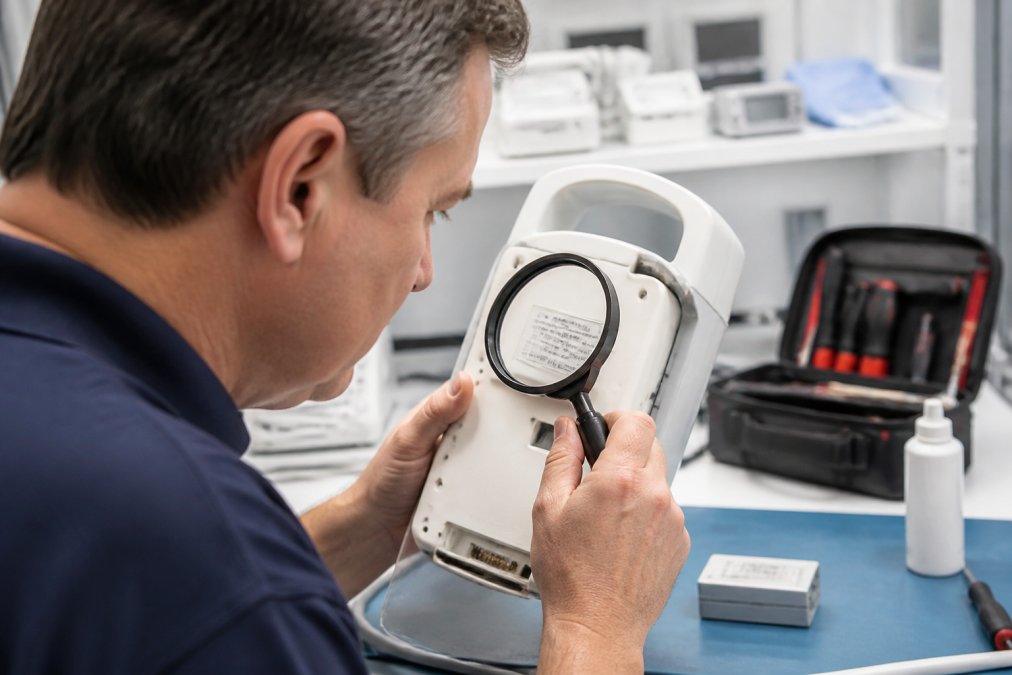
Finding your device's battery specifications requires three pieces of information: device model number, original battery part number, and voltage/capacity ratings. Start with the device label or user manual. Never assume a battery that physically fits will work correctly, voltage and capacity must match exactly.
Reading Battery Labels and Device Documentation
Battery labels contain standardized information: voltage (3.7V, 9V), capacity (mAh or Wh), and chemistry (Li-ion, Alkaline, NiMH, LiFePO4). Manufacturing date codes help identify battery age. Part numbers identify exact battery types, a "CR2032" is a specific coin-cell lithium battery, an "18650" is a standard cylindrical lithium-ion cell.
User manuals specify approved batteries by part number and chemistry. Some devices accept substitutes in the same form factor; others require exact chemistry matches. A device designed for alkaline cells may not tolerate the different voltage curve of rechargeable NiMH, causing malfunction. Always verify the manual before assuming substitution works.
Matching Battery Chemistry to Your Application
Application determines optimal chemistry. Devices used daily benefit from rechargeable lithium-ion because cycle life and energy density minimize replacement frequency. Emergency equipment like defibrillators uses alkaline primaries because they maintain charge during long storage. Devices exposed to temperature extremes need LiFePO4 for thermal stability.
Usage pattern drives chemistry selection. A portable patient monitor used 8 hours daily needs a rechargeable battery with high cycle life. A home pulse oximeter used intermittently can use alkaline cells. Rechargeable batteries cost more upfront but amortize over hundreds of cycles. Operating temperature narrows chemistry choices, devices in operating rooms facing 60°F to 85°F swings need standard lithium-ion, while extreme environments may require LiFePO4 or alkaline batteries with wider operating temperature ranges.
Medical Device Battery Replacement Guide
Replacing a medical device battery requires three steps: verification, removal, and installation. Skipping verification causes device failures.
Step-by-Step Replacement Process
Step 1: Verify Compatibility (Time: 5 minutes)
Locate your device model number and original battery specifications from the device label, battery compartment, or user manual. Write down the voltage, capacity, chemistry, and part number. Contact Bigtime Battery with this information for compatibility verification before purchase.
Step 2: Power Down and Discharge (Time: 2 minutes)
Turn off the device completely. If it's a rechargeable battery, discharge any remaining charge by powering the device until it shuts down. Wait 30 seconds after shutdown before opening the battery compartment.
Step 3: Remove the Old Battery (Time: 3 minutes)
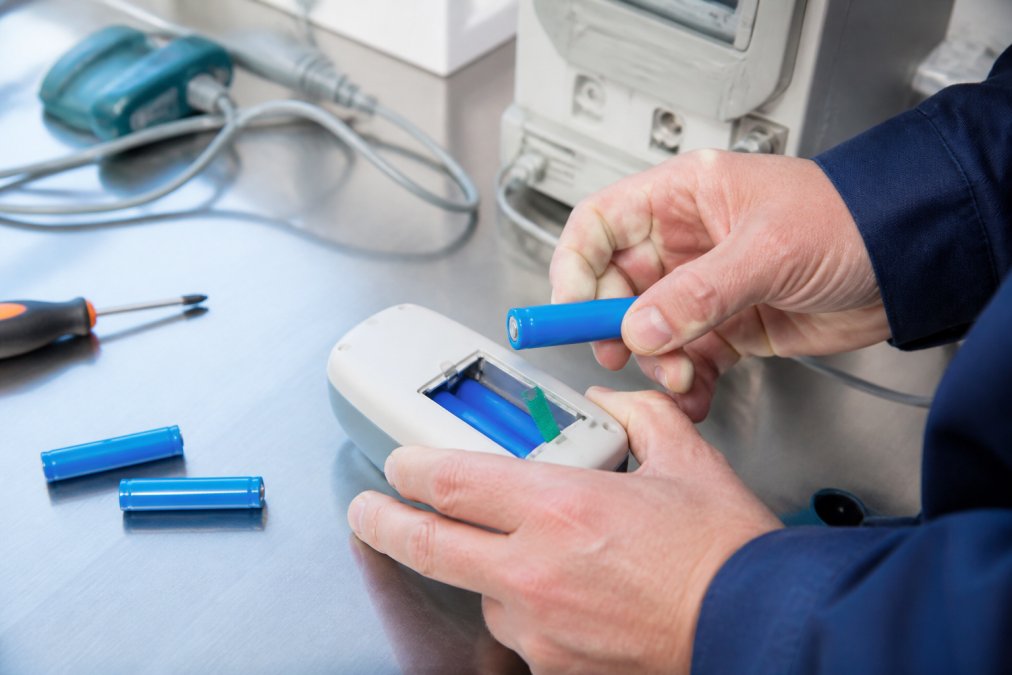
Open the battery compartment. Note the polarity, positive terminal orientation matters. Take a photo of the original battery orientation before removal to prevent polarity reversal.
Step 4: Install the New Battery (Time: 3 minutes)
Insert the new battery matching the original orientation. Positive terminal connects to positive contact, negative to negative. Verify the battery seats fully, as loose connections cause intermittent failures.
Step 5: Verify Operation (Time: 5 minutes)
Power on the device and verify normal operation. Check display, wireless connectivity, and sensor response. Allow the device 2-3 minutes to stabilize before critical use. If the device behaves abnormally, power down immediately and verify battery polarity and compatibility.
Verifying Battery Compatibility Before Installation
Match your device model to the battery part number using the manufacturer's compatibility matrix. Physical fit matters, the battery should sit flush against the compartment contacts with no gaps. Voltage verification is non-negotiable: a 3.7V battery installed in a 9V device destroys internal circuits immediately.
Thermal Management and Operating Temperature Considerations
Battery performance degrades outside optimal temperature ranges. Most medical device batteries operate best between 50°F and 95°F (10°C to 35°C). Cold temperatures reduce available capacity, a battery rated for 2000 mAh at 70°F delivers only 1200 mAh at 32°F. Heat accelerates chemical reactions, reducing cycle life and increasing failure risk.
Battery management systems monitor temperature and adjust charging rates accordingly. Smart rechargeable batteries reduce charge current in high-temperature conditions, protecting internal chemistry and extending cycle life. Devices without BMS rely on passive thermal management through adequate ventilation around the battery compartment.
Shelf life degrades at elevated temperatures. A battery stored in a 95°F warehouse loses capacity faster than one stored at 70°F. Store batteries at room temperature away from direct sunlight to extend usable life by months.
How to Dispose of Medical Device Batteries Safely
Used medical device batteries require proper disposal. Throwing them in regular trash creates environmental and safety hazards. Lithium batteries can ignite in landfills or recycling facilities. Alkaline batteries leak heavy metals into soil.

Regulatory Disposal Requirements and Best Practices
The EPA regulates battery disposal under the Universal Waste Rule. All batteries must be recycled or disposed of through approved facilities. Establish a battery collection system with a labeled, fire-safe container in your facility. Train staff on proper placement, batteries should never be crushed or compressed. Document battery disposal with device model, battery type, and disposal date to prove compliance.
Sustainability and Recycling Options
Battery recycling recovers valuable materials. Lithium, cobalt, and nickel from rechargeable batteries get extracted and reused in new batteries. Contact your local waste management authority for approved recycling facilities. Call2Recycle operates the largest battery recycling network in the United States and identifies drop-off facilities within your area at no cost.
Troubleshooting Common Medical Device Battery Failures
Battery failures manifest as sudden shutdown, intermittent operation, or reduced runtime.
Identifying Battery Failure Modes and Root Causes
Sudden shutdown during use indicates voltage collapse from increased internal impedance. Intermittent operation, device works for minutes, then shuts down, then restarts, suggests poor battery contact. Verify the battery seats fully and contacts are clean.
Reduced runtime without shutdown indicates capacity degradation. Lithium-ion batteries typically deliver 500-1000 cycles before capacity drops below 80%. LiFePO4 batteries last 2000-3000 cycles. Failure to charge indicates BMS malfunction or internal cell damage. Overheating during use signals internal resistance failure or internal short circuit, power down immediately and remove the battery.
When to Replace vs. When to Troubleshoot
Replace the battery if it's older than its expected cycle life. Troubleshoot first if the device recently started failing by checking battery contacts for corrosion or debris and cleaning with a dry cloth. Replace if troubleshooting doesn't restore function. Document battery performance before replacement to identify premature failures or compatibility issues.
Supply Chain and Lead Time Considerations
Battery availability fluctuates based on demand, manufacturing capacity, and raw material supply. Lead times extend from standard 5-7 days to 2-3 weeks during demand spikes. Build safety stock into your inventory plan. A facility using 10 batteries monthly should maintain 30-day supply on hand. For critical devices like defibrillators or patient monitors, maintain 60-90 day supply.
Finding the correct medical device battery requires matching your device's voltage, capacity, and chemistry specifications. Bigtime Battery simplifies this process, our team verifies compatibility before you purchase, eliminating installation guesswork. Contact us with your device model number and battery specifications, and we'll confirm the exact battery you need, backed by documentation proving regulatory compliance.
Frequently Asked Questions
What are the FDA requirements for medical device batteries?
The FDA requires medical device batteries to meet specific safety and performance standards through regulatory certification processes. Batteries must pass biocompatibility testing, electrical safety testing, and performance validation per IEC 62133 and ISO 13485 standards. Manufacturers must document compliance and maintain traceability records. The device's classification (Class II or III) determines the level of documentation and testing required. Always verify that your replacement battery comes from a manufacturer whose products meet FDA-recognized standards and have been tested for the specific device application.
How do I identify the correct battery chemistry for my medical device?
Start by checking your device's documentation or the worn battery label for chemistry type: lithium-ion, lithium-polymer, LiFePO4, or alkaline. Match the voltage (typically 3.7V, 6V, 9V, or 12V), capacity in mAh, and discharge rate requirements. Consider your device's power consumption profile and operating temperature range. If the label is unreadable, contact the device manufacturer or your supplier with the device model number. Never guess chemistry, as using the wrong type can cause thermal runaway, reduced cycle life, or device malfunction.
How often should medical device batteries be replaced?
Replacement frequency depends on cycle life, usage profile, and storage conditions. Most lithium-ion medical batteries last 300-1000 cycles (typically 2-5 years with regular use). Primary cells are single-use and replaced when depleted. Track state of charge (SOC) and state of health (SOH) using your device's battery management system (BMS) if available. Replace batteries when capacity retention drops below 80% or if the device shows low-battery warnings. For portable medical equipment, maintain a spare battery on hand to avoid downtime during emergencies.
What is the difference between consumer and medical-grade batteries?
Medical-grade batteries undergo rigorous testing for biocompatibility, electrical safety, and performance consistency per ISO 13485 standards. They have stricter quality control, documented manufacturing processes, and traceability for regulatory compliance. Medical batteries maintain tighter voltage regulation, better capacity retention, and wider operating temperature ranges than consumer batteries. They're designed for critical applications where failure could affect patient safety. Consumer batteries lack this certification and may not meet FDA requirements for portable medical equipment, making them unsuitable for life-critical devices like AEDs or portable oxygen concentrators.