 listicle
Best Replacement Batteries for GPS: 2026 Guide
Table of Contents
- Quick Comparison Table: Top Replacement Batteries for GPS
- Lithium vs NiMH for GPS: Which Chemistry Wins
- 1. Energizer Ultimate Lithium AA Batteries
- 2. Panasonic Eneloop Pro AA Rechargeable NiMH Batteries
- 3. Tenergy AA 2500mAh NiMH Rechargeable Batteries
- How to Extend GPS Battery Life and Maximize Runtime
- Choosing the Right Battery for Your GPS Device
- Frequently Asked Questions
Last Updated: August 10, 2026
Quick Comparison Table: Top Replacement Batteries for GPS
| Battery Type | Chemistry | Best For | Capacity | Cold Weather | Rechargeable |
|---|---|---|---|---|---|
| Energizer Ultimate Lithium AA | Lithium-ion | Extreme conditions, long-term storage | 3500 mAh | Excellent (-40°F to 140°F) | No |
| Panasonic Eneloop Pro AA | NiMH | Frequent users, varied climates | 2500 mAh | Good (down to -20°C) | Yes |
| Tenergy AA 2500mAh | NiMH | Budget-conscious frequent users | 2500 mAh | Moderate | Yes |
| Duracell Coppertop AA | Alkaline | Occasional use, backup power | Standard | Fair | No |
| Garmin NiMH Battery Pack | NiMH | Garmin GPSMAP 64/Oregon 600 series | Device-specific | Good | Yes |
Choosing the best replacement batteries for GPS requires weighing three critical factors: chemistry type, discharge rate performance, and environmental conditions. The right battery extends your GPS runtime by hours; the wrong choice leaves you stranded mid-expedition.
This guide from Bigtime Battery breaks down the real differences between lithium, NiMH, and alkaline chemistries, shows which batteries perform in the field, and walks you through specific steps to maximize battery life in your handheld GPS unit.
Lithium vs NiMH for GPS: Which Chemistry Wins
The choice between lithium and nickel-metal hydride (NiMH) chemistry fundamentally changes how your GPS performs. Lithium batteries deliver consistent voltage and superior cold weather performance, while NiMH batteries offer reusability and lower per-use costs over time.
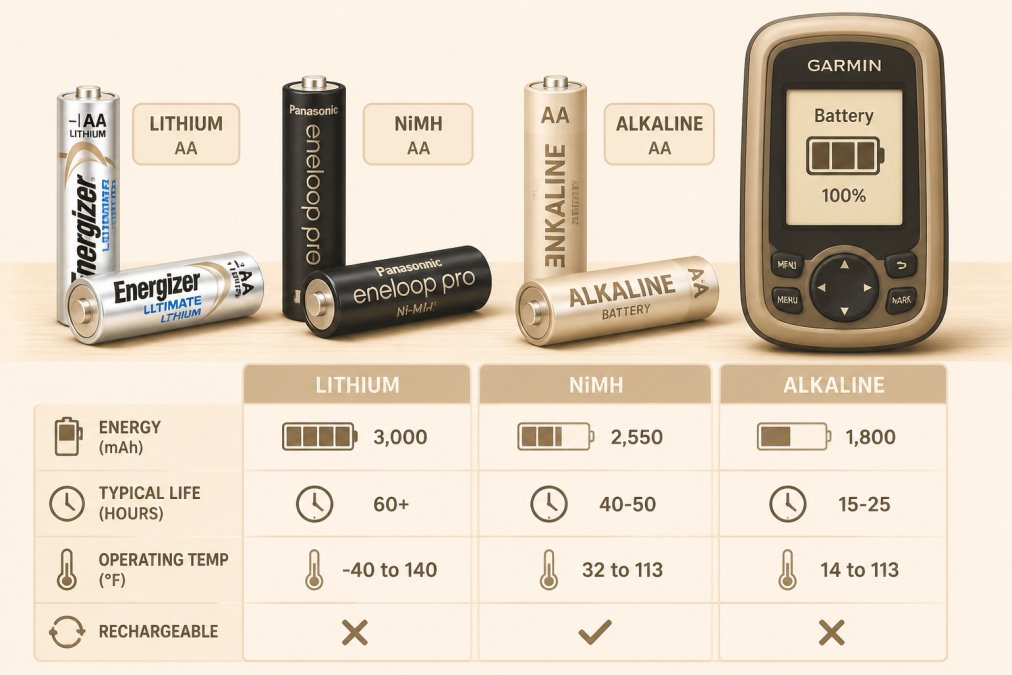
Lithium chemistry maintains 1.5V nominal voltage throughout its discharge cycle, ensuring your GPS receives consistent power from full charge to depletion. This matters because GPS units draw significant current, and voltage drop-off directly impacts performance. Lithium batteries excel in extreme temperatures, functioning reliably from -40°F to 140°F without the capacity loss that plagues other chemistries.
NiMH batteries operate at 1.2V nominal voltage, which is lower than lithium. This voltage difference can affect runtime in power-hungry devices, though modern GPS units tolerate it. The real advantage of NiMH lies in cycle life. A quality NiMH battery like Panasonic Eneloop Pro recharges up to 500 times, dramatically reducing long-term battery costs compared to disposable cells.
If you're using GPS occasionally in normal conditions, lithium batteries justify their higher upfront cost through reliability and shelf life. Energizer Ultimate Lithium AA batteries maintain charge for up to 25 years in storage, ideal for emergency backup units. If you run GPS daily or several times weekly, NiMH rechargeable batteries become more economical despite requiring a dedicated charger.
Cold weather performance separates these chemistries most clearly. Lithium maintains 100% capacity down to -40°F. NiMH performance degrades in extreme cold, though Panasonic Eneloop Pro batteries retain usable capacity down to -20°C (-4°F). For marine operations, winter hiking, or arctic field monitoring, lithium is the more reliable choice.
1. Energizer Ultimate Lithium AA Batteries
Energizer Ultimate Lithium AA batteries are the longest-lasting AA batteries available, engineered for high-drain devices like GPS units operating in demanding conditions. These batteries deliver consistent 1.5V nominal voltage and approximately 3500 mAh capacity, with reliable performance across -40°F to 140°F.
The standout feature is their lightweight construction, 33% lighter than standard alkaline batteries, reducing pack weight for backcountry GPS use without sacrificing power. The leak-proof design protects your GPS electronics if a battery fails, and the 25-year shelf life means you can stock them in emergency kits without worrying about degradation.
What works: Runtime in high-drain GPS devices exceeds alkaline batteries significantly. Consistent voltage delivery prevents the performance drop-off that occurs with alkaline batteries as they discharge. Temperature performance is exceptional in conditions that would severely degrade other chemistries.
What doesn't: Non-rechargeable chemistry means higher long-term costs if you use GPS frequently. Environmental impact of single-use batteries is also a consideration for teams running multiple devices.
2. Panasonic Eneloop Pro AA Rechargeable NiMH Batteries
Panasonic Eneloop Pro AA batteries represent the premium tier of rechargeable NiMH technology, delivering 2500 mAh capacity with exceptional cold weather performance and virtually zero self-discharge. These batteries retain 80% of their charge after one year of storage, a significant advantage over standard NiMH options.
The technology enables recharging up to 500 times, translating to years of reliable use with proper maintenance. The 2500 mAh capacity approaches lithium performance in practical runtime, and the batteries are compatible with any standard AA charger, though Panasonic's dedicated chargers optimize charging cycles.
Cold weather performance distinguishes Eneloop Pro from budget rechargeable options. These batteries maintain usable capacity down to -20°C (-4°F), making them suitable for winter field monitoring and marine operations in northern climates.
What works: Reusability transforms the economics of GPS battery management. After the initial investment in batteries and a charger, your per-use cost drops dramatically compared to disposable batteries. Environmental impact is significantly lower. Low self-discharge means you can charge these batteries, store them for months, and they'll still have sufficient charge when needed.
What doesn't: Initial investment is higher than disposable batteries. You need a dedicated charger, adding another piece of equipment to manage. Cold weather performance doesn't match lithium in extreme conditions below -20°C.
3. Tenergy AA 2500mAh NiMH Rechargeable Batteries
Tenergy AA 2500mAh NiMH rechargeable batteries deliver solid performance at a lower price point than premium brands, making them the budget-conscious choice for teams running multiple GPS units. The 2500 mAh capacity matches Eneloop Pro, and the no-memory-effect design allows charging at any state of discharge without degrading capacity.
These batteries recharge up to 1000 cycles, theoretically doubling the lifespan compared to Eneloop Pro. Real-world cycle life depends heavily on charging practices and operating conditions. The 1.2V nominal voltage is standard for NiMH chemistry, and internal resistance is adequate for GPS power requirements.
What works: Cost-per-battery is significantly lower than Eneloop Pro while maintaining comparable capacity. The 1000-cycle rating provides excellent value for frequent users. No-memory-effect chemistry means you don't need to fully deplete these batteries before recharging.
What doesn't: Performance in extreme cold is less predictable than premium NiMH batteries. Self-discharge rates are higher than Eneloop Pro. Build quality and consistency are less controlled than premium brands.
How to Extend GPS Battery Life and Maximize Runtime
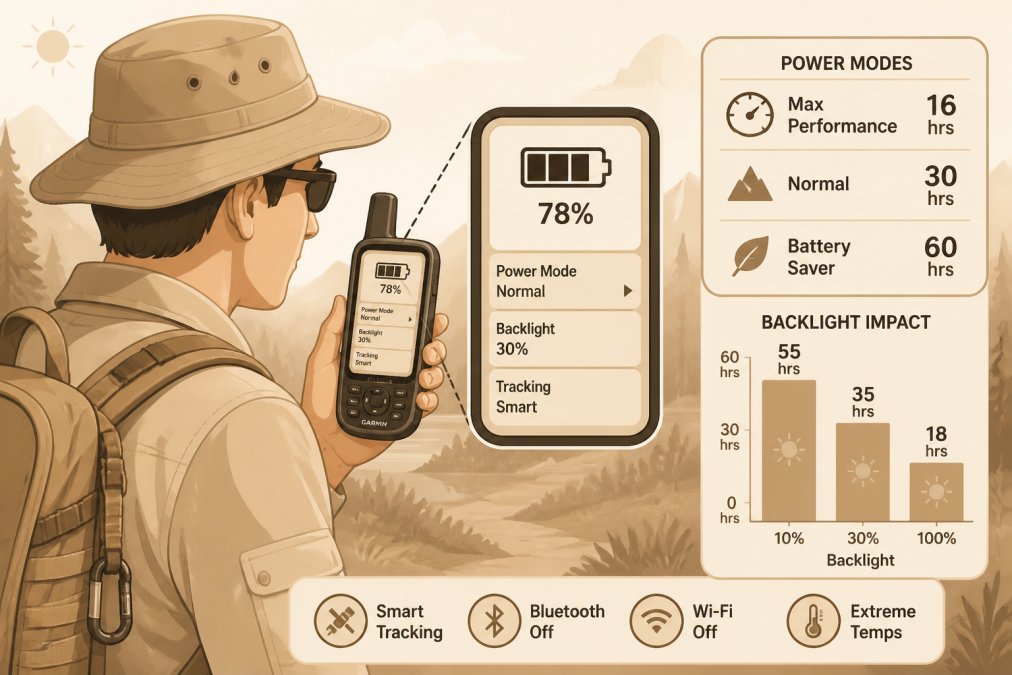
Extending GPS battery life requires understanding both hardware settings and operational practices. Most GPS devices drain batteries faster than necessary because default settings prioritize features over efficiency. Adjusting these settings can add 30-50% to your runtime.
Manage Power Consumption Settings
Reduce screen brightness to the minimum level that remains readable in your operating conditions. Most GPS devices allow automatic brightness adjustment based on ambient light; enable this feature if available. Screen brightness often accounts for 30-40% of total power consumption.
Disable wireless connectivity when not needed. GPS units with Bluetooth, Wi-Fi, or cellular connectivity drain batteries significantly faster when these radios are active. Battery life often improves by 20-25% with wireless disabled.
Reduce update frequency if your application allows it. GPS units tracking position every second consume more power than units updating every five seconds. Adjust the update interval to match your actual needs.
Disable unnecessary features like barometric altimeter, electronic compass, and accelerometer. If you're using GPS primarily for navigation, disable sensors you don't actively use.
Use Battery Management Practices
Store NiMH batteries at room temperature (65-75°F) in a cool, dry location. Heat accelerates self-discharge and degrades battery chemistry. Lithium batteries tolerate wider temperature ranges but still perform best in moderate conditions.
Rotate battery usage if you maintain multiple sets. Using one set while another rests prevents deep discharge cycles that degrade battery chemistry.
For rechargeable batteries, avoid complete discharge. Recharge when batteries reach 20-30% capacity, not when completely dead. This practice can extend rechargeable battery life by 50-100 cycles.
Load testing reveals actual runtime under your specific operating conditions. Activate all features you'll actually use and note how long the battery lasts. This real-world data is more useful than manufacturer specifications.
Choosing the Right Battery for Your GPS Device
Selecting the right battery requires understanding three factors: your device's specifications, your usage pattern, and the environmental conditions where you operate.
Check Your Device's Battery Specifications
Your GPS unit's manual specifies the required battery type, quantity, and voltage. Most handheld GPS devices use AA or AAA batteries, though some professional-grade units use proprietary battery packs. Some GPS manufacturers explicitly recommend against rechargeable batteries due to voltage differences. Check your specific device documentation before switching to rechargeable options.
Consider Your Usage Pattern
Occasional users (once or twice monthly) should prioritize shelf life and reliability. Energizer Ultimate Lithium batteries excel here. You'll use a single set of batteries over many months, and the 25-year shelf life ensures backup batteries remain functional when needed.
Frequent users (weekly or more) benefit from rechargeable batteries despite higher initial investment. Calculate your annual battery cost. If you use your GPS 50 times per year with four-battery devices, that's 200 batteries annually with disposables. Rechargeable batteries reduce this to the cost of electricity plus charger amortization, typically 80-90% less expensive over five years.
Professional operations running multiple GPS units should establish a battery rotation system. Maintain charged spare batteries in inventory, rotate used batteries through a charger, and track battery age.
Evaluate Environmental Conditions
Temperature is the primary environmental factor affecting battery performance. If you operate in extreme cold (below 0°F), lithium batteries are the only reliable choice. Energizer Ultimate Lithium maintains full capacity in these conditions.
Humidity and moisture affect battery terminals and device contacts. If you operate in marine environments or high-humidity conditions, ensure battery contacts are clean and dry. Corrosion on terminals reduces power delivery and can cause intermittent GPS failures.
Duration of field operations determines your spare battery strategy. A day trip requires one set of batteries plus one spare set. A week-long expedition requires calculating daily battery consumption and carrying sufficient spares. For extended operations, rechargeable batteries with a portable charger become essential.
Choosing the right replacement batteries for GPS is fundamentally about matching battery chemistry to your operational requirements. Lithium batteries deliver superior cold weather performance and shelf life, ideal for emergency backup and extreme-condition use. Rechargeable NiMH batteries, particularly premium options from Panasonic Eneloop, offer long-term cost savings and environmental benefits for frequent users.
At Bigtime Battery, we stock a complete selection of replacement batteries for GPS units and other high-drain devices. Whether you need Energizer Ultimate Lithium for expedition reliability, Panasonic Eneloop Pro for daily field work, or budget-friendly Tenergy options for fleet operations, we provide the performance you need at competitive pricing. Explore our wide selection of replacement batteries and find the exact chemistry and capacity your GPS device requires.
Frequently Asked Questions
What is the best battery for a handheld GPS device?
The best replacement battery for GPS depends on your usage. Energizer Ultimate Lithium AA batteries excel in extreme temperatures and high-drain scenarios, delivering consistent 1.5V nominal voltage with minimal voltage drop-off. For frequent users, Panasonic Eneloop Pro NiMH rechargeable batteries offer 2500 mAh capacity and excellent cold weather performance down to -20°C. Alkaline options like Duracell Coppertop work for occasional use but lack the longevity of lithium or the cost savings of rechargeables over time.
Are lithium batteries better than NiMH for GPS devices?
Lithium and NiMH batteries each have distinct advantages. Lithium batteries provide superior performance in extreme temperatures (-40°F to 140°F), weigh 33% less, and maintain consistent voltage throughout discharge cycles. NiMH batteries like Eneloop Pro are rechargeable (up to 500 cycles), more environmentally friendly, and cost less over time if you use your GPS frequently. For field monitoring in harsh conditions, lithium wins. For daily use with access to charging, NiMH is more economical.
How long do GPS batteries typically last in the field?
Runtime depends on battery capacity, discharge rate, and device power consumption. High-capacity NiMH batteries (2500 mAh) typically deliver 12-20 hours of continuous GPS operation, while lithium AA batteries provide similar or extended runtime due to higher energy density and stable voltage delivery. Actual field performance varies based on screen brightness, GPS update frequency, and temperature. Cold weather significantly reduces runtime across all battery types, though lithium maintains better performance than alkaline in freezing conditions.
How do I know which replacement battery fits my GPS model?
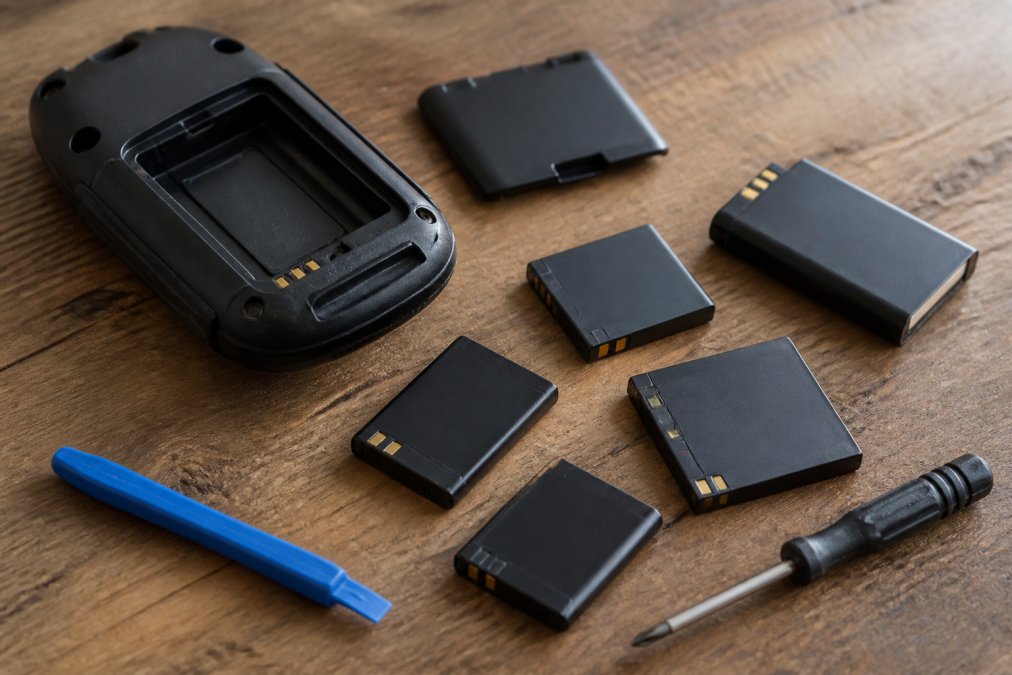
Check your GPS device manual or the battery compartment label for the exact battery size (AA, AAA, etc.) and chemistry type required. For internal batteries in devices like Garmin or TomTom units, you'll need model-specific replacement kits with tools and instructions. If the label is worn, contact your GPS manufacturer with the device model number. Bigtime Battery's customer service can help identify the correct battery if you provide your device details, this prevents costly ordering mistakes and downtime.
Can I use rechargeable batteries in my GPS device?
Yes, most GPS devices accept rechargeable NiMH batteries in standard AA or AAA sizes. However, NiMH batteries have a nominal voltage of 1.2V compared to 1.5V for alkaline and lithium, which may slightly reduce runtime. High-capacity NiMH options like Eneloop Pro (2500 mAh) compensate for this voltage difference through greater amp-hour capacity. Avoid using lithium-ion rechargeable batteries unless your GPS manufacturer explicitly recommends them, as some devices require the specific discharge characteristics of alkaline or NiMH chemistry.