 listicle
Best Motorcycle Batteries for Endurance: 2026 Guide
Table of Contents
- Quick Comparison Table
- Types of Motorcycle Batteries: Which Technology Wins for Long-Distance Riding
- Key Features and Metrics for Endurance Motorcycle Batteries
- Motorcycle Battery Brands Comparison: Yuasa, Antigravity, Shorai, and More
- Motorcycle Battery Life Expectancy: What to Expect from Each Type
- Motorcycle Battery Maintenance Tips for Extended Endurance Performance
- Environmental Impact and Battery Disposal Considerations
- Cost Analysis: Long-Term Value Beyond Upfront Price
- Frequently Asked Questions
Best Motorcycle Batteries for Endurance: 2026 Guide
Last Updated: July 28, 2026
Quick Comparison Table
| Battery Type | Weight | Lifespan | CCA | Best For | Price Range |
|---|---|---|---|---|---|
| Lithium Iron Phosphate (LiFePO4) | Ultra-light (1-3 lbs) | 8-10 years | 400-600 | Performance riders, weight-conscious builders | $140-$300 |
| AGM (Absorbent Glass Mat) | Moderate (5-8 lbs) | 3-5 years | 250-400 | Long-distance touring, reliable everyday use | $70-$175 |
| Lead-Acid | Heavy (8-12 lbs) | 2-3 years | 200-300 | Budget-conscious riders, occasional use | $40-$100 |
| Gel Battery | Moderate (6-10 lbs) | 3-5 years | 200-350 | Extreme temperatures, vibration-heavy bikes | $80-$150 |
Selecting the best motorcycle battery for endurance depends on riding style, budget, and weight tolerance. Lithium options deliver twice the lifespan of lead-acid while cutting weight by 75 percent, critical for long-distance rides. At Bigtime Battery, we help riders find the right power solution for their needs, whether that means maximum runtime or affordability.
Types of Motorcycle Batteries: Which Technology Wins for Long-Distance Riding
Different battery chemistries perform dramatically differently under extended riding stress.
Lithium Iron Phosphate (LiFePO4) Batteries
Lithium Iron Phosphate batteries weigh one-fifth of traditional lead-acid equivalents while delivering superior cranking power and 2,000-3,000 cycles at 80 percent depth of discharge. They hold charge for up to a year without maintenance, ensuring reliable starts after winter storage. The integrated Battery Management System (BMS) prevents over-discharge and thermal runaway automatically.
Lithium performance degrades below 40°F, which matters for winter riders. You'll also need a lithium-compatible charger; standard motorcycle chargers can damage these batteries. Lithium battery charging requirements from battery manufacturers clarifies compatibility requirements.
AGM (Absorbent Glass Mat) Batteries
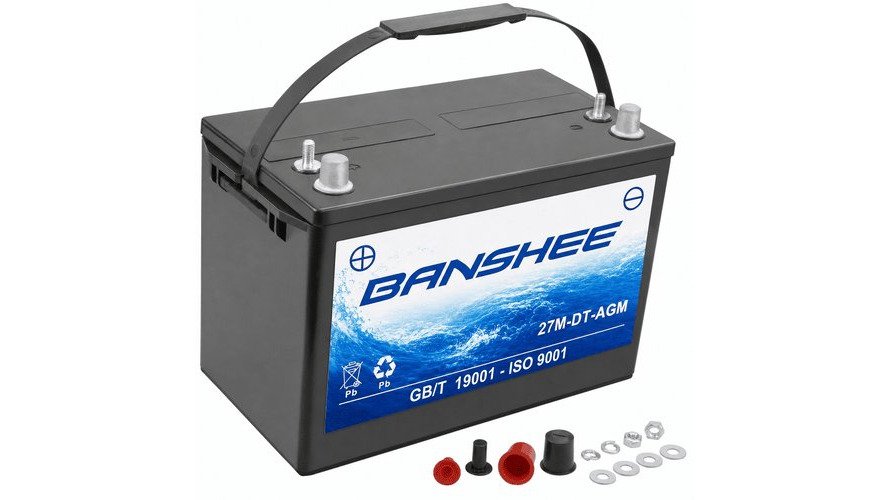
AGM batteries are maintenance-free, proven across millions of motorcycles, and spill-proof due to their glass mat separator. They deliver consistent voltage over extended use with no water loss or acid smell. Yuasa's YTX series and Motobatt's QuadFlex models offer 310+ cold cranking amps and 400+ deep cycles at 80 percent discharge.
The limitation: AGM batteries weigh 6-8 pounds, significantly more than lithium alternatives. Lifespan reaches 3-5 years before replacement becomes necessary.
Lead-Acid and Gel Batteries
Traditional lead-acid batteries remain the budget option at $40-$100. Gel batteries offer similar pricing with improved vibration resistance. For true endurance riding, these underperform. Lead-acid batteries sulfate during storage, losing capacity if your bike sits for weeks. Gel batteries address this somewhat but still require maintenance and deliver shorter lifespan than AGM.
Key Features and Metrics for Endurance Motorcycle Batteries
Three metrics dominate the decision: Cold Cranking Amps, Amp-Hour capacity, and cycle life expectancy.
Cold Cranking Amps (CCA) and Amp-Hour (Ah) Capacity
Cold Cranking Amps measure current delivery at 0°F for 30 seconds, how reliably your bike starts in harsh conditions. Most motorcycles need 150-300 CCA, though larger displacement bikes demand 400+ CCA.
Amp-Hour (Ah) capacity measures total energy storage. A 12Ah battery theoretically runs a 1-amp device for 12 hours. For motorcycles, this matters less than CCA during normal operation but becomes critical with accessories like heated grips, GPS units, or auxiliary lights. A 12Ah battery handles these loads better than an 8Ah unit during extended riding.
For endurance touring, prioritize CCA first for reliable starts in all conditions. Ah capacity matters second, especially with aftermarket electrical equipment.
Lifespan, Charging Cycles, and Battery Management Systems
Lead-acid batteries typically survive 2-3 years. AGM extends to 3-5 years. Lithium reaches 8-10 years because it tolerates 2,000+ charge cycles versus 400-600 for AGM.
A Battery Management System (BMS) is essential for lithium batteries, monitoring cell voltage, temperature, and discharge rate while automatically shutting down if parameters exceed safe ranges. This protection explains why lithium batteries outlast traditional options. Deltran's lithium batteries include quad-terminal configuration with integrated BMS, allowing flexible installation and automatic protection during long tours.
Motorcycle Battery Brands Comparison: Yuasa, Antigravity, Shorai, and More
Premium Lithium Options: Antigravity, Shorai, and Deltran
Antigravity Batteries Re-Start Lithium ($119.99-$199.99) includes built-in jump-start capability, meaning a dead battery won't strand you mid-tour. The BMS includes over-discharge, over-charge, and thermal protections, delivering up to twice the lifecycle of lead-acid batteries with 2x the cranking amps.
Shorai LFX14L2-BS12 ($140.76-$143.96) represents the ultra-lightweight option at one-fifth the weight of lead-acid equivalents, transforming bike handling on long rides. The faster recharge rate means your alternator tops up the battery quicker during highway riding. Shorai performance drops below 40°F, and the battery requires a charging system output of 13.1V or higher at idle, not exceeding 15.2V. Shorai battery specifications and compatibility guide details which motorcycles work with their technology.
Deltran Battery Tender Lithium ($269.96-$299.95) delivers 2,000+ deep cycles at 80 percent discharge. The quad-terminal configuration simplifies custom wiring and allows mounting in any direction for unconventional bike builds.
Reliable AGM Choices: Yuasa, Motobatt, and Odyssey
Yuasa YTX20HL-BS ($119.95-$173.95) is the industry standard. OEM manufacturers trust Yuasa for 310 CCA, sealed spill-proof construction, and gas recombination technology that eliminates water loss. This battery handles extreme weather and vibration without complaint, delivering predictable 3-5 year lifespan.
Motobatt MBTX12U QuadFlex ($67.50-$92.95) offers 20 percent more Amp-Hour capacity and CCA compared to same-size competitors. The QuadFlex terminal design accommodates multiple accessory connections without adapters, ideal for riders running heated grips, auxiliary lights, and GPS units simultaneously.
Odyssey Extreme Series PC545 ($147.99-$174.99) builds pure virgin lead plates for maximum surface area. The non-spillable AGM design protects against shock and vibration, reaching 400 cycles at 80 percent depth of discharge, roughly double conventional AGM batteries. Odyssey batteries recharge fully in 4-6 hours, faster than competitors.
Budget-Friendly Alternatives: Power Sonic and Scorpion
Power Sonic PTX14BS ($39.99-$56.40) delivers maintenance-free sealed AGM performance at the lowest price point. The tradeoff is straightforward: shorter warranty (typically 6-12 months) and heavier weight than lithium options.
Scorpion Stinger Lithium batteries offer 2x the starting power of OEM batteries at competitive pricing with direct-fit replacement options. Performance in cold temperatures remains the limitation, as batteries may not deliver full cranking power below 40°F.
Motorcycle Battery Life Expectancy: What to Expect from Each Type
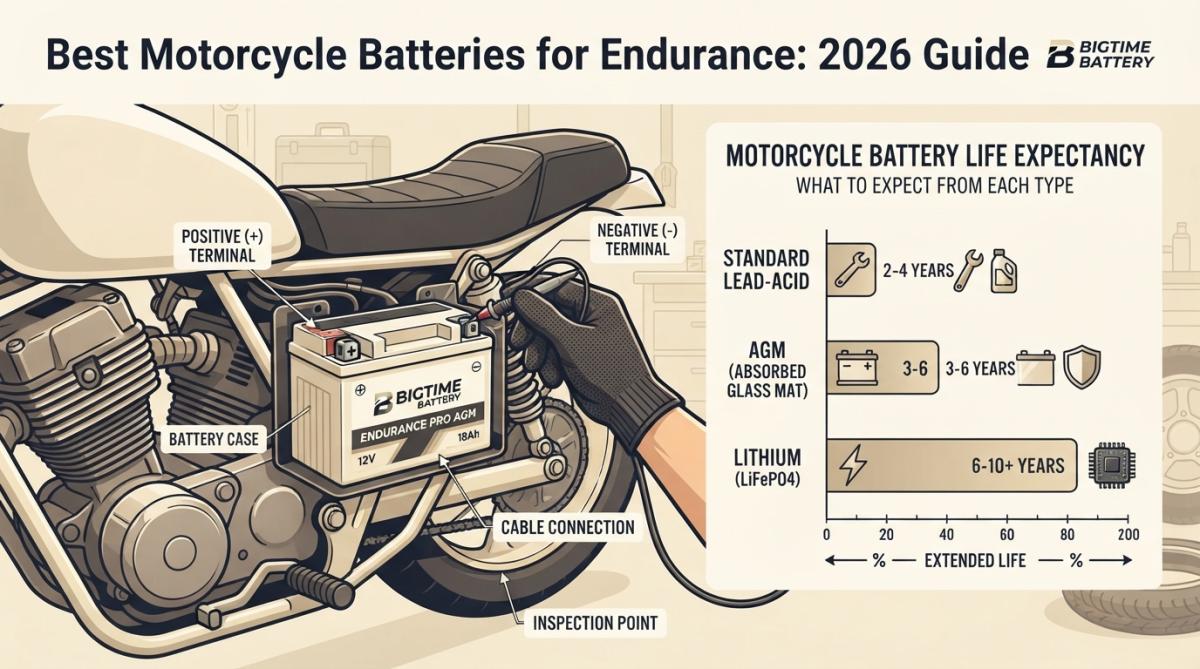
Real-world lifespan depends on riding patterns, climate, and maintenance. Lead-acid batteries typically last 2-3 years, with extreme heat accelerating sulfation and cold reducing capacity. AGM batteries extend to 3-5 years under normal conditions, with the sealed design preventing water loss and corrosion. Lithium batteries reach 8-10 years because they tolerate 2,000+ cycles without significant degradation, maintaining 80 percent capacity after 1,500 cycles.
Cold weather testing shows lithium performance degrades below 40°F but recovers when warmed. AGM maintains consistent performance across temperatures, making it more reliable for winter touring. Lead-acid struggles in both cold and heat.
Motorcycle Battery Maintenance Tips for Extended Endurance Performance
Proper maintenance extends battery life by 50 percent or more.
Preventing Sulfation and Parasitic Drain
Sulfation occurs when lead-acid batteries sit uncharged, as lead sulfate crystals form on the plates, reducing capacity permanently. AGM batteries resist sulfation better than lead-acid but still benefit from regular charging. Lithium batteries hold charge for up to a year without maintenance, making them superior for seasonal riders.
Parasitic drain happens when electrical systems draw power while the engine is off. Alarm systems, clocks, and fuel pumps consume 5-50 milliamps continuously. Disconnect the negative terminal before long-term storage to eliminate parasitic drain. Lithium batteries with integrated BMS shut down at safe voltage thresholds automatically.
Using Battery Tenders and Trickle Chargers
A battery tender maintains charge without overcharging, using smart charging profiles that adjust voltage and current based on battery state. For lead-acid and AGM batteries, a tender is essential during storage. Modern smart chargers switch to maintenance mode once the battery reaches full charge.
Lithium batteries require lithium-compatible chargers. Battery tender and trickle charger compatibility guide provides detailed information on charger selection. Connect the tender during winter storage, at least once monthly during off-season, to extend battery life by 1-2 years.
Environmental Impact and Battery Disposal Considerations
Lead-acid batteries are 99 percent recyclable, with lead, plastic, and sulfuric acid all recovered and reused. Most retailers accept old batteries for recycling when you purchase replacements, sometimes offering core charges.
Lithium batteries last 8-10 years, meaning fewer replacements and less total waste. However, lithium recycling is less established than lead-acid. Responsible manufacturers like Shorai and Antigravity provide recycling programs for end-of-life batteries.
AGM batteries fall between the two, recyclable like lead-acid but with less environmental hazard due to sealed construction. Consider the full lifecycle: a lithium battery lasting 10 years has lower environmental impact than replacing a lead-acid battery every 2-3 years, even if lithium recycling is less mature.
Cost Analysis: Long-Term Value Beyond Upfront Price
The cheapest battery rarely delivers the best value. A $50 lead-acid battery replaced every 2-3 years costs $100-$150 over a decade. A $200 lithium battery lasting 10 years costs $200 total, plus you avoid replacement hassle and the risk of being stranded.
For endurance riders, total cost of ownership matters more than sticker price. AGM batteries offer the best value for most riders, costing $70-$175 and lasting 3-5 years. Lithium batteries make sense if you ride 10+ years on the same bike, as the higher upfront cost amortizes over longer ownership. Motorcycle battery cost comparison study shows lithium delivers best value for riders keeping their bikes longer than five years, while AGM wins for those replacing bikes more frequently.
Finding the best motorcycle batteries for endurance requires balancing reliability, weight, lifespan, and cost. Lithium options like Antigravity and Shorai deliver unmatched performance for long-distance riding, while AGM batteries from Yuasa and Motobatt provide proven durability at lower cost. Bigtime Battery maintains a curated selection of replacement batteries across all chemistries, with expert guidance to match you with the right option for your specific motorcycle and riding style. Whether you prioritize weight reduction, maximum lifespan, or budget-friendly reliability, the right battery exists, and choosing well means never being stranded miles from home.
Frequently Asked Questions
What type of motorcycle battery lasts the longest for endurance riding?
Lithium Iron Phosphate (LiFePO4) batteries typically last the longest, offering up to 10 years and 2000+ deep cycles at 80% depth of discharge. AGM batteries provide solid longevity with proper maintenance, lasting 3-5 years, while traditional lead-acid batteries usually last 2-3 years. For endurance riders covering long distances, lithium batteries deliver superior lifespan despite higher upfront costs, making them the best long-term investment.
How do I choose the best motorcycle battery for endurance touring?
Evaluate your motorcycle's electrical system output (should be 13.1V or higher at idle for lithium compatibility), total accessory load (GPS, heated grips, additional lights), and riding climate. For endurance touring, prioritize Cold Cranking Amps (CCA) for reliable starts and Amp-hour (Ah) capacity for powering accessories. Lithium batteries offer weight savings and longer lifespan; AGM batteries provide proven reliability and maintenance-free operation. Check OEM specifications and verify compatibility with your voltage regulator before upgrading.
Are lithium batteries worth the extra cost for motorcycle endurance use?
Yes, for serious endurance riders. Lithium batteries cost 2-3 times more upfront but deliver 3-5 times longer lifespan, reduce motorcycle weight by up to 80%, and maintain stronger cranking power in cold weather compared to lead-acid. Over 10 years, the cost-per-year of a lithium battery often matches or beats AGM options when accounting for replacement frequency and fuel savings from weight reduction. The investment pays off for riders covering 10,000+ annual miles.
What should I look for in motorcycle battery maintenance tips to extend endurance?
Use a Battery Tender or trickle charger during off-season storage to prevent sulfation and parasitic drain, which are leading causes of premature failure. Keep terminals clean and corrosion-free, check electrolyte levels in lead-acid batteries monthly, and avoid deep discharges. For lithium batteries, ensure your charging system outputs between 13.1V and 15.2V at idle. Store batteries in cool, dry conditions and recharge after every ride, especially on endurance trips, to maintain optimal health and reliability.
How do motorcycle battery types compare for cold weather endurance riding?
AGM batteries excel in cold weather, maintaining strong Cold Cranking Amps (CCA) even below freezing, making them ideal for winter endurance touring. Lithium batteries perform well down to 40°F but may experience reduced output below that threshold, requiring a compatible charger. Traditional lead-acid batteries lose significant cranking power in extreme cold. For endurance riding in northern climates, AGM batteries or lithium options with integrated Battery Management Systems (BMS) provide the most reliable cold-weather performance.