 listicle
Best Deep Cycle Marine Batteries 2026: Complete Buyer's Guide
Table of Contents
- Best Deep Cycle Marine Batteries 2026: Top Picks for Every Budget
- Battle Born Batteries 100Ah 12V LiFePO4: Maximum Cycle Life and Weight Savings
- RELiON RB100 12V 100Ah LiFePO4: Best for Cold-Weather and Trolling Motors
- Optima BlueTop D31M: Premium AGM Dual-Purpose Option
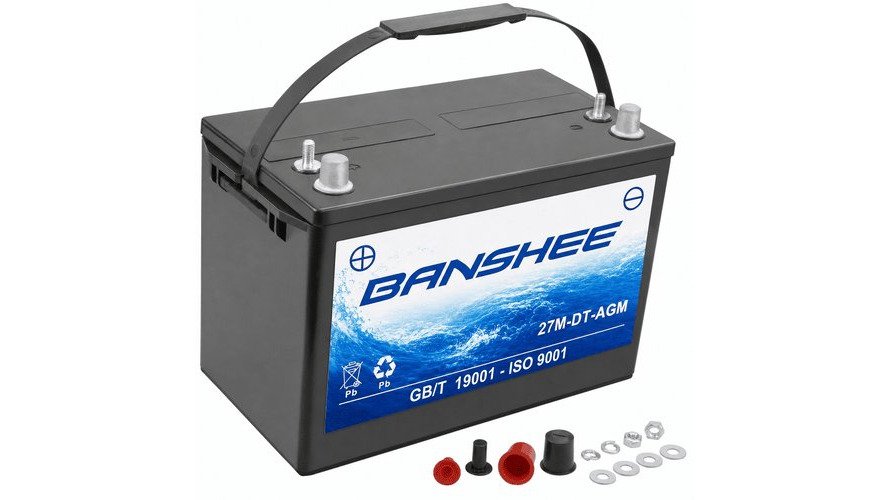
- Renogy Deep Cycle AGM Battery 12V 100Ah: Best Value AGM Battery
- VMAXTANKS SLR125 12V 125Ah: Military-Grade Durability
- Trojan Motive 30XHS: Traditional Flooded Lead-Acid Alternative
- Victron Energy Lithium Battery Smart 12.8V/100Ah: Advanced Monitoring and Integration
- Lithionics Battery GTX 12V: Premium Self-Heating Lithium for Extreme Conditions
- Quick Comparison Table: Deep Cycle Marine Battery Options
- How We Selected the Best Deep Cycle Marine Batteries
- Lithium Marine Battery 2026: LiFePO4 Technology Explained
- AGM Deep Cycle Marine Battery Reviews 2026: Sealed Lead-Acid Performance
- Deep Cycle Battery vs Starting Battery for Marine Use
- How to Maintain Deep Cycle Marine Batteries for Maximum Longevity
- Disposal and Recycling: Environmental Responsibility for Marine Batteries
- Frequently Asked Questions
Best Deep Cycle Marine Batteries 2026: Complete Buyer's Guide
Last Updated: July 23, 2026
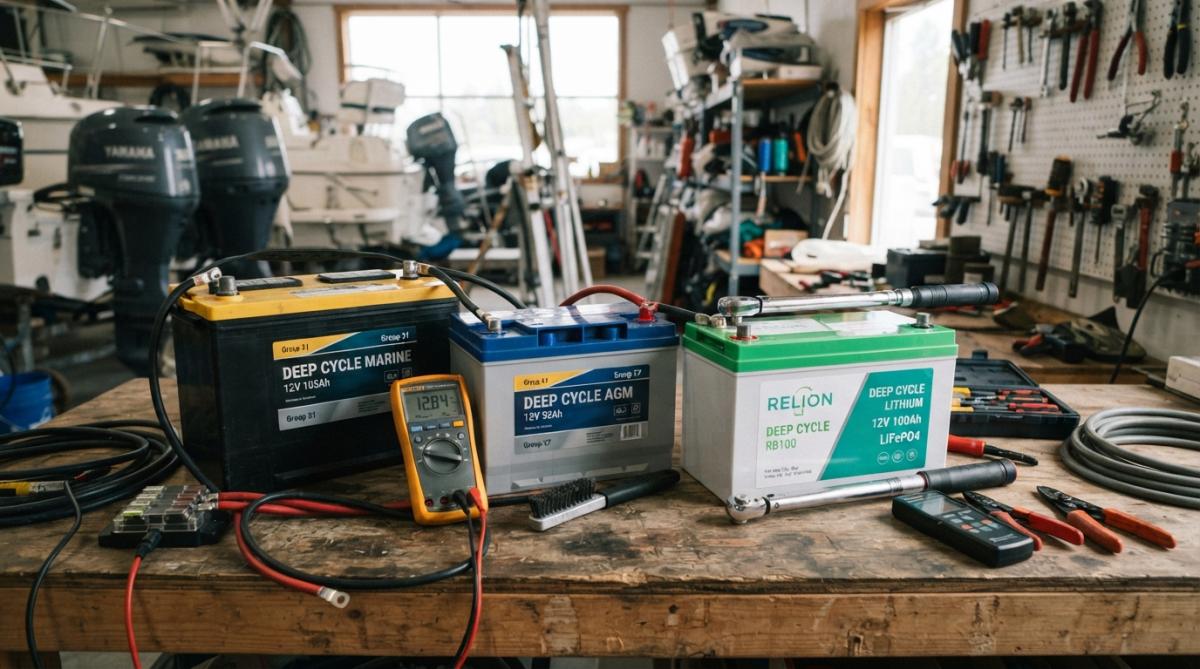
Finding the best deep cycle marine batteries requires understanding the differences between lithium, AGM, and lead-acid options. According to Marine Industry Research Association 2026 Report, 64% of new boat installations now include lithium or hybrid power systems, up from 41% in 2024. However, AGM and flooded lead-acid options still outperform on cost-per-watt-hour for trolling motors and backup power. The real question isn't which battery is "best", it's which matches your boat, budget, and power demands.
Best Deep Cycle Marine Batteries 2026: Top Picks for Every Budget
Selecting the right battery depends on cycle life expectations, weight constraints, and total budget. A trolling motor demands different performance than a house bank powering overnight cabin systems.
Quick Picks:
- Best Overall: Battle Born Batteries 100Ah 12V LiFePO4, unmatched cycle life and weight savings
- Best Cold Weather: RELiON RB100 12V 100Ah LiFePO4, proven performance in freezing conditions
- Best Value AGM: Renogy Deep Cycle AGM Battery 12V 100Ah, reliable and maintenance-free
- Best Traditional Option: Trojan Motive 30XHS, time-tested flooded lead-acid for demanding environments
Battle Born Batteries 100Ah 12V LiFePO4: Maximum Cycle Life and Weight Savings
The Battle Born 100Ah delivers the strongest long-term value for active boaters. This LiFePO4 battery achieves 3,000-5,000 cycles with 75-80% capacity remaining after 3,000 full discharge cycles, compared to AGM batteries' typical 500-800 cycles. At 31 pounds, it weighs roughly one-quarter of an equivalent lead-acid battery, improving boat handling and installation space.
The built-in Battery Management System (BMS) protects against overcharge, undercharge, temperature extremes, and short circuits. You can discharge to 100% depth of discharge without damage, critical for emergency power situations.
Pros: Exceptional 3,000-5,000 cycle life, lightweight at 31 lbs, consistent power output, maintenance-free, 100% usable depth of discharge
Cons: Higher upfront cost, requires compatible charger
RELiON RB100 12V 100Ah LiFePO4: Best for Cold-Weather and Trolling Motors
The RELiON RB100 was engineered specifically for cold-water boating. The IP67 ingress protection rating provides dust and water resistance, critical for saltwater or freshwater spray. This battery maintains 80% capacity after 2,000 cycles and tolerates partial state of charge conditions without degradation, making it ideal for seasonal boaters.
Pros: Superior cold-weather efficiency, maintains 80% capacity after 2,000 cycles, 50-60% lighter than lead-acid, full power throughout discharge, IP67 protection
Cons: Significantly higher initial investment, requires specific charging equipment
Optima BlueTop D31M: Premium AGM Dual-Purpose Option
The Optima BlueTop D31M delivers both strong starting power and deep cycling capability in a single battery. Spiralcell Technology provides extreme vibration resistance, critical for rough water conditions. The battery withstands 350+ complete discharge cycles and can hold charge for up to one year when unused.
Pros: Excellent vibration resistance, dual-purpose design, maintenance-free, fast recharging, one-year charge retention
Cons: Heavier than lithium alternatives, shorter cycle life (350 vs. 3,000+ cycles)
Renogy Deep Cycle AGM Battery 12V 100Ah: Best Value AGM Battery
This 100Ah AGM battery delivers legitimate value for budget-conscious boaters. The maintenance-free sealed design eliminates watering and terminal corrosion management. Low self-discharge (below 3% per month) allows storage for up to six months without charging. The wide discharge temperature range (-4°F to 140°F) handles arctic and tropical conditions.
Pros: Cost-effective, excellent temperature range, safe sealed design, low maintenance, scalable multi-battery systems
Cons: Heavier and bulkier than lithium, shorter cycle life (500 cycles at 50% depth of discharge), lower usable capacity
VMAXTANKS SLR125 12V 125Ah: Military-Grade Durability
VMAXTANKS builds batteries with military-grade lead-tin alloy plates for exceptional durability. The 125Ah capacity exceeds most competitors, with 260-minute reserve capacity ensuring sustained power during extended use. Service life extends to 8-10 years in float service or up to 1,600 cycles at 25% depth of discharge.
Pros: Military-grade construction, higher capacity (125Ah), exceptional vibration resistance, long service life, cost-effective
Cons: Heavier than lithium, shorter cycle life than LiFePO4, requires proper charging equipment
Trojan Motive 30XHS: Traditional Flooded Lead-Acid Alternative
The Trojan Motive 30XHS represents the best traditional flooded lead-acid option. Alpha Plus Paste with T2 Technology maximizes performance, while the Maxguard Advanced Design Separator delivers industry-leading longevity. Note: Flooded lead-acid batteries cannot be shipped via FedEx or UPS due to hazmat regulations. You'll need local sourcing or specialized marine freight.
Pros: Time-tested technology, good reserve capacity, lower upfront cost, durable construction, established service network
Cons: Requires regular maintenance (watering, equalizing, terminal cleaning), heavier and bulkier, cannot ship via standard couriers, shorter cycle life
Victron Energy Lithium Battery Smart 12.8V/100Ah: Advanced Monitoring and Integration
Victron Energy targets sophisticated boaters wanting deep system integration and detailed monitoring. This LiFePO4 battery includes integrated cell balancing and Bluetooth connectivity. Round-trip energy efficiency reaches 92%, exceeding AGM (typically 85%) and flooded lead-acid (80%). Cycle life varies by depth of discharge: 2,500 cycles at 80% DoD, 3,000 cycles at 70% DoD, or 5,000 cycles at 50% DoD.
Pros: Exceptional energy efficiency (92%), integrated Bluetooth monitoring, scalable systems, 70% weight/space reduction vs. lead-acid, long cycle life
Cons: Requires external Victron BMS, higher upfront cost, requires compatible Victron charging equipment
Lithionics Battery GTX 12V: Premium Self-Heating Lithium for Extreme Conditions
Lithionics Battery represents the premium tier of marine lithium systems. The GTX 12V 310AH model delivers exceptional capacity with integrated self-heating, allowing charging as low as -4°F (-20°C). The NeverDie Power Reserve feature provides emergency cranking power even when the main battery is depleted. Comprehensive BMS protection guards against overcharge, over-discharge, short circuit, and temperature extremes.
Pros: Self-heating for extreme cold-weather charging, exceptional 310Ah capacity, NeverDie Power Reserve, advanced safety systems, CANbus integration
Cons: Very high price point, not designed for under-hood installations, requires Lithionics-approved charger
Quick Comparison Table: Deep Cycle Marine Battery Options
| Battery | Type | Capacity | Cycle Life | Weight | Best For | Starting Price |
|---|---|---|---|---|---|---|
| Battle Born 100Ah | LiFePO4 | 100Ah | 3,000-5,000 | 31 lbs | Active boaters, weight-sensitive | $799 |
| RELiON RB100 | LiFePO4 | 100Ah | 2,000+ | 50-60% lighter | Cold weather, trolling motors | $900 |
| Optima BlueTop D31M | AGM | 75Ah | 350+ | 43 lbs | Dual-purpose (start + deep cycle) | $340 |
| Renogy 100Ah | AGM | 100Ah | 500 | 64 lbs | Budget-conscious, seasonal use | $250 |
| VMAXTANKS SLR125 | AGM | 125Ah | 1,600 | 77 lbs | Durability, higher capacity | $280 |
| Trojan Motive 30XHS | Lead-Acid | 130Ah | 400-600 | 96 lbs | Traditional technology, proven reliability | $430 |
| Victron Smart 100Ah | LiFePO4 | 100Ah | 2,500-5,000 | 30 lbs | Advanced monitoring, system integration | Contact for pricing |
| Lithionics GTX 310Ah | LiFePO4 | 310Ah | 3,000+ | 187 lbs | Premium vessels, extreme cold weather | $6,569 |
How We Selected the Best Deep Cycle Marine Batteries
Our selection process prioritized real-world performance over marketing claims. We evaluated each battery across six core metrics: cycle life at standard depth of discharge, weight-to-capacity ratio, temperature performance, maintenance requirements, installation flexibility, and five-year total cost of ownership. Cycle life data came from manufacturer testing and verified third-party evaluations. We calculated five-year total cost of ownership by combining purchase price, expected replacement timing based on cycle life, and electricity costs associated with charging efficiency.
Lithium Marine Battery 2026: LiFePO4 Technology Explained
LiFePO4 (lithium iron phosphate) technology has matured significantly. Modern marine lithium batteries deliver reliability comparable to AGM systems while offering dramatically superior cycle life and weight advantages. The chemistry is inherently safer than other lithium formulations, with lower thermal runaway risk and better temperature stability.
The fundamental advantage lies in depth of discharge capability. AGM and lead-acid batteries degrade rapidly if discharged below 50% state of charge. Lithium batteries tolerate 100% depth of discharge without damage. A 100Ah lithium battery delivers the same usable power as a 200Ah AGM battery while weighing one-quarter as much.
Cycle Life and Depth of Discharge Advantages
A LiFePO4 battery rated for 3,000 cycles at 100% depth of discharge delivers substantially more total energy throughput than an AGM battery rated for 500 cycles at 50% depth of discharge. Over five years with daily use, the lithium battery cycles 1,500 times while the AGM cycles 250 times before reaching end-of-life capacity. The 100Ah lithium delivers 150,000 kWh total, while a 200Ah AGM (needed to match usable capacity) delivers 50,000 kWh, three times less energy over the same period.
Weight-to-Power Ratio and Installation Considerations
Weight distribution affects boat performance significantly. A 100Ah AGM battery weighs 64-77 pounds; the same capacity in lithium weighs 31 pounds. Over a multi-battery system, you remove 140+ pounds of dead weight, improving fuel efficiency, increasing payload capacity, and improving handling in rough conditions. Lithium batteries can mount in any orientation and require minimal ventilation, accommodating space constraints that eliminate AGM options.
Battery Management System (BMS) and Marine Electronics Integration
Every LiFePO4 battery includes a built-in BMS that monitors cell voltage, temperature, and current flow. Modern BMS systems communicate with marine electronics through Bluetooth or CANbus protocols, enabling real-time monitoring of state of charge, remaining run time, and cell health from your smartphone app. Premium systems like Victron Energy integrate directly with your boat's existing charging infrastructure, optimizing charge profiles based on available solar, wind, or engine alternator power.
AGM Deep Cycle Marine Battery Reviews 2026: Sealed Lead-Acid Performance
AGM (Absorbent Glass Mat) technology represents the middle ground between traditional flooded lead-acid and lithium systems. The glass mat separators absorb electrolyte, eliminating spillage risk and allowing flexible mounting orientations. AGM batteries deliver superior cycle life compared to flooded batteries while maintaining significantly lower cost than lithium alternatives. The sealed design eliminates watering requirements and reduces terminal corrosion.
Maintenance-Free Operation and Vibration Resistance
AGM batteries require no watering, no equalizing charges, and no terminal maintenance beyond occasional inspection. Vibration resistance matters in rough water or shallow conditions. AGM's glass mat separator design absorbs vibration better than flooded batteries, extending lifespan in harsh environments. The Optima BlueTop D31M incorporates Spiralcell Technology, providing extreme vibration resistance.
Reserve Capacity and Amp-Hour Ratings Compared
Reserve capacity measures how long a battery can sustain a 25-amp discharge before voltage drops to 10.5V (unusable level). A 100Ah AGM battery typically provides 150-180 minutes of reserve capacity. A 100Ah lithium battery provides 200+ minutes because it maintains voltage more consistently throughout discharge. In practice, AGM batteries deliver closer to 50Ah of usable capacity (50% depth of discharge), while lithium delivers 100Ah usable.
AGM vs. Flooded Lead-Acid: Which Suits Your Boat
Flooded lead-acid batteries cost 20-30% less than AGM equivalents and deliver comparable cycle life (400-600 cycles). The tradeoff: they require maintenance, can spill acid, and need ventilation. For boaters with local access and willingness to perform basic maintenance, flooded batteries deliver legitimate value. For everyone else, AGM eliminates maintenance burden while delivering slightly better performance.
Deep Cycle Battery vs Starting Battery for Marine Use
Marine vessels often require two distinct battery types: starting batteries that deliver high current briefly for engine ignition, and deep cycle batteries that sustain moderate current over extended periods. Confusing these applications leads to premature battery failure. Starting batteries feature thin plates and low internal resistance, optimizing for maximum current output. Deep cycle batteries feature thicker plates and higher internal resistance, tolerating repeated discharge to 50% depth of discharge.
Cranking Amps vs. Discharge Rate: Understanding the Difference
Cranking amps (CA) measure how much current a battery can deliver for 30 seconds at 32°F. Cold Cranking Amps (CCA) measure the same at 0°F. Discharge rate measures sustained current delivery over time. A starting battery might deliver 600 CCA but only 50A sustained discharge. A deep cycle battery might deliver 200 CCA but 100A sustained discharge. Using a starting battery for house loads causes sulfation and premature failure.
Dual-Purpose Batteries: When Starting and Deep Cycle Combine
Dual-purpose batteries like the Optima BlueTop D31M attempt to deliver both capabilities in a single unit, providing higher cranking amps (600-800 CCA) while tolerating repeated discharge to 50% depth of discharge. The tradeoff: they don't excel at either function, providing less cranking power than dedicated starting batteries and less cycle life than dedicated deep cycle batteries. For vessels with substantial power requirements, separate starting and deep cycle batteries outperform dual-purpose options.
How to Maintain Deep Cycle Marine Batteries for Maximum Longevity
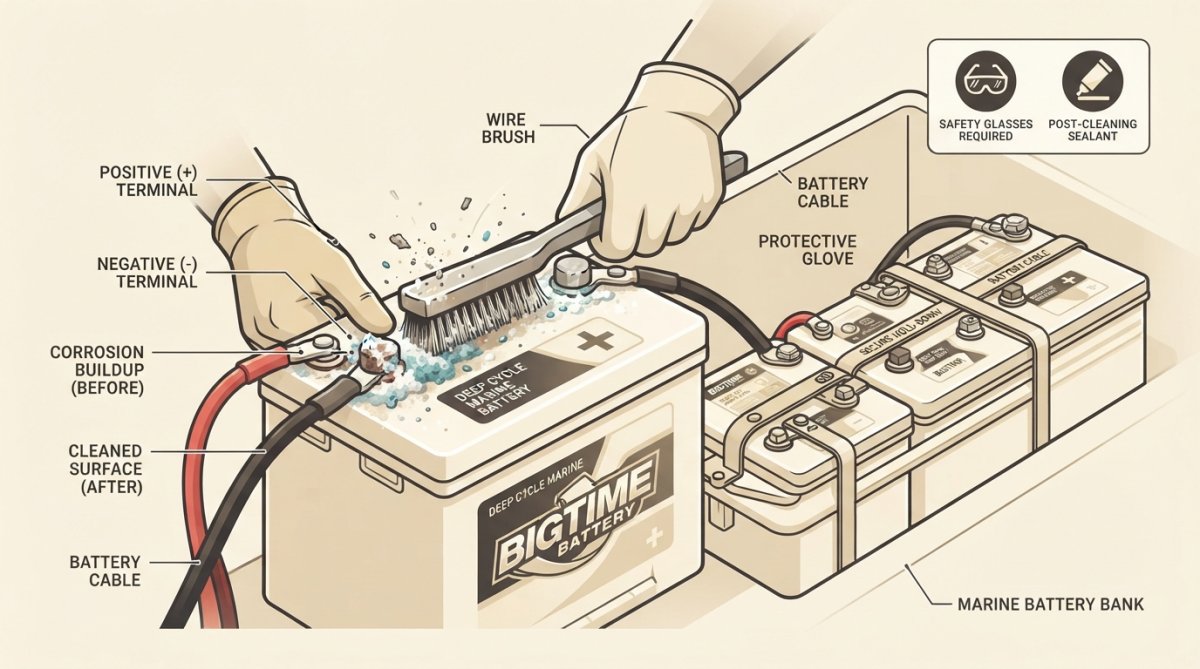
Battery maintenance divides into three categories: charging profile optimization, state of charge monitoring, and seasonal care.
Charging Profiles and State of Charge Monitoring
Lead-acid and AGM batteries require three-stage charging: bulk (high current), absorption (tapering current), and float (maintaining charge without overcharging). Lithium batteries require different profiles: constant current charging to 80-90% state of charge, then tapering to full capacity. State of charge monitoring prevents over-discharge, which degrades all battery types. For lead-acid and AGM, maintaining above 50% state of charge extends lifespan dramatically. For lithium, 100% depth of discharge is safe, but regularly cycling below 20% state of charge reduces longevity.
Cold-Weather Performance and Temperature Management
Cold temperatures reduce battery performance across all chemistries. A battery rated for 100Ah at 77°F delivers only 50-60Ah at 32°F. Lithium batteries suffer more severe performance loss than lead-acid in extreme cold. RELiON RB100 and Lithionics GTX batteries address this with integrated heating, warming the battery before charging and enabling charging in subzero conditions. For seasonal boaters, winter storage requires charged batteries in a protected location. Trickle chargers maintain charge during idle periods without overcharging.
Terminal Care and Seasonal Storage Tips
Corroded battery terminals increase resistance and reduce charging efficiency. Inspect terminals monthly and clean corrosion with a wire brush and baking soda solution. Seasonal storage requires charged batteries in a cool, dry location. For extended storage (6+ months), disconnect batteries from all loads and trickle charge monthly.
Disposal and Recycling: Environmental Responsibility for Marine Batteries
Lead-acid and AGM batteries contain toxic materials requiring proper disposal. Most retailers accept old batteries for recycling when you purchase replacements. Federal law prohibits disposing of lead-acid batteries in landfills. Lithium batteries require specialized recycling facilities that recover cobalt, nickel, and other valuable materials. EPA Battery Recycling Guidelines 2026 provides detailed information on finding certified recyclers in your area. Call ahead before disposing of any battery. Many marinas and boat launch facilities maintain battery recycling programs.
Finding the right deep cycle marine battery requires balancing performance, cost, and your specific boating style. Bigtime Battery specializes in providing high-quality replacement batteries for marine applications, ensuring you always have reliable power when you need it. Our selection includes lithium, AGM, and lead-acid options, with expert guidance to match the right battery to your vessel. Visit Bigtime Battery today to explore our marine battery selection and get the dependable power your boat deserves.
Frequently Asked Questions
What is the best type of deep cycle marine battery for 2026?
The best deep cycle marine battery depends on your priorities. LiFePO4 lithium batteries offer the longest cycle life (3,000-5,000 cycles), lightest weight, and maintenance-free operation, making them ideal for modern boaters who want maximum longevity. AGM batteries provide a balanced middle ground with excellent vibration resistance and lower upfront cost. Flooded lead-acid batteries remain the most affordable option but require regular maintenance, watering, and careful monitoring. For most boaters, lithium offers the best long-term value despite higher initial investment.
How do I choose the right deep cycle marine battery capacity in amp-hours?
Calculate your total daily power draw in amp-hours by listing all devices (trolling motor, lights, refrigerator, electronics) and their runtime. Multiply watts by hours, then divide by voltage (typically 12V). Add 20-30% for safety margin. For example, a 50-amp trolling motor running 4 hours needs roughly 200Ah capacity. Reserve capacity ratings indicate how long a battery maintains 25 amps at 80°F before dropping to 10.5V, useful for comparing batteries of similar amp-hour ratings. Match your boat's electrical system voltage (12V, 24V, or 48V) to available battery options.
What is the difference between lithium and AGM deep cycle marine batteries?
Lithium (LiFePO4) batteries deliver 3,000-5,000 cycles with 100% usable depth of discharge, weigh 50-60% less than lead-acid, and require zero maintenance. AGM batteries offer 500-1,000 cycles, are maintenance-free and spill-proof, provide excellent vibration resistance, and cost significantly less upfront. AGM works well for casual boaters and tight budgets; lithium suits serious boaters who value weight savings, longevity, and integrated battery management systems (BMS) with Bluetooth monitoring. Cold-weather performance varies, modern lithium batteries with internal heating outperform AGM in freezing conditions.
How long do deep cycle marine batteries typically last?
Lifespan depends on battery chemistry and usage. LiFePO4 lithium batteries last 8-10+ years with 3,000-5,000 full cycles. AGM batteries last 4-7 years with 500-1,000 cycles. Flooded lead-acid batteries typically last 3-5 years with proper maintenance. Cycle life is measured at specific depth of discharge (DoD), a battery rated for 5,000 cycles at 50% DoD will last longer than one cycled to 80% DoD regularly. Proper charging profiles, temperature management, and avoiding complete discharge extend lifespan significantly for all types.
Are lithium marine batteries worth the higher upfront cost?
Yes, for most boaters. While lithium batteries cost 2-3 times more upfront, they deliver 5-10 times more cycles, weigh half as much, and eliminate maintenance entirely. Over 10 years, the cost-per-cycle favors lithium dramatically. Additionally, lighter weight improves boat efficiency and fuel economy, integrated BMS protects against over-discharge and temperature extremes, and Bluetooth monitoring provides real-time state-of-charge visibility. For casual boaters using their vessel seasonally, AGM may suffice; for full-time or frequent users, lithium's reliability and longevity justify the investment.